Panic Attack Cheat Sheet
Five steps to get through a panic attack, written to be read mid-panic: short lines, one step at a time. Includes three physiology facts that take the fear out of the symptoms, and a cut-out wallet card so the plan is with you when it happens.
Free download · PDF & PNG
Prints on one page - A4 and US Letter versions included
These cheat sheets are free for personal use, and therapists, counselors, and teachers are welcome to print and hand them out. Please keep the footer with the source on. If you share online, a link back to this page helps other people find the free version.
What's on this cheat sheet
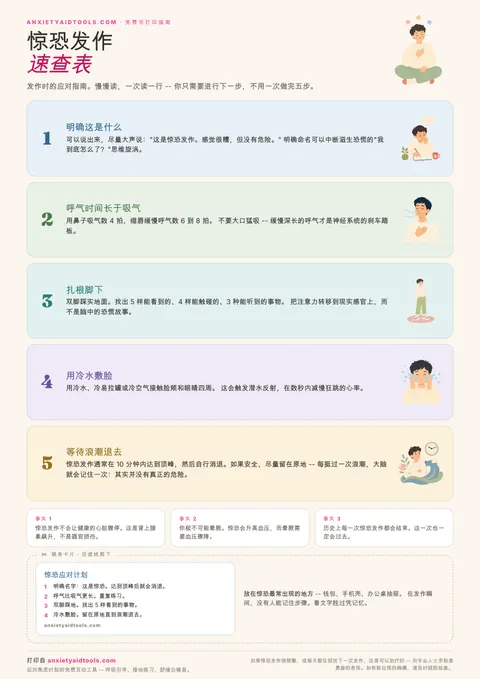
Step 1: Name what this is
Saying "this is a panic attack, it is not dangerous" stops the "what is happening to me?" spiral that feeds the panic.
Step 2: Breathe out longer than in
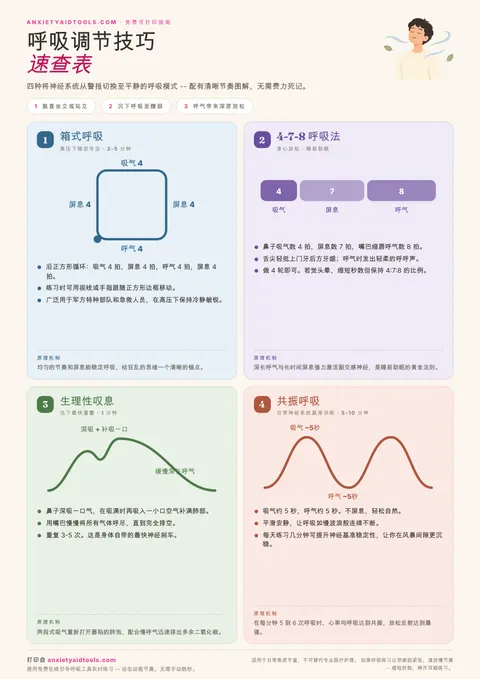
In for about 4 counts, out through pursed lips for 6 to 8. The long exhale is the brake pedal, and it beats gulping air in.
Step 3: Plant yourself
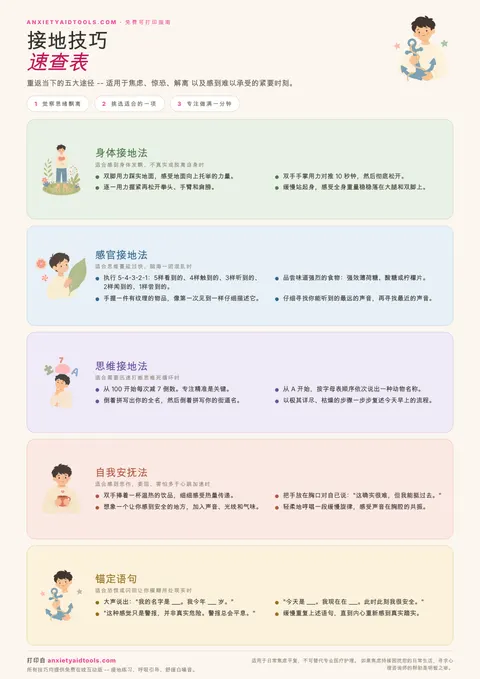
Feet pressed into the floor, then 5 things you can see, 4 you can touch, 3 you can hear. Senses over story.
Step 4: Put cold on your face
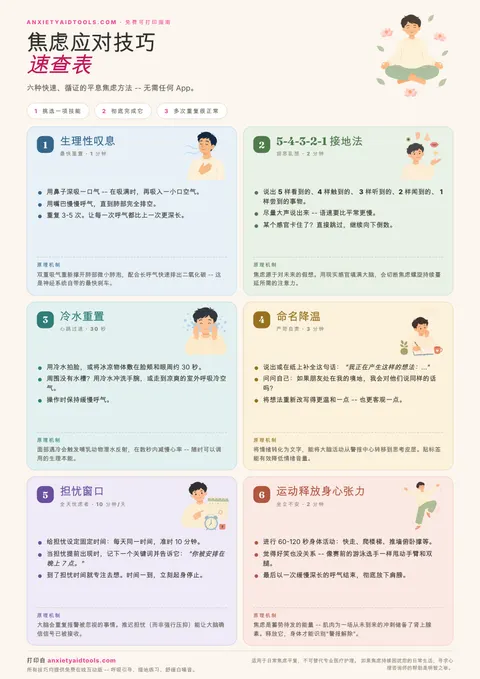
Cold water, a cold can, or cold air triggers the dive reflex, which slows a racing heart within seconds.
Step 5: Stay until the wave drops
Panic usually peaks within about ten minutes. Riding it out where you are, when safe, teaches your brain there was no danger.
The wallet card
A credit-card-sized version of the plan to cut out and keep in your wallet or phone case, because nobody remembers instructions mid-panic. Reading beats remembering.
How to use it
- 1
Print the sheet and cut out the wallet card along the dashed line.
- 2
Keep the card where panic actually finds you: wallet, phone case, car, desk drawer.
- 3
During a panic attack, read one step at a time. You only ever need the next step, not all five.
- 4
Afterwards, note what helped. Your personal order of steps may differ from the printed one, and that is fine.
Frequently asked questions
How long does a panic attack last?
Most panic attacks peak within about ten minutes and then fall away on their own, even if you do nothing. Lingering shakiness afterwards is adrenaline being cleared, not the attack continuing. Knowing the shape of the wave is itself one of the most calming facts about panic.
Can a panic attack damage your heart?
A panic attack cannot stop or damage a healthy heart. The racing, pounding sensation is adrenaline doing exactly what it evolved to do, just at the wrong moment. That said, new or unusual chest pain always deserves a medical check to rule other things out.
Why shouldn't I leave the place where the panic attack started?
Escaping mid-panic brings fast relief, but it quietly teaches your brain that the supermarket or the train was the danger. That is how panic grows into avoidance. If you are somewhere safe, staying until the wave drops teaches the opposite lesson.
What should I put in my wallet for panic attacks?
A short, readable plan. The sheet includes a cut-out wallet card with four lines: name it, exhale longer than you inhale, feet down and find five things you can see, cold on the face and stay until it drops. In-the-moment reading works when memory does not.