For Therapists & Counselors
Anxiety Worksheets & Handouts for Therapists
Print-ready CBT and DBT materials for session work and between-session homework, plus interactive tools your clients can use with no account and no app.
Print-ready, one page
Every handout and worksheet is a clean single-page PDF designed to survive a waiting-room photocopier.
No client accounts
Send a link and it just works - no signup, no email capture, no personal data required from your clients.
Built on CBT & DBT
Thought records, exposure ladders, distress tolerance, behavioral activation - the frameworks you already work in.
How therapists use these materials
These materials are designed to be used in three ways. The first is psychoeducation: when you introduce a concept like cognitive distortions or the fight-flight-freeze response in session, a one-page cheat sheet gives the client something concrete to take home, so the idea survives the week between appointments. The second is homework. Worksheets like the thought record or the fear ladder give between-session practice a clear structure, and because each one prints on a single page, clients are more likely to actually complete them than a multi-page packet.
The third is skills rehearsal. It is one thing to tell a client to practice paced breathing and another to give them a link that runs the exact exercise you demonstrated, on their own phone, at 11pm when they need it. None of the interactive tools require an account, so there is no onboarding friction and no personal data for your client to hand over. That also means nothing here creates a record you would need to think about from a confidentiality standpoint.
Everything is deliberately framework-familiar rather than novel: thought records, exposure hierarchies, behavioral activation, DBT distress tolerance and emotion regulation skills. The materials are designed to slot into the treatment you are already delivering, not to prescribe one.
Psychoeducation handouts
One-page cheat sheets that explain a concept and list concrete skills - useful as take-homes after you introduce a topic in session.
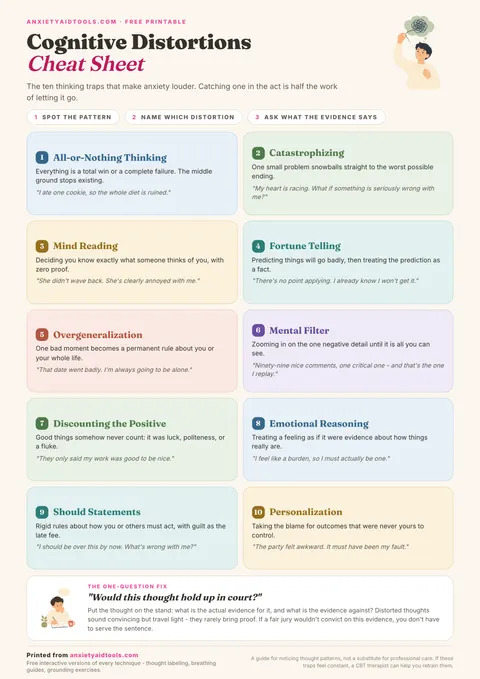
Cognitive Distortions
Name the thinking traps before challenging them - pairs with any CBT thought work.
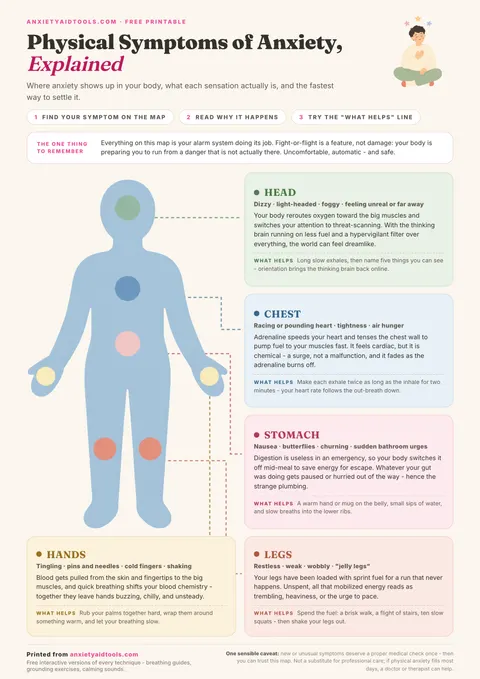
Anxiety Symptoms
Psychoeducation for clients who fear their physical symptoms mean something is medically wrong.
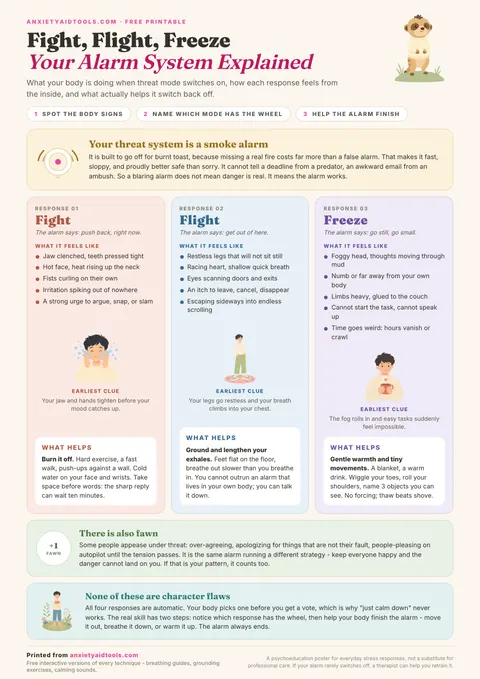
Fight, Flight, Freeze
Explain the threat response in plain language during early psychoeducation sessions.
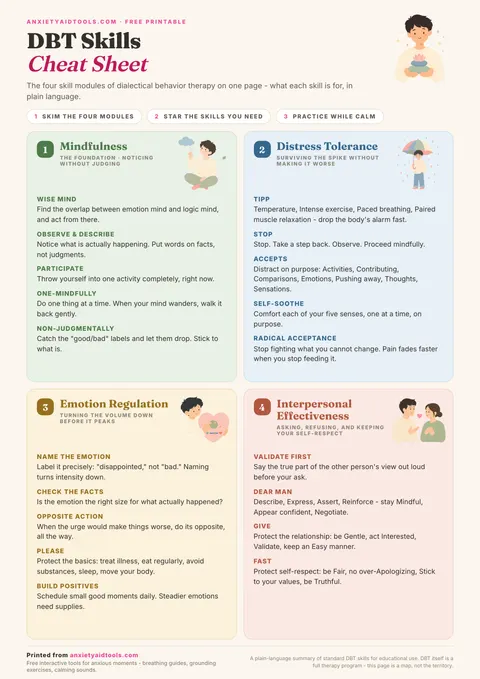
DBT Skills Overview
One-page map of the four DBT modules for skills-group participants.
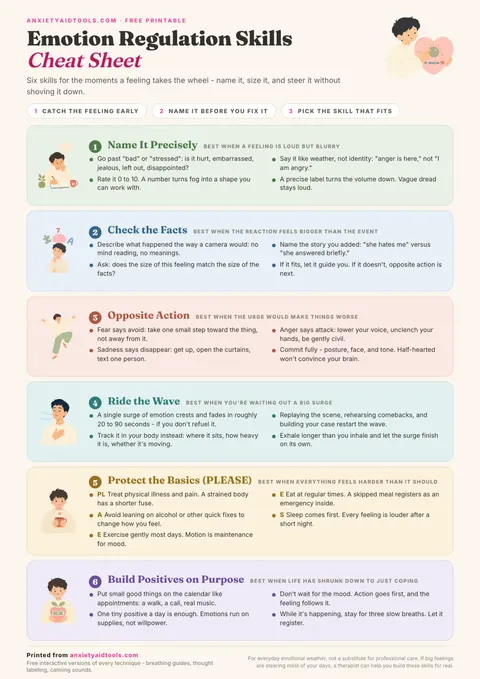
Emotion Regulation Skills
Take-home reference after teaching emotion regulation in session.
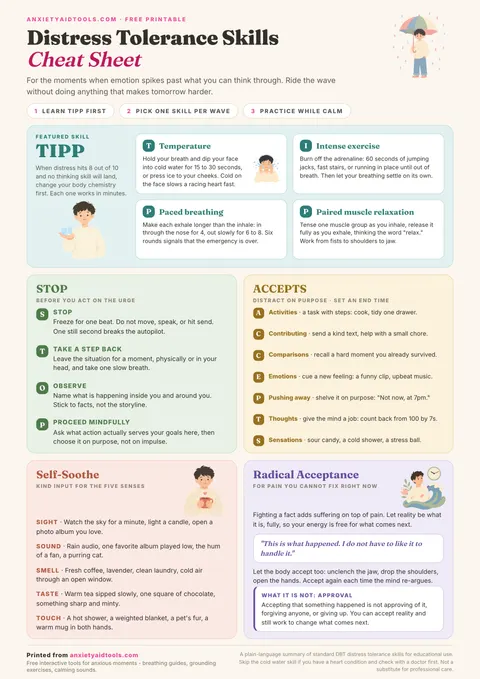
Distress Tolerance Skills
Crisis-survival reference clients can keep on the fridge or in a wallet.
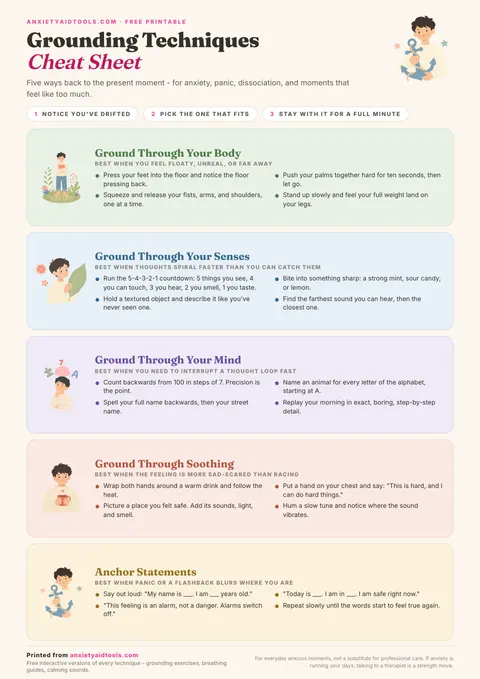
Grounding Techniques
Concrete anchoring steps for dissociation, flashbacks, or panic.
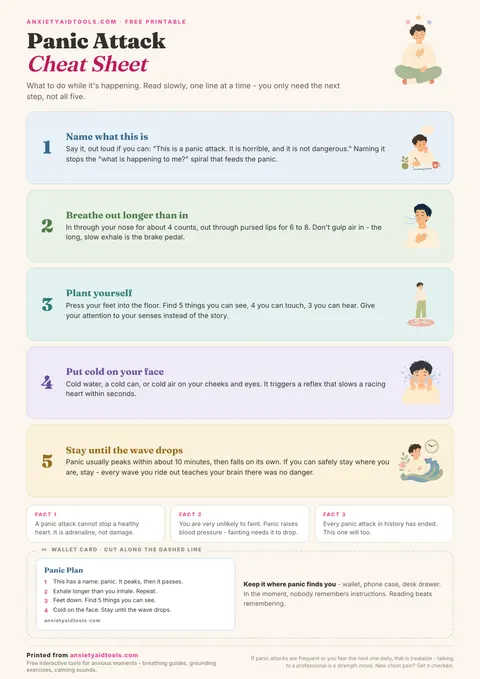
Panic Attack Steps
A during-the-moment protocol clients can follow before skills are internalized.
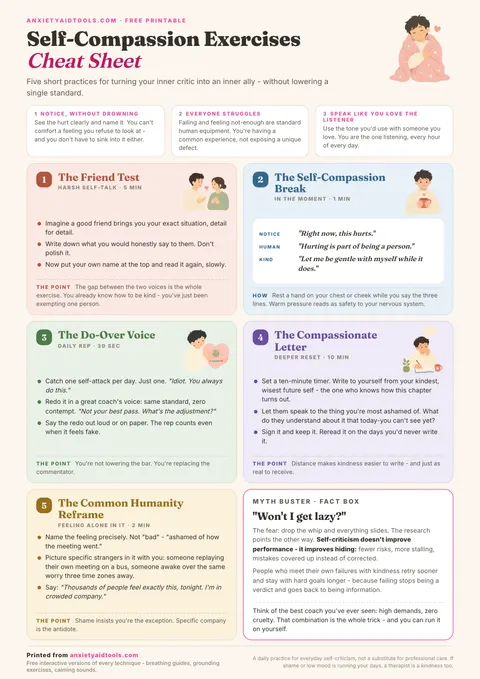
Self-Compassion
For clients whose inner critic undermines the work between sessions.
Worksheets for session work and homework
Fillable, structured exercises - complete them together in session or assign them between appointments.
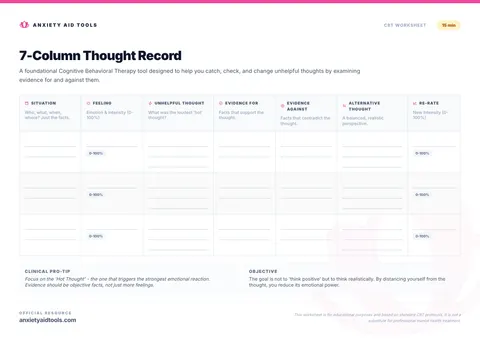
CBT Thought Record
The classic seven-column record for homework between sessions.
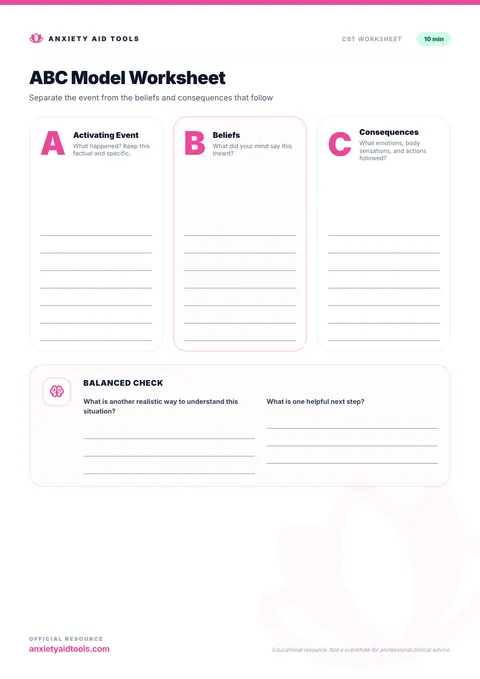
ABC Model
Gentler entry point to cognitive work for clients new to CBT.
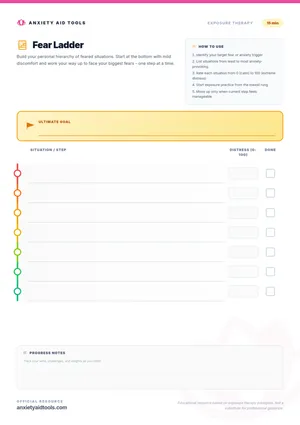
Fear Ladder
Build graded exposure hierarchies collaboratively in session.
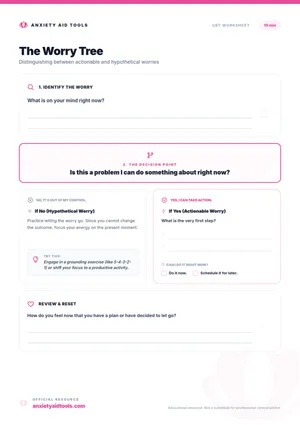
Worry Tree
Sort solvable worries from hypothetical ones - useful for GAD.
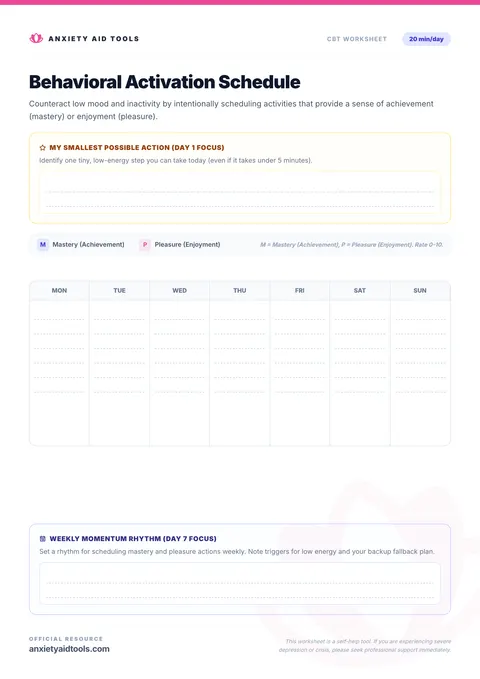
Behavioral Activation Schedule
Structured activity planning for comorbid low mood.
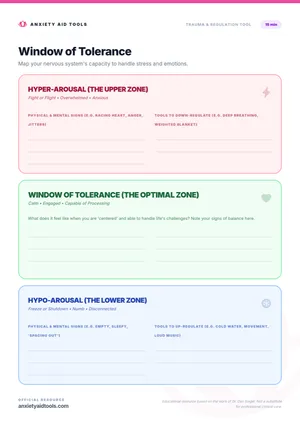
Window of Tolerance
Map arousal states with trauma-informed clients.
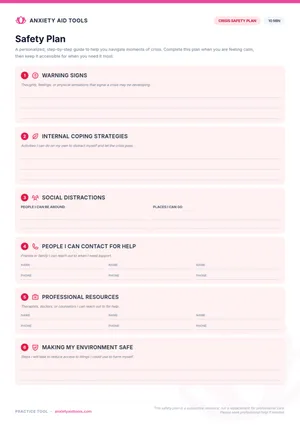
Safety Plan
Stanley-Brown-style crisis planning template.
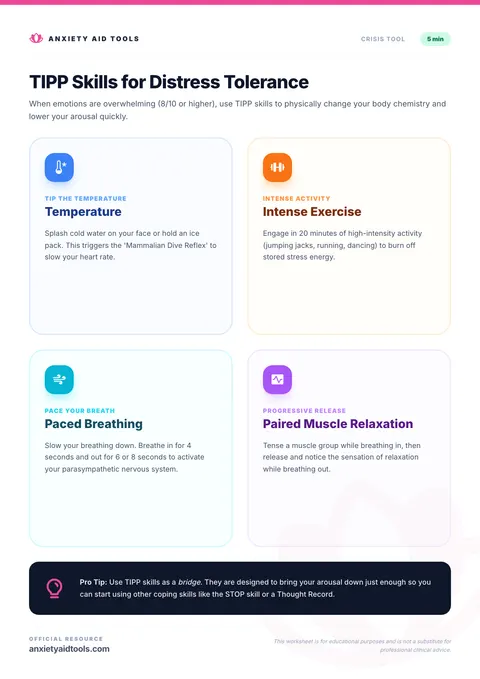
TIPP Skills
Fast physiological de-escalation steps from DBT distress tolerance.
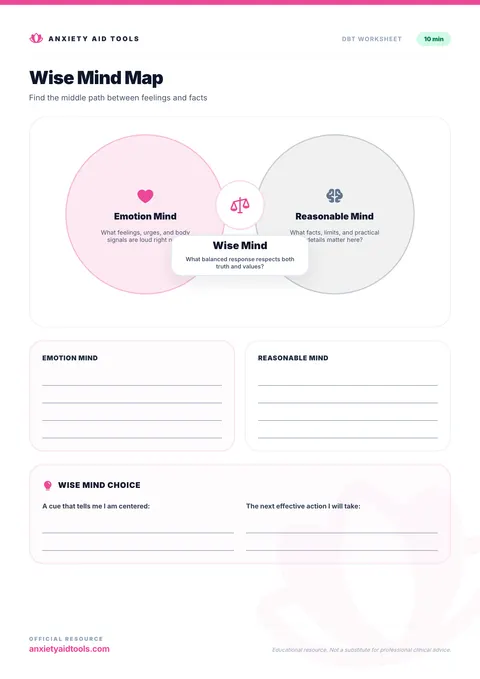
Wise Mind
Introduce the DBT states-of-mind model with a fillable exercise.
Interactive tools for in-session practice
Demonstrate a skill once in session, then send the link - clients can rehearse the exact same exercise at home.
Guided breathing
Paced visual breathing (box, 4-7-8 and more) for teaching diaphragmatic control.
5-4-3-2-1 grounding
A guided walkthrough of sensory grounding clients can run themselves mid-spiral.
Progressive muscle relaxation
Timed tense-and-release sequence - a reliable homework assignment for somatic tension.
Self-tests (GAD-7, PHQ-9 & more)
Standard screening instruments clients can complete before a first session - as conversation starters, not diagnoses.
What you're allowed to do
Link to any interactive tool or self-test from your practice website or client portal - free, no permission needed. Full printable worksheets and cheat sheets are available through our $19 lifetime Pro library, allowing you to print copies for clients, groups, and workshops. Please keep the source footer on printed sheets and don't resell the materials. If you'd like co-branded versions for your practice, get in touch below.
Common questions
Can I print these and hand them to clients?
Yes. Once downloaded via your Pro library, you are welcome to print copies for clients and hand them out in session or as homework. We only ask that you keep the small footer with the source on each sheet and do not resell the materials.
Do my clients need an account to use the interactive tools?
No. Every exercise - breathing, grounding, muscle relaxation, the self-tests - works instantly in the browser with no signup, no app install, and no personal data required.
Are the materials evidence-based?
The worksheets and handouts are built on established CBT and DBT frameworks - thought records, exposure hierarchies, distress tolerance and emotion regulation skills, behavioral activation. They are teaching aids, not a protocol, and are meant to support your clinical judgment.
Can I upload the PDFs to my client portal or practice website?
You can share downloaded PDFs directly with your own clients through a portal. If you post online, please link to the website page so clients can also access the interactive tools.
Is there a cost or a catch?
Core interactive tools and self-tests are free to use with clients in the browser with no accounts required. Printable worksheets, cheat sheets, and guided programs are part of our $19 one-time lifetime Pro library.
Want something for your practice we don't have yet?
Co-branded sheets, a topic that's missing, or a question about using the tools with clients - email us and a human will reply.
[email protected]Also see: for schools · for universities · for workplaces · all organizations