Tecniche di grounding
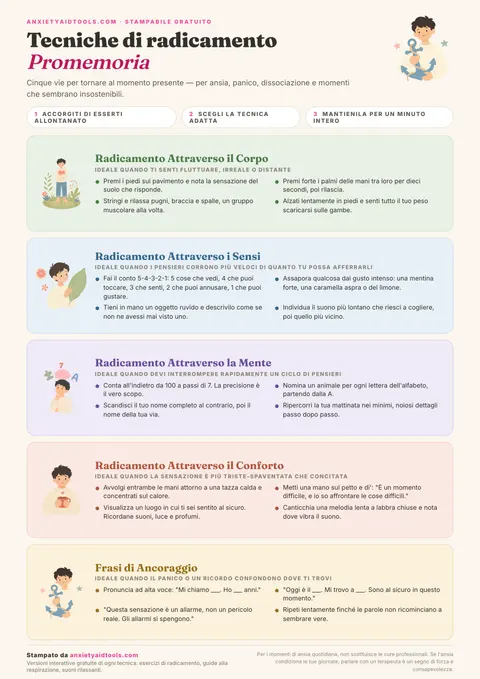
Venti tecniche di radicamento organizzate in cinque categorie: corpo, sensi, mente, conforto e frasi àncora. Ogni categoria indica quando è più efficace, per scegliere il tipo di radicamento adatto al tuo momento.
Sblocca i download con Pro
Scarica i formati PDF ad alta risoluzione (A4 e US Letter) e PNG pronti per la stampa per tutti i promemoria direttamente dalla tua dashboard.
I promemoria sono schede di riferimento rapido di una pagina progettate per essere stampate e tenute a portata di mano dove l'ansia ti colpisce. Disponibili nei formati A4, US Letter e PNG nella tua dashboard Pro.
Cosa contiene questo promemoria
Radicamento attraverso il corpo
Premere i piedi a terra, spinte con i palmi e contrazioni muscolari. Ideale quando ti senti fluttuare, irrealistico o distante da te stesso.
Radicamento attraverso i sensi
Il conto alla rovescia 5-4-3-2-1, sapori intensi, consistenze e ascolto vicino/lontano. Ideale quando i pensieri corrono più veloci di quanto tu possa afferrarli.
Radicamento attraverso la mente
Contare all'indietro di sette in sette, giochi con l'alfabeto e compitazione al contrario. Compiti mentali strutturati che interrompono subito i loop di pensieri.
Radicamento attraverso il conforto
Calore, frasi gentili verso di sé, visualizzazione del luogo sicuro e canticchiare. Ideale quando la sensazione è più di tristezza e paura che di agitazione frenetica.
Frasi àncora
Semplici fatti detti a voce: il tuo nome, la data, dove ti trovi e che sei al sicuro adesso. Pensate per panico e flashback che confondono il presente.
Come usarlo
- 1
Stampa la scheda o salva l'immagine PNG sul tuo smartphone.
- 2
Osserva quale categoria corrisponde al tuo stato: sensazione di fluttuare, spirale, loop mentale, vulnerabilità o disorientamento.
- 3
Scegli una tecnica da quella categoria e mantienila per almeno un minuto intero.
- 4
Se funziona solo in parte, cambia categoria anziché abbandonare del tutto il radicamento.
Domande frequenti
Cos'è il metodo di radicamento 5-4-3-2-1?
Consiste nel nominare 5 cose che vedi, 4 che puoi toccare, 3 che ascolti, 2 che puoi annusare e 1 che puoi gustare. Lavorare attraverso i sensi riporta l'attenzione al presente, togliendo all'ansia il carburante necessario per alimentarsi. È la tecnica più nota della scheda, ma non l'unica efficace.
Le tecniche di radicamento aiutano nella dissociazione?
Il radicamento corporeo e le frasi àncora sono le categorie più utili per chi sperimenta dissociazione o derealizzazione, poiché ristabiliscono il contatto con le sensazioni fisiche e con la realtà circostante. È consigliabile partire da queste piuttosto che dai giochi mentali.
Perché organizzare le tecniche di radicamento in categorie?
Perché stati ansiosi differenti rispondono a stimoli diversi. Una mente agitata spesso ha bisogno di un compito cognitivo strutturato, mentre sentirsi distaccati dalla realtà richiede input fisici intensi. Le categorie ti permettono di scegliere la tecnica mirata al tuo stato anziché procedere a caso.
Posso stampare questa guida per pazienti o studenti?
Sì. Una volta scaricata tramite la tua dashboard Pro, puoi stampare copie per pazienti e studenti. Ti chiediamo solo di mantenere il riferimento al piè di pagina.