דף עזר: הנחיות לכתיבה ויומן חרדה
שאלות והנחיות ממוקדות לכתיבה טיפולית ופריקת עומס רגשי. מסייע לארגן מחשבות סוערות, לחשוף דפוסים אוטומטיים ולהחזיר בהירות.
פתיחת הורדות עם Pro
הורידו פורמטים של PDF ברזולוציה גבוהה (A4 ו-US Letter) ו-PNG מוכנים להדפסה עבור כל דפי העזר ישירות מלוח הבקרה.
דפי עזר הם כרזות עזר מהירות של עמוד אחד שנועדו להדפסה ולשמירה במקום שבו החרדה פוגשת אתכם. זמינים בפורמטים A4, US Letter ו-PNG בלוח הבקרה של Pro.
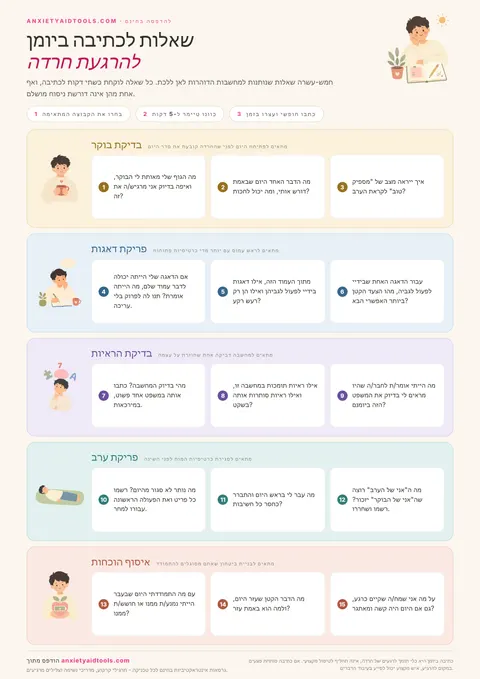
מה מופיע בדף עזר זה
בדיקת בוקר (Morning Check-In)
שלוש שאלות הפותחות את היום בתנאים שלכם: מה הגוף שלכם מאותת, מה באמת זקוק לכם היום, ואיך נראה 'טוב מספיק' עד שעת ארוחת הערב.
פריקת דאגות (The Worry Dump)
פריקה בשלושה שלבים לראש עמוס: תנו לדאגה להיכתב על פני עמוד שלם ללא עריכה, סננו את מה שנמצא באחריותכם לפעול לגביו מתוך כל הרעש, ובחרו בצעד הבא הקטן ביותר.
בדיקת הראיות (The Evidence Check)
בדיקה קצרה ברוח CBT למחשבה עקשנית אחת: כתבו אותה כמשפט בודד, שקלו את הראיות בעדה ונגדה, וענו עליה כפי שהייתם עונים לחבר קרוב.
פריקת ערב (The Evening Unload)
סגרו את הכרטיסיות הפתוחות לפני השינה: רשמו מה שטרם הושלם בצירוף צעד ראשון למחר, הבחינו במה שהתברר כלא חשוב, והשאירו פתק לעצמכם של מחר.
איסוף הוכחות והצלחות
ניצחונות והכרת תודה ללא חיוביות מאולצת: עם מה התמודדתם שבשנה שעברה הייתם נמנעים ממנו, מה עזר ולמה, ודבר אחד שאתם שמחים על קיומו.
איך להשתמש
- 1
הדפיסו והחזיקו בתוך מחברת הכתיבה או היומן האישי.
- 2
במצב עומס, בחרו שאלה אחת או שתיים וענו עליהן ברצף של 5-10 דקות כתיבה חופשית.
- 3
כתבו ללא עריכה עצמית או שיפוט על איכות הניסוח.
- 4
סיימו את הכתיבה בשאלה מקרקעת אחת או פעולה קטנה הבאה.
שאלות נפוצות
מדוע כתיבה מקלה על חרדה?
העברת מחשבות מהראש אל הדף מחייבת ארגון מילולי ועיבוד מוחי, מה שמוציא את המחשבות מהלולאה החזרתית ומפחית את עומס הזיכרון.
כמה זמן מומלץ לכתוב בכל פעם?
5 עד 10 דקות מספיקות בהחלט. אין צורך בכתיבה ממושכת שעלולה לעורר שקיעה יתרה בדאגות.
מה ההבדל בין פריקת מחשבות לחשיבת יתר (Rumination)?
פריקה בכתב בליווי שאלות מנחות מנתבת את המחשבה לעבר פתרון ועיבוד, בניגוד לחשיבת יתר שרק משחזרת את המצוקה.
איך מורידים את דף ההנחיות?
קובצי PDF ו-PNG באיכות מלאה זמינים להורדה בלוח הבקרה למנויי Pro.