דף עזר: עיוותי חשיבה נפוצים
מדריך לזיהוי עשרה מלכודות חשיבה נפוצות מתוך ה-CBT, כולל דוגמאות יומיומיות ושאלות מנחות לאיתגור מחשבות אוטומטיות.
פתיחת הורדות עם Pro
הורידו פורמטים של PDF ברזולוציה גבוהה (A4 ו-US Letter) ו-PNG מוכנים להדפסה עבור כל דפי העזר ישירות מלוח הבקרה.
דפי עזר הם כרזות עזר מהירות של עמוד אחד שנועדו להדפסה ולשמירה במקום שבו החרדה פוגשת אתכם. זמינים בפורמטים A4, US Letter ו-PNG בלוח הבקרה של Pro.
מה מופיע בדף עזר זה
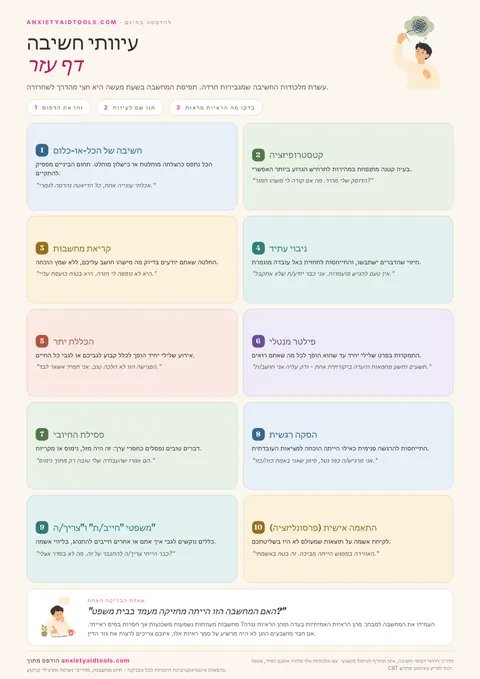
חשיבה של הכל או כלום (All-or-Nothing)
הכל נתפס כהצלחה מוחלטת או ככישלון גמור, ללא שטח ביניים. הכרטיס מצמיד את ההגדרה לדוגמה יומיומית כדי שתוכלו לזהות אותה מהר.
קטסטרופיזציה (Catastrophizing)
בעיה קטנה אחת מתגלגלת ככדור שלג ישר לסוף הגרוע ביותר האפשרי. דפוס חרדה קלאסי, מודגם עם תחושה גופנית.
קריאת מחשבות (Mind Reading)
החלטה שאתם יודעים בדיוק מה מישהו חושב עליכם ללא כל הוכחה. הדוגמה מראה כיצד אי-החזרת שלום הופכת לסיפור שלם.
ניבוי עתיד (Fortune Telling)
חיזוי שהדברים ישתבשו והתייחסות לתחזית כעובדה גמורה, מה שמשכנע אתכם בשקט לוותר מראש על הניסיון.
הכללת יתר (Overgeneralization)
רגע רע בודד הופך לכלל קבוע עליכם או על כל חייכם, בדרך כלל בליווי מילים כמו 'תמיד' ו-'אף פעם'.
פילטר מנטלי (Mental Filter)
התמקדות בפרט שלילי יחיד עד שהוא כל מה שאתם רואים, בעוד תשעים ותשעה פרטים חיוביים נעלמים מהעין.
ביטול החיובי (Discounting the Positive)
דברים טובים איכשהו אף פעם לא נחשבים: זה היה רק מזל, נימוס או מקריות. מלכודת שמונעת מהצלחות להיקלט באמת.
חשיבה רגשית (Emotional Reasoning)
התייחסות לרגש כאילו היה הוכחה לגבי המציאות: "אני מרגיש/ה את זה, לכן זה חייב להיות נכון".
הצהרות 'חייב' ו-'צריך' (Should Statements)
חוקים נוקשים לגבי האופן שבו אתם או אחרים צריכים להתנהג, כאשר אשמה היא קנס הפיגורים בכל פעם שהכלל מופר.
התאמה אישית (Personalization)
לקיחת אשמה על תוצאות שמעולם לא היו בשליטתכם, מאירועים חברתיים מביכים ועד למצבי רוח של אנשים אחרים.
תיקון בשאלה אחת (The One-Question Fix)
שאלת מסגור מחדש בסגנון בית משפט: האם המחשבה הזו הייתה מחזיקה מעמד כעדות בבית משפט? שקלו את הראיות בעד ונגד לפני שתאמינו לה.
איך להשתמש
- 1
הדפיסו את הדף והניחו ליד שולחן העבודה או יומן המחשבות.
- 2
כשמבחינים במחשבה מכאיבה, בדקו האם היא מתאימה לאחד מעיוותי החשיבה ברשימה.
- 3
שאלו: "איזה עיוות פועל כאן? מהן העובדות האובייקטיביות בפועל?"
- 4
נסחו מחדש מחשבה מאוזנת וריאליסטית יותר.
שאלות נפוצות
מהם עיוותי חשיבה (Cognitive Distortions)?
הרגלי חשיבה אוטומטיים ומוטים שאינם תואמים את המציאות האובייקטיבית, אשר מגבירים חרדה, דיכאון ותסכול.
האם זיהוי העיוות מספיק כדי לשנות את ההרגשה?
הזיהוי הוא הצעד הראשון המפחית את האחיזה של המחשבה. שילוב שאלות איתגור וניסוח אלטרנטיבה מאוזנת מייצר שינוי רגשי מתמשך.
האם מחשבות חיוביות הן המטרה של CBT?
לא. המטרה ב-CBT אינה חשיבה חיובית מאולצת, אלא חשיבה מציאותית, מדויקת וגמישה.
איך מורידים את דף העזר להדפסה?
קובצי הדפסה באיכות גבוהה בפורמטי PDF ו-PNG זמינים בלוח הבקרה למנויי Pro.