
Assertiveness Test: Is It Hard to Speak Up?
Do you hold back when you need to speak up? Take this assertiveness test to explore your comfort with boundaries and saying no.
Who Is This Test For?
This assertiveness test is for anyone who wants to understand how comfortable they are expressing themselves and whether difficulty with assertiveness may be affecting their relationships and well-being.
- People who struggle to say no, set boundaries, or express disagreement
- Those who avoid conflict, difficult conversations, or standing up for themselves
- Anyone who feels taken advantage of or unable to ask for what they need
- People exploring the connection between communication style and self-respect
Please read each statement and choose the option that best describes how much it is like you.
Most people seem to be more aggressive and assertive than I am.
I have hesitated to make or accept dates because of shyness.
If a salesperson has gone to considerable trouble to show me merchandise that is not quite suitable, I have a difficult time saying no.
When the food served at a restaurant is not done to my satisfaction, I complain about it to the waiter or waitress.
When I am asked to do something, I insist upon knowing why.
I am careful to avoid hurting other people's feelings, even when I feel that I have been injured.
There are times when I look for a good, vigorous argument.
I strive to get ahead as well as most people in my position.
To be honest, people often take advantage of me.
I enjoy starting conversations with new acquaintances and strangers.
I often don't know what to say to people I find attractive.
I will hesitate to make phone calls to business establishments and institutions.
I would rather apply for a job or for admission to a college by writing letters than by going through with personal interviews.
I find it embarrassing to return merchandise.
If a close and respected relative were annoying me, I would smother my feelings rather than express my annoyance.
I have avoided asking questions for fear of sounding stupid.
During an argument, I am sometimes afraid that I will get so upset that I will shake all over.
If a famed and respected lecturer makes a comment which I think is incorrect, I will have the audience hear my point of view as well.
I avoid arguing over prices with clerks and salespeople.
When I have done something important or worthwhile, I manage to let others know about it.
I am open and frank about my feelings.
If someone has been spreading false and bad stories about me, I see him or her as soon as possible and have a talk about it.
I often have a hard time saying no.
I tend to bottle up my emotions rather than make a scene.
I complain about poor service in a restaurant and elsewhere.
When I am given a compliment, I sometimes just don't know what to say.
If a couple near me in a theater or at a lecture were conversing rather loudly, I would ask them to be quiet or to take their conversation elsewhere.
Anyone attempting to push ahead of me in a line is in for a good battle.
I am quick to express an opinion.
There are times when I just can't say anything.
Good To Know
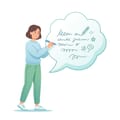
Use the DESC Script
Structure difficult conversations with DESC: Describe (the situation), Express (your feelings), Specify (what you want), Consequences (positive outcomes). This framework keeps communication clear and respectful.
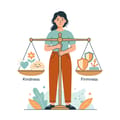
Practice Saying No
Start with small requests and simple refusals: 'I can't help with that' or 'That doesn't work for me.' You don't need elaborate excuses. Your needs are valid without extensive justification.

Distinguish Feelings from Facts
Assertiveness doesn't require being right—it requires being honest. You can express that you feel upset about something without proving the other person was wrong. 'I felt hurt when...' is more assertive than 'You shouldn't have...'
Understanding the RAS Assertiveness Test
T he Rathus Assertiveness Schedule (RAS) was developed by Spencer Rathus in 1973 as a 30-item self-report measure of assertiveness. It was designed to assess behavior across a range of situations including expressing annoyance, asking questions, receiving compliments, dealing with salespeople, and handling interpersonal conflict.
The RAS includes items describing both assertive behaviors and non-assertive behaviors. Unlike some assertiveness measures that focus only on one direction, the RAS captures the full spectrum from extreme non-assertiveness to appropriate assertiveness. This version presents scores as 'assertiveness difficulty' rather than the original signed total.
This test uses a concern-based scoring where higher scores indicate more difficulty with assertiveness. Low-assertiveness items (1,2,3,6,9,11,12,13,14,15,16,17,19,23,24,26,30) are scored directly (5-0), while assertive/aggressive items (4,5,7,8,10,18,20,21,22,25,27,28,29) are reverse-scored (0-5). This presentation helps identify when assertiveness difficulties may be limiting well-being.
Assertiveness is distinct from aggression and passivity. Assertive communication expresses your needs, opinions, and feelings directly and respectfully, while respecting others. Passive communication suppresses your needs; aggressive communication violates others' rights. Healthy assertiveness balances self-respect with respect for others.
Frequently Asked Questions
How is this test scored?
This version presents 'assertiveness difficulty' scores. Items describing low assertiveness (1,2,3,6,9,11,12,13,14,15,16,17,19,23,24,26,30) are scored directly (5-0). Items describing assertive/aggressive behaviors (4,5,7,8,10,18,20,21,22,25,27,28,29) are reverse-scored (0-5). Higher total scores indicate more difficulty with assertiveness.
Isn't being assertive the same as being aggressive?
No. Assertiveness respects both your rights and others' rights. Aggression violates others' rights to get what you want. Passivity violates your own rights by not expressing your needs. Assertiveness finds the middle ground—expressing yourself directly and respectfully.
Can assertiveness be learned?
Yes. Assertiveness is a set of skills that can be developed through practice. Many people learn assertiveness through therapy, communication skills training, or self-help resources. It often feels uncomfortable at first but becomes more natural with experience.
Why do I struggle with assertiveness?
Common reasons include fear of rejection, desire to please others, past experiences of punishment for speaking up, low self-esteem, cultural or family messages about being 'nice,' and anxiety about conflict. Understanding your specific barriers helps address them.
How can I become more assertive?
Start with small, low-stakes situations. Use 'I' statements to express your feelings and needs. Practice saying no to minor requests. Notice that feared consequences usually don't happen. Consider assertiveness training or therapy for structured skill-building.
More Tests
This self-assessment is for education and self-reflection. It is not a diagnosis and cannot replace a professional evaluation. Difficulty with assertiveness can overlap with social anxiety, low self-esteem, and other concerns. If your results reflect significant distress or impairment, consider speaking with a qualified mental health professional.