
Panic Severity Self-Check (PDSS-SR-Informed)
A 7-question self-check based on the symptom domains measured by the Panic Disorder Severity Scale – Self-Report, designed to help you reflect on past-week panic severity without using the copyrighted official item text.
Who Is This Self-Check For?
This PDSS-SR-informed self-check is for adults who want a structured way to reflect on recent panic symptoms and their impact.
- Adults who have panic attacks or panic-like episodes
- People who worry about when the next attack might happen
- Anyone avoiding places, activities, or sensations because of panic fear
- People preparing to discuss panic symptoms with a healthcare provider
Over the past week, how much have panic symptoms affected you in these areas?
How often did you have panic attacks or shorter panic-like episodes?
How intense or upsetting did those episodes feel while they were happening?
How much did you worry about having another panic episode?
How much did fear of panic lead you to avoid places or situations?
How much did you avoid activities that can bring on panic-like body sensations?
How much did panic symptoms interfere with work, school, home tasks, or responsibilities?
How much did panic symptoms interfere with your social life or relationships?
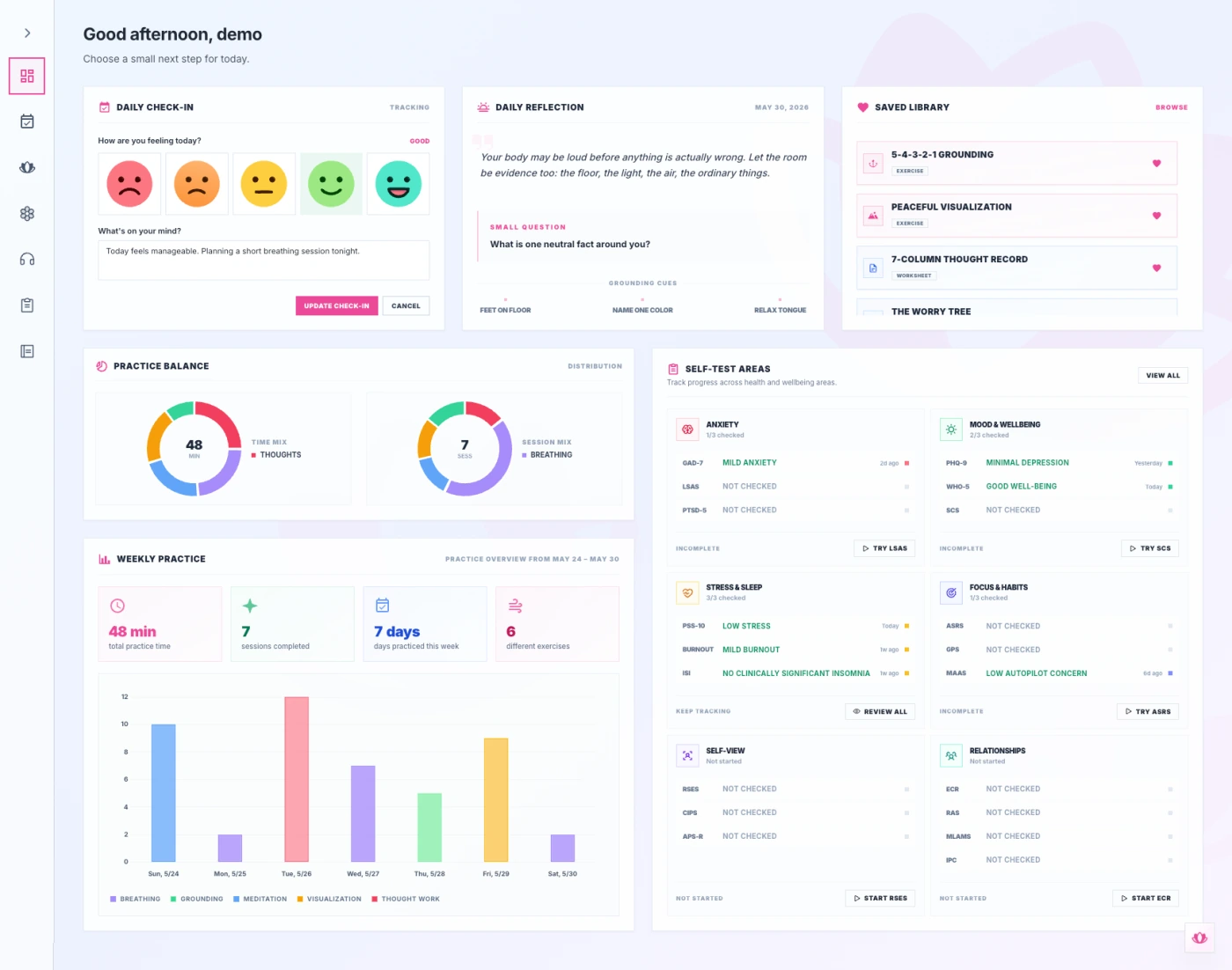
Turn self-test results into a clearer next step.
Save your results, watch changes over time, and find relevant tools when you need a next step.
- Save your history
- Track changes over time
- Find relevant tools
Save this result so your next score has context.
Good To Know

Panic Peaks and Passes
Panic symptoms can feel endless, but they usually rise, peak, and settle. During a surge, choose one anchor, reduce frantic checking, and let time show your body that the alarm can pass.

Reduce Fear of Body Sensations
A racing heart, dizziness, warmth, or breath changes can become scary when you interpret them as danger. Gentle, planned practice with safe sensations can help your brain relearn that discomfort is not the same as threat.

Avoidance Keeps Panic Going
Skipping places or activities can feel protective, but it often strengthens panic fear. Gradual, supported re-entry into avoided situations helps rebuild confidence without forcing yourself too far too fast.
Understanding This Panic Severity Self-Check
T he Panic Disorder Severity Scale – Self-Report (PDSS-SR) is a researched 7-item measure of panic disorder severity. The validated scale scores each item from 0 to 4 for a total range of 0 to 28.
This page is PDSS-SR-informed, not the official PDSS-SR. Because the official item wording is copyrighted, these questions are paraphrased around the same broad symptom domains: episode frequency, distress, anticipatory fear, avoidance, body-sensation fear, role interference, and social interference.
The severity bands shown here are practical interpretation bands for this self-check, informed by published PDSS research including Furukawa and colleagues. They are not official diagnostic cutoffs and cannot determine whether you have panic disorder.
Panic symptoms can feel dangerous even when they are part of a false alarm response. Effective care often focuses on understanding the panic cycle, reducing fear of body sensations, and gradually reversing avoidance. Share concerning or persistent results with a qualified professional.
Frequently Asked Questions
Is this the official PDSS-SR?
No. This self-check is informed by the symptom domains measured by the Panic Disorder Severity Scale – Self-Report, but it does not reproduce the official item wording and should not be treated as the official instrument.
Can this diagnose panic disorder?
No. It can help you reflect on panic severity over the past week, but only a qualified healthcare or mental health professional can diagnose panic disorder after a full assessment.
Why does it ask about avoidance?
Avoidance often keeps panic going. Avoiding places, activities, or body sensations can bring short-term relief, but it teaches your brain that those situations are dangerous and can make your life smaller over time.
What should I do if my score is high?
Consider sharing your result with a clinician, especially if panic is limiting work, home life, travel, exercise, or relationships. If symptoms feel medically unusual or you feel unsafe, seek urgent medical or crisis support.
How often should I repeat this self-check?
Because it asks about the past week, weekly or every few weeks can be useful when tracking patterns. More frequent use may be less meaningful and can become another form of reassurance checking for some people.
More Tests
Sources & References
- Shear MK et al. Multicenter collaborative Panic Disorder Severity Scale. Am J Psychiatry. 1997;154(11):1571-1575.
- Houck PR et al. Reliability and validity of the self-report version of the Panic Disorder Severity Scale. Depress Anxiety. 2002;15(4):183-185.
- Furukawa TA et al. Evidence-based guidelines for interpretation of the Panic Disorder Severity Scale. Depress Anxiety. 2009;26(10):922-929.
This is a PDSS-SR-informed self-check, not the official Panic Disorder Severity Scale – Self-Report, not a diagnostic instrument, and not a substitute for professional evaluation. The bands are practical severity ranges for this tool, not official diagnostic cutoffs. If you have chest pain, fainting, new or unusual physical symptoms, feel unsafe, or may harm yourself, seek urgent help immediately.