10 min

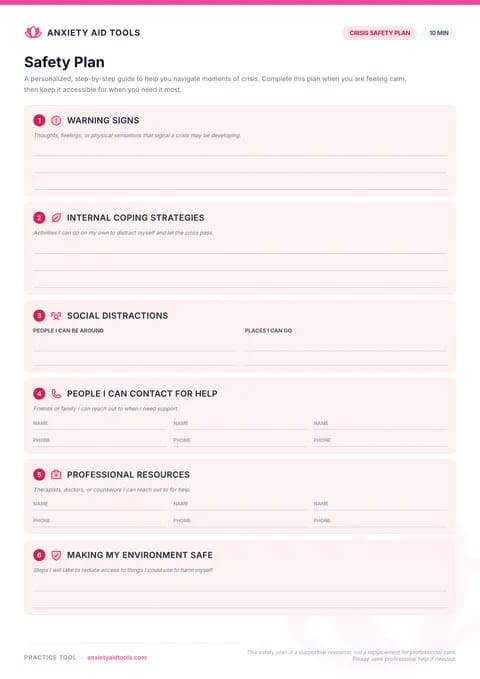
Safety Plan

A personalized crisis intervention tool based on the Stanley-Brown Safety Planning Intervention to help you navigate moments of emotional crisis.

Crisis & Safety
Beginner
10 min

The Safety Plan is an evidence-based crisis intervention tool developed by Dr. Barbara Stanley and Dr. Gregory Brown. It is designed to be completed when you are feeling calm and kept accessible for moments when you need support. Having a written plan reduces the need to think clearly during a crisis.

This worksheet guides you through six essential steps: recognizing your personal warning signs, identifying internal coping strategies, listing social distractions, noting people you can contact for help, documenting professional resources, and planning ways to make your environment safer.

Research has shown that safety planning significantly reduces suicidal behavior and is now a standard component of evidence-based suicide prevention. The plan works by creating a personalized sequence of coping strategies and resources to use before and during a crisis.

We recommend completing this worksheet with a mental health professional if possible, and sharing your completed plan with someone you trust. Remember: reaching out for help is a sign of strength, not weakness.
Safety Plan

Safety Plan

A personalized crisis intervention tool based on the Stanley-Brown Safety Planning Intervention to help you navigate moments of emotional crisis.

When to Use

  • When you want to prepare in advance for potential moments of crisis
  • After experiencing suicidal thoughts or urges to self-harm
  • During therapy as part of a comprehensive safety strategy
  • When you notice your mental health declining and want a plan in place

How to Use

  1. 1
    Complete when calm: Fill out the plan during a stable period, not during a crisis
  2. 2
    Identify warning signs: List the thoughts, feelings, or situations that signal trouble
  3. 3
    List coping strategies: Write activities you can do alone to distract yourself
  4. 4
    Note social supports: Include people and places that help you feel better
  5. 5
    Add emergency contacts: List friends, family, and professionals you can call
  6. 6
    Keep it accessible: Store the plan somewhere you can easily find it when needed

Research & References

  • Stanley, B., & Brown, G. K. (2012). Safety Planning Intervention: A Brief Intervention to Mitigate Suicide Risk. Cognitive and Behavioral Practice, 19(2), 256-264.