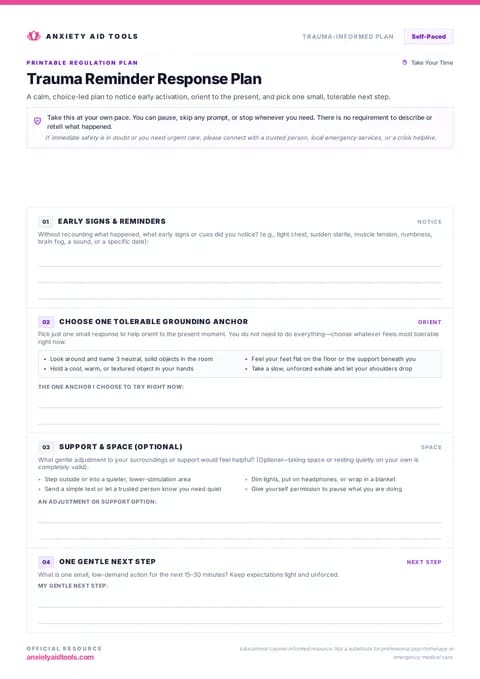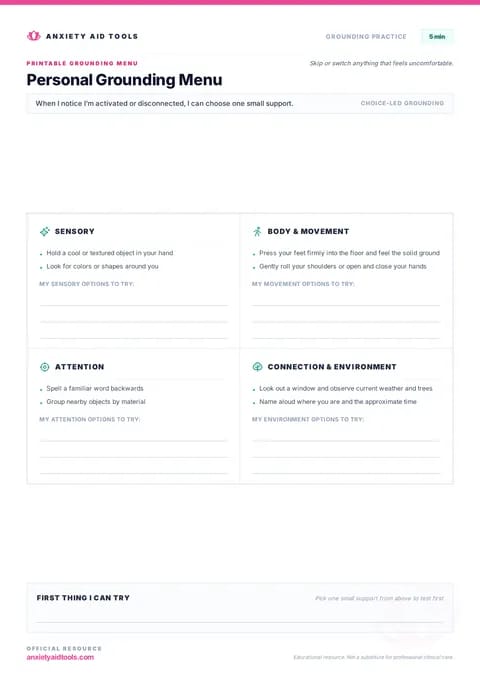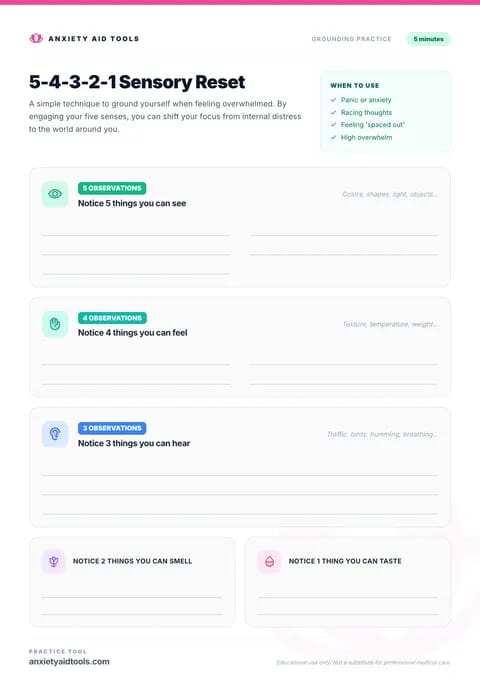
The 5-4-3-2-1 Sensory Reset is a powerful grounding tool used to help you manage moments of intense anxiety or panic. Rather than letting your mind stay trapped in a cycle of worry, fear, or dissociation, this technique helps you reconnect with your immediate surroundings through small, manageable steps. By looking at each preceding step, you can see where things began to escalate and what you can do differently next time.
Our 5-4-3-2-1 Grounding worksheet includes psychoeducation about how sensory awareness interrupts the body's stress response and a dedicated section for practice. The fill-in portion is designed to be used multiple times, allowing you to address various instances where you feel overwhelmed.
After completing the exercise, use the worksheet to help you spot patterns and identify which sensory anchors work best for you. Oftentimes, it’s easier to make changes earlier in the chain of events, rather than waiting until you reach a breaking point.
Additionally, you may choose to reflect on the outcome of using the grounding skill compared to previous experiences where anxiety took over. This can help build motivation to keep practicing, even during times when you feel ambivalent about making changes.