AnxietyAidTools

Evidence-based mental health tools
15 min

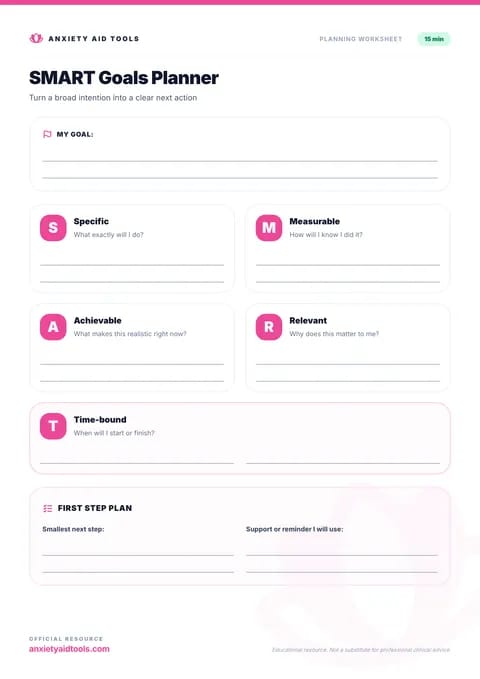
SMART Goals Planner

A structured planning worksheet that turns broad intentions into specific, realistic, and time-bound next steps.

Self-Discovery
Beginner
15 min
SMART Goals Planner

When to Use

  • When a goal feels vague or overwhelming
  • Before starting a new habit
  • During behavioral activation planning
  • When motivation needs a clear structure

How to Use

  1. 1
    Write one goal in plain language at the top.
  2. 2
    Make the goal specific by naming the exact behavior.
  3. 3
    Define how you will measure completion or progress.
  4. 4
    Check that the goal is realistic for your current resources.
  5. 5
    Connect the goal to a value or meaningful reason.
  6. 6
    Set a start time and choose the smallest next step.

Download PDF and PNG with Pro

Preview this worksheet for free. Pro unlocks downloadable PDF and PNG versions, fillable worksheets, and saved progress.

Unlock Pro

The SMART Goals Planner helps convert vague intentions into goals that are easier to start and review. SMART stands for Specific, Measurable, Achievable, Relevant, and Time-bound. Each part reduces ambiguity, which can lower avoidance and make follow-through feel more manageable.

This worksheet breaks one goal into five focused prompts, then asks for the smallest next step and a support cue. It is useful for therapy homework, habit change, behavioral activation, exposure practice, study routines, or any plan that needs clarity before action.

Keep the goal small enough that it can survive a difficult day. A strong SMART goal is not about perfection; it is about creating a clear path you can test, learn from, and adjust without abandoning the larger direction.
Research & References

  • Doran, G. T. (1981). There's a S.M.A.R.T. way to write management's goals and objectives. Management Review, 70(11), 35-36.