15 min

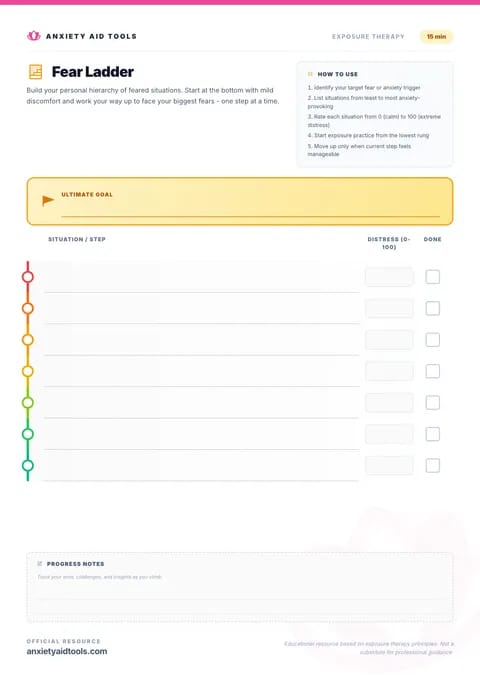
Fear Ladder

A systematic exposure hierarchy to help you face your fears gradually, building confidence one step at a time.

Anxiety & Worry
Beginner
15 min

The Fear Ladder (also called an Exposure Hierarchy) is a cornerstone of evidence-based anxiety treatment. It works by breaking down a large, overwhelming fear into smaller, manageable steps. By starting with situations that cause only mild discomfort and gradually working your way up, you train your brain to tolerate anxiety without avoidance.

This worksheet helps you create a personalized roadmap for gradual exposure. Each 'rung' represents a specific situation or challenge, ranked by how much distress it causes (0-100). The color-coded ladder visually represents your journey from comfort (green) to your ultimate goal (red).

Research shows that repeated, controlled exposure to feared situations is one of the most effective ways to reduce anxiety long-term. The key is to move at your own pace and celebrate small wins along the way.

Use this worksheet in collaboration with a therapist, or as a self-guided tool if you're working on manageable fears. Remember: courage isn't the absence of fear - it's taking action despite it.
Fear Ladder

Fear Ladder

A systematic exposure hierarchy to help you face your fears gradually, building confidence one step at a time.

When to Use

  • When avoidance is limiting your daily life or opportunities
  • To prepare for phobias like public speaking, flying, or social situations
  • When working with a therapist on exposure therapy for anxiety or OCD
  • To build confidence by tackling challenges in a structured way

How to Use

  1. 1
    Identify your fear: Choose one specific anxiety or phobia to work on
  2. 2
    Brainstorm situations: List 7-10 scenarios related to this fear, from easiest to hardest
  3. 3
    Rate distress: For each situation, estimate how anxious it would make you (0-100)
  4. 4
    Arrange by difficulty: Place them on the ladder from lowest (bottom) to highest (top)
  5. 5
    Start at the bottom: Practice the easiest step repeatedly until it feels manageable
  6. 6
    Climb gradually: Only move up when the current rung no longer causes significant anxiety

Research & References

  • Foa, E. B., & Kozak, M. J. (1986). Emotional processing of fear: Exposure to corrective information. Psychological Bulletin, 99(1), 20-35.