10 min

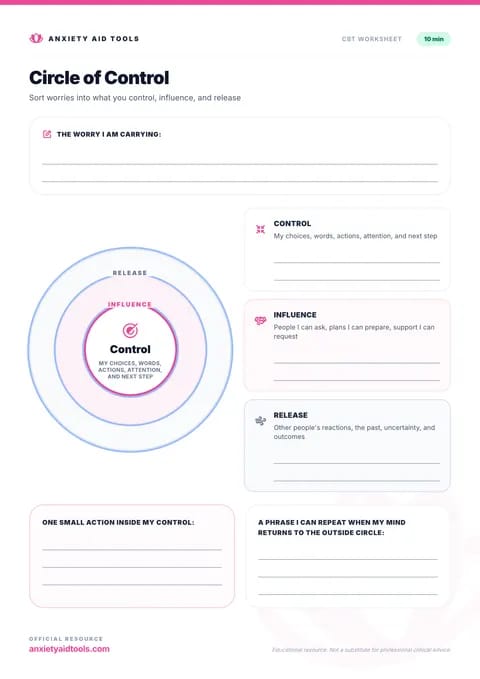
Circle of Control

A practical CBT-inspired worksheet for sorting worries into what you can control, influence, and release.

Anxiety & Worry
Beginner
10 min

The Circle of Control helps reduce anxious overthinking by separating a stressful situation into three zones: what you directly control, what you may influence, and what sits outside your reach. This shift encourages problem-solving where action is possible and gentle disengagement where repeated worry is not useful.

The worksheet gives you a clear visual map with concentric circles, reflection prompts, and writing space for a specific next step. Instead of debating every possible outcome, you identify the part of the situation that belongs to your choices, attention, preparation, or communication.

Use it repeatedly with everyday worries. Over time, the practice builds cognitive flexibility: your mind learns to return from broad uncertainty to concrete, values-based action. Pair it with grounding or breathing if you notice your body staying activated after the planning step.
Circle of Control

Circle of Control

A practical CBT-inspired worksheet for sorting worries into what you can control, influence, and release.

When to Use

  • When worries feel too broad to solve
  • Before reacting to uncertain outcomes
  • When you need a clear next step
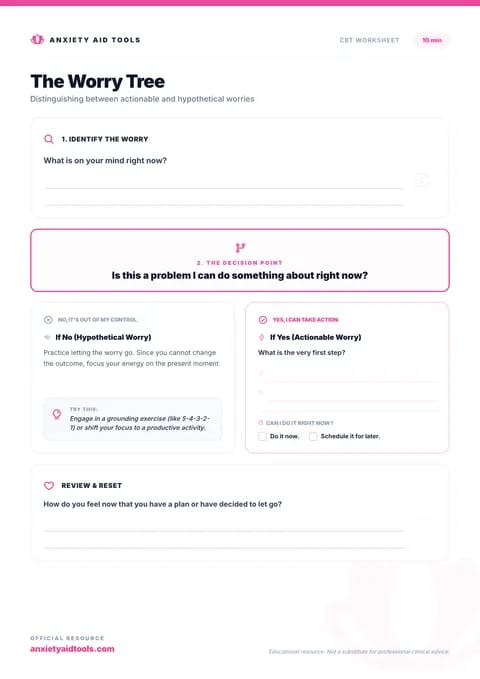
  • After using the Worry Tree worksheet

How to Use

  1. 1
    Write one specific worry at the top of the page.
  2. 2
    Place direct choices and behaviors in the control circle.
  3. 3
    List requests, preparation, and communication in the influence circle.
  4. 4
    Name outcomes, opinions, and past events in the release circle.
  5. 5
    Choose one small action from the control circle to complete next.
  6. 6
    Practice your release phrase when your mind returns to outside concerns.

Research & References

  • Covey, S. R. (1989). The 7 Habits of Highly Effective People. Free Press.
  • Centre for Clinical Interventions (2022). What? Me Worry!? Managing Worries. CCI Self-Help Resources.