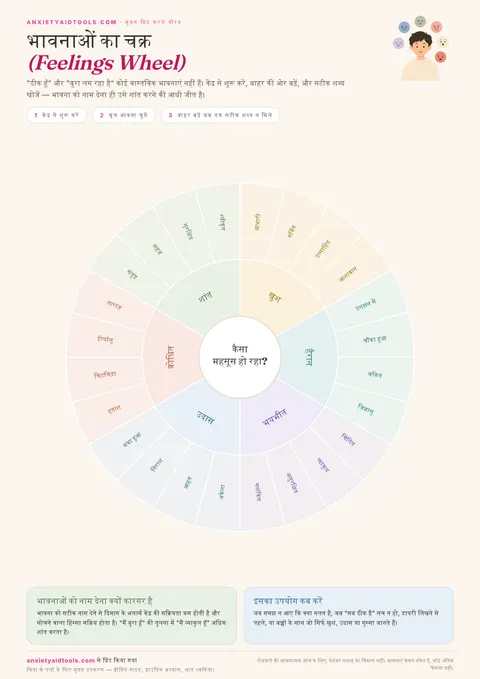
भावनाओं का चक्र चीट शीट
एक व्यवस्थित भावनाओं का चक्र जो आपको प्राथमिक भावनाओं से सूक्ष्म भावनाओं तक ले जाता है। अपनी भावना को सटीक नाम देने में मदद करता है।
Pro के साथ डाउनलोड अनलॉक करें
सीधे अपने डैशबोर्ड से सभी चीट शीट्स के लिए उच्च-रिज़ॉल्यूशन PDF (A4 और US Letter) और प्रिंट-रेडी PNG प्रारूप डाउनलोड करें।
चीट शीट्स एक पृष्ठ के त्वरित संदर्भ पोस्टर हैं जिन्हें प्रिंट करने और वहां रखने के लिए डिज़ाइन किया गया है जहां आपको चिंता होती है। आपके Pro डैशबोर्ड में A4, US Letter और PNG प्रारूपों में उपलब्ध हैं।
इस चीट शीट में क्या है
मुख्य भावनाएं
केंद्र में 6 बुनियादी भावनाएं: खुशी, उदासी, क्रोध, भय, घृणा, और आश्चर्य।
मध्यम स्तर की भावनाएं
बुनियादी भावनाओं की विशिष्ट शाखाएं, जो अहसास को और स्पष्ट करती हैं।
सूक्ष्म भावनाएं
बाहरी परत में 72 सटीक भावनाएं, जो यह समझने में मदद करती हैं कि आप वास्तव में क्या महसूस कर रहे हैं।
नाम देकर शांत करने की विधि
भावना को सटीक नाम देने से मस्तिष्क का एमिग्डाला शांत होता है।
इसका उपयोग कैसे करें
- 1
शीट को प्रिंट करें या फोन में रखें।
- 2
केंद्र की 6 बुनियादी भावनाओं से शुरुआत करें और पहचानें कि कौन सी आपके सबसे करीब है।
- 3
बाहर की ओर बढ़ें जब तक आपको सबसे सटीक शब्द न मिल जाए।
- 4
उस शब्द को बोलें: "मैं इस समय ___ महसूस कर रहा हूँ"।
अक्सर पूछे जाने वाले प्रश्न
भावनाओं का चक्र कैसे मदद करता है?
सटीक भावनात्मक शब्दावली मस्तिष्क को भावना को संसाधित करने में मदद करती है, जिससे तनाव कम होता है।
मैं इस चीट शीट को कैसे डाउनलोड और प्रिंट करूँ?
आप इस पेज पर चीट शीट का ऑनलाइन पूर्वावलोकन देख सकते हैं। उच्च-रिज़ॉल्यूशन प्रिंट करने योग्य PDF (A4 और US Letter) और PNG प्रारूप Anxiety Aid Tools Pro के साथ आपके डैशबोर्ड में उपलब्ध हैं।
क्या बच्चे इसका उपयोग कर सकते हैं?
हाँ, यह बच्चों को अपनी भावनाओं को व्यक्त करने और समझने में मदद करने का एक बेहतरीन उपकरण है।
क्या ये कौशल थेरेपी का विकल्प हैं?
नहीं। ये रोजमर्रा के चिंताजनक पलों के लिए साक्ष्य-आधारित स्व-सहायता टूल्स हैं। यदि चिंता आपके दैनिक जीवन को प्रभावित कर रही है, तो किसी थेरेपिस्ट से परामर्श लें।