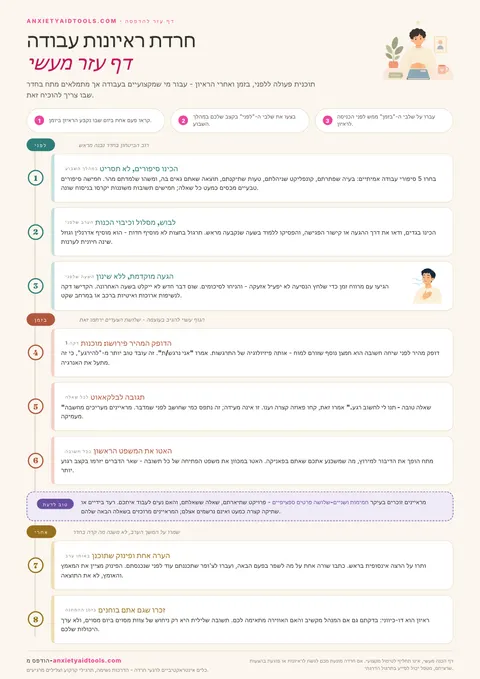
דף עזר: חרדה מראיונות עבודה
מדריך מעשי להורדת לחץ וחרדה לפני ובמהלך ראיונות עבודה. כלים להפחתת עוררות פיזית, מענה בטוח לשאלות מאתגרות ושיפור הביטחון העצמי.
פתיחת הורדות עם Pro
הורידו פורמטים של PDF ברזולוציה גבוהה (A4 ו-US Letter) ו-PNG מוכנים להדפסה עבור כל דפי העזר ישירות מלוח הבקרה.
דפי עזר הם כרזות עזר מהירות של עמוד אחד שנועדו להדפסה ולשמירה במקום שבו החרדה פוגשת אתכם. זמינים בפורמטים A4, US Letter ו-PNG בלוח הבקרה של Pro.
מה מופיע בדף עזר זה
לפני הראיון
הכינו חמישה סיפורי עבודה קונקרטיים במקום חמישים תשובות מתוסרטות, קבעו שעת עצירה קשיחה להכנה בלילה שלפני, והקדישו את השעה האחרונה להגעה מוקדמת במקום לשינון לחוץ.
במהלך הראיון
מסגרו מחדש את הדופק המואץ כמוכנות, השתמשו ב-"שאלה מצוינת, תנו לי לחשוב רגע" כמהלך מלא ביטחון, והאטו את המשפט הראשון שלכם בכוונה.
אחרי הראיון
רשמו הערה אחת על מה לשפר, ואז צאו לפינוק מתוכנן. ללא לולאות שחזור מעיקות בראש - הראיון הוא גם בדיקה שלכם האם הם מתאימים לכם.
עובדת פרופורציה
מראיינים זוכרים חום אנושי ושניים-שלושה פרטים ספציפיים. הם מדרגים מועמדים כהרבה פחות לחוצים מכפי שהמועמדים מרגישים מבפנים.
איך להשתמש
- 1
הדפיסו וקראו בבוקר הראיון ובהמתנה בחדר הקבלה או מול הזום.
- 2
הכינו מראש 2 דוגמאות מפתח מרכזיות במקום לנסות לזכור עשרות פרטים.
- 3
השתמשו במשפט ההשהיה כשיש שאלה מורכבת.
- 4
אחרי הראיון, התמקדו במה שעשיתם היטב במקום לחפש פגמים.
שאלות נפוצות
האם המראיין רואה שאני לחוץ/ה?
לרוב המראיינים מבחינים בהרבה פחות סימני לחץ ממה שנדמה לכם. בנוסף, רמת התרגשות מסוימת נתפסת כאכפתיות ורצינות.
מה לעשות אם יש לי בלקאאוט באמצע תשובה?
עצרו, חייכו ואמרו: "פרח לי חוט המחשבה לרגע, תנו לי לחזור לנקודה העיקרית". זה מפגין ביטחון ואותנטיות.
איך להרגיע רעידות בידיים או בקול?
הצמידו כפות רגליים לרצפה, האטו את קצב הדיבור וקחו נשימה עמוקה בין משפטים.
איך מורידים את דף העזר?
קובצי PDF ו-PNG באיכות מלאה זמינים להורדה בלוח הבקרה למנויי Pro.