AnxietyAidTools

Evidence-based mental health tools
Self-Paced / Optional

Sensory Regulation Planner

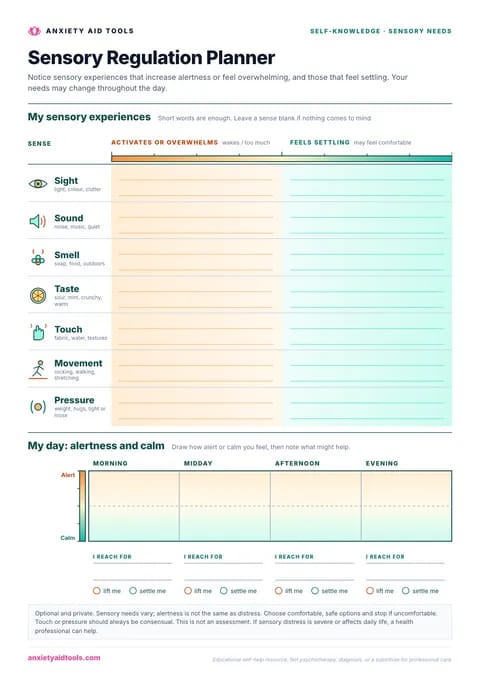
Notice sensory experiences that increase alertness or feel overwhelming, and those that feel settling. Your needs may change throughout the day.

Self-Discovery
Beginner
Self-Paced / Optional
Sensory Regulation Planner
Pro download PDF & PNG

Overview

Print for offline use during therapy or self-practice

Printable PDF and PNG formats are also available in your dashboard

When to Use

  • When you want to understand which sensory experiences suit you.
  • When your sensory needs change across the day.
  • When you want to plan comfortable options for alertness or settling.

How to Use

  1. 1
    For any of the seven senses, note experiences that activate or overwhelm and those that feel settling.
  2. 2
    Compare the two columns; leave any sense blank if you wish.
  3. 3
    Draw your alertness and calm across the day and note what might help.
  4. 4
    Choose what you might reach for to feel more alert or settled, and stop anything uncomfortable.

Sensory needs differ between people and can change during the day. An experience may increase alertness, feel overwhelming or feel settling; alertness is not itself distress.

The grid has seven senses, including movement and pressure, with space to compare activating and settling experiences. A day curve and reach-for choices help you notice what might suit different times.

Optional and private. Sensory needs vary; alertness is not the same as distress. Choose comfortable, safe options and stop if uncomfortable. Touch or pressure should always be consensual. This is not an assessment. If sensory distress is severe or affects daily life, a health professional can help.
Research & References

  • Leicestershire Partnership NHS Trust. Strategies for supporting sensory processing needs.