AnxietyAidTools

Evidence-based mental health tools
Self-Paced / Optional

Rest or Avoidance Check

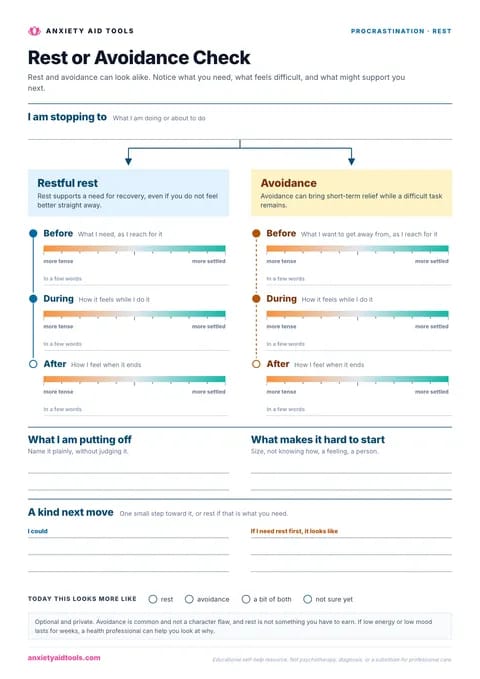
Rest and avoidance can look alike. Notice what you need, what feels difficult, and what might support you next.

Self-Discovery
Beginner
Self-Paced / Optional
Rest or Avoidance Check
Pro download PDF & PNG

Overview

Print for offline use during therapy or self-practice

Printable PDF and PNG formats are also available in your dashboard

When to Use

  • When you want to reflect on what you need before or after a pause.
  • When a task feels difficult to start and you want to understand why.
  • When you want to choose a small step or more rest without self-judgment.

How to Use

  1. 1
    Name what you are doing or about to do and consider what you need.
  2. 2
    Use either or both paths to note feelings before, during and after; mark the scales if helpful.
  3. 3
    Write what you may be putting off and what makes starting difficult.
  4. 4
    Choose a kind next move or describe rest you need first; mark rest, avoidance, both or not sure if useful.

Rest can support recovery without making you feel better immediately, and avoiding a difficult task can bring short-term relief. Either, both or neither description may fit; you do not have to earn rest.

The two paths invite reflection on needs and feelings before, during and after an activity. Note anything being postponed and what makes it hard, then choose a kind next move or rest first; uncertainty is allowed.

Optional and private. Avoidance is common and not a character flaw, and rest is not something you have to earn. If low energy or low mood lasts for weeks, a health professional can help you look at why.