AnxietyAidTools

Evidence-based mental health tools
Self-Paced / Optional

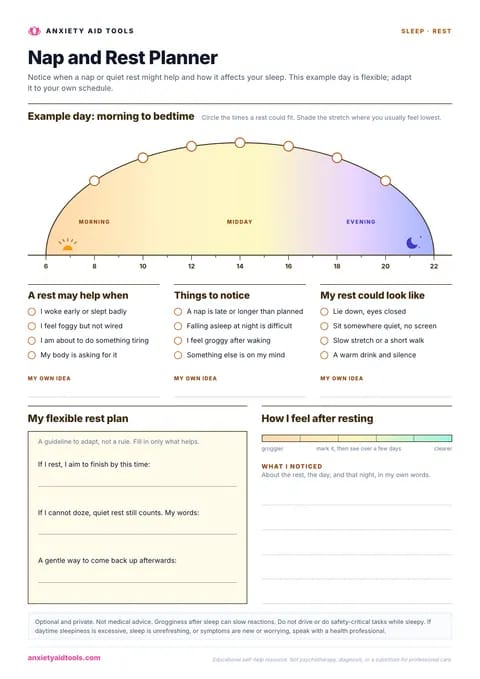
Nap and Rest Planner

Notice when a nap or quiet rest might help and how it affects your sleep. This example day is flexible; adapt it to your own schedule.

Sleep
Beginner
Self-Paced / Optional
Nap and Rest Planner
Pro download PDF & PNG

Overview

Print for offline use during therapy or self-practice

Printable PDF and PNG formats are also available in your dashboard

When to Use

  • When planning a nap or quiet break.
  • When exploring how daytime rest relates to nighttime sleep.
  • When you want to plan how to return to activity after a rest and notice how you feel.

How to Use

  1. 1
    Circle suitable times on the example day and shade your usual low-energy period.
  2. 2
    Choose a comfortable form of rest or write your own.
  3. 3
    Complete any parts of the flexible plan: when to finish, a quiet alternative to dozing, and a gentle way back to activity.
  4. 4
    Record how you feel afterward and notice patterns over several days.

A quiet break can be restorative even when you do not fall asleep. Notice patterns over several days rather than treating one nap or a fixed schedule as a rule.

Use the example day to find possible rest windows, then choose a comfortable way to pause and a gentle way to return to activity. Record how you feel afterward and whether your nighttime sleep changes.

Optional and private. Not medical advice. Grogginess after sleep can slow reactions; allow time to become alert before driving or other safety-critical tasks. If daytime sleepiness is excessive, sleep is unrefreshing, or symptoms are new or worrying, speak with a health professional. Do not drive or perform safety-critical tasks while sleepy.
Research & References

  • Kingston and Richmond NHS Foundation Trust. Sleep hygiene.
  • CDC NIOSH. Sleep inertia.