Driving Anxiety Cheat Sheet
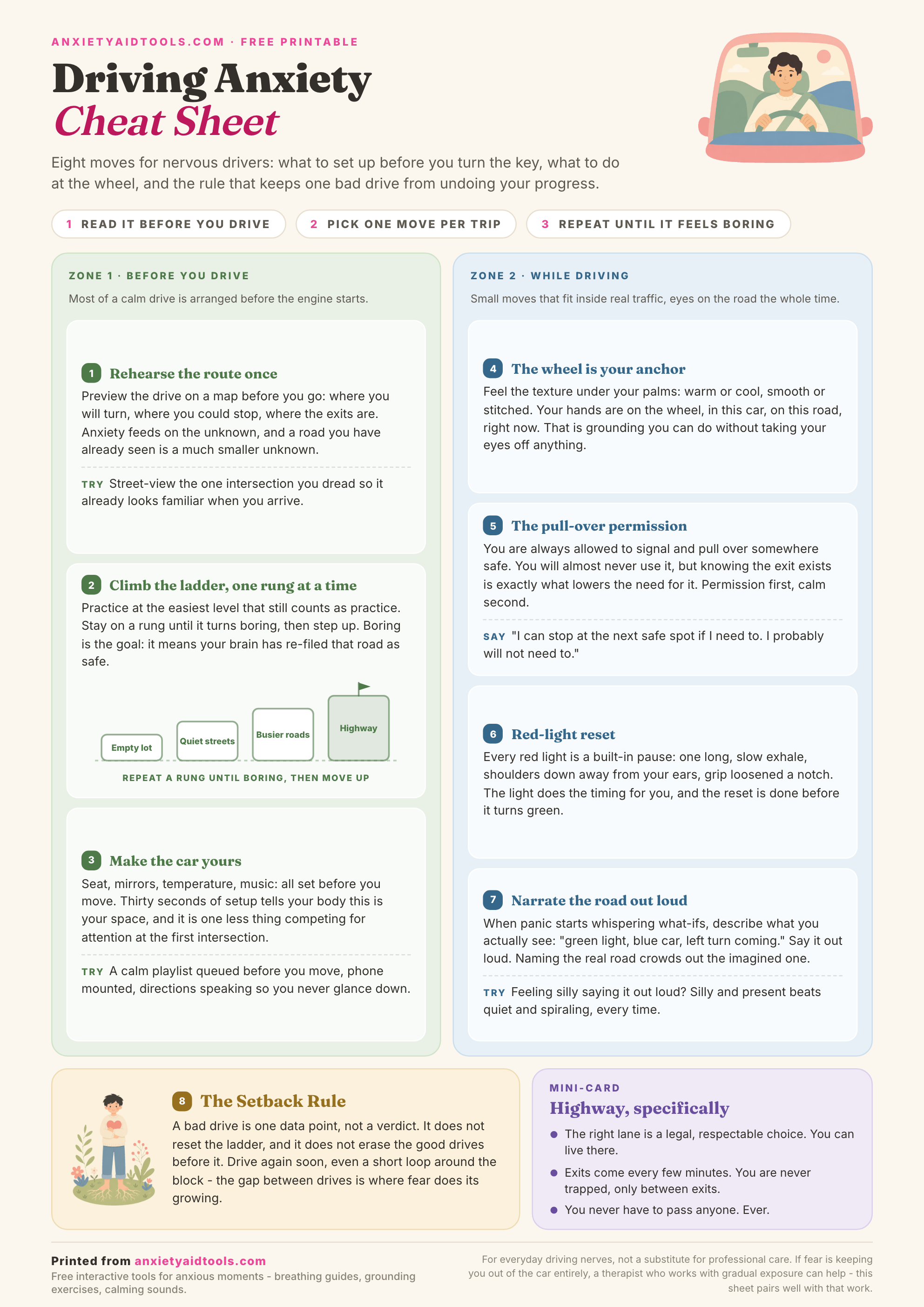
Eight moves for nervous drivers: what to set up before you turn the key, what to do at the wheel, and the rule that keeps one bad drive from undoing your progress. Includes a graded practice ladder and a highway-specific mini-card.
Free download · PDF & PNG
Prints on one page - A4 and US Letter versions included
These cheat sheets are free for personal use, and therapists, counselors, and teachers are welcome to print and hand them out. Please keep the footer with the source on. If you share online, a link back to this page helps other people find the free version.
What's on this cheat sheet
Before you drive
Rehearse the route once so the drive is a smaller unknown, climb the practice ladder from empty lot to highway one rung at a time, and set seat, mirrors, and music before you move.
While driving
Use the wheel as a grounding anchor, keep the pull-over permission in your back pocket, run a long-exhale reset at every red light, and narrate what you see out loud when what-ifs start.
The setback rule
A bad drive is one data point, not a verdict. It does not reset the ladder - drive again soon, because the gap between drives is where fear grows.
Highway mini-card
Three permissions for highway driving: the right lane is a legal choice you can live in, exits come every few minutes, and you never have to pass anyone.
How to use it
- 1
Print the sheet and keep it in the glovebox or door pocket.
- 2
Before a drive, do the zone 1 moves: preview the route and set up the car.
- 3
Pick one zone 2 move per trip and practice it until it feels automatic.
- 4
After a hard drive, read the setback rule and schedule the next short drive soon.
Frequently asked questions
How do I get over driving anxiety?
Gradual, repeated practice is the approach with the best track record. Build a ladder from easiest to hardest - sitting in the parked car, an empty lot, quiet streets, busier roads, then highway - and stay on each rung until it feels boring before stepping up. Boring is the signal that your brain has re-filed that situation as safe. Short frequent drives beat rare long ones, and if you are stuck on a rung, a therapist who works with gradual exposure can help you move.
What if I panic while driving?
You have a concrete exit at all times: signal, pull over somewhere safe, and let the wave peak and fall - it usually drops within a few minutes. Panic feels overwhelming, but it does not remove your ability to steer, brake, or signal; anxious drivers pull over safely every day. Once the wave drops, resume the drive if you can, even just to the next block, so the trip ends with you driving. Knowing this plan exists is exactly what makes you less likely to need it.
Why am I suddenly afraid of driving?
Sudden driving anxiety usually has a trigger: an accident or near miss, a panic attack that happened to strike in the car, a stressful life season, or simply a long gap without driving. Your brain tagged the car as a threat and now sounds the alarm early. The tag fades the same way it formed - through experience - so short, easy, frequent drives teach your alarm system the road is manageable again. If it appeared with dizziness or vision changes, check with a doctor first.
How do I deal with driving anxiety on highways?
Start with permissions: the right lane is a legal, respectable place to live, exits come every few minutes so you are never trapped, and you never have to pass anyone. Then make the first trips small - one exit to the next at a quiet time of day, back roads home if you want. Preview the route so you know your exits, and treat each one-exit hop as a ladder rung: repeat it until boring, then add another exit.