Anger Test: Is Anger Getting in Your Way?
Is anger harming your relationships or peace of mind? Take this anger test to understand your reactions and what may be driving them.
Who Is This Test For?
This self-test is for adults who want a brief, non-diagnostic reflection on anger reactions and irritability using public-domain IPIP items.
- People who want to understand how easily irritation or anger shows up
- Anyone noticing tension, impatience, or mood shifts during stress
- People who want language for anger patterns without blame or diagnosis
- Anyone looking for a short self-check before practicing calming or repair skills
Rate how accurately each statement describes you in general. There are no good or bad answers; choose the option that best fits your usual pattern.
Get angry easily.
Rarely get irritated.
Get irritated easily.
Seldom get mad.
Get upset easily.
Am not easily annoyed.
Am often in a bad mood.
Keep my cool.
Lose my temper.
Rarely complain.
Good To Know

Body Cues Come First
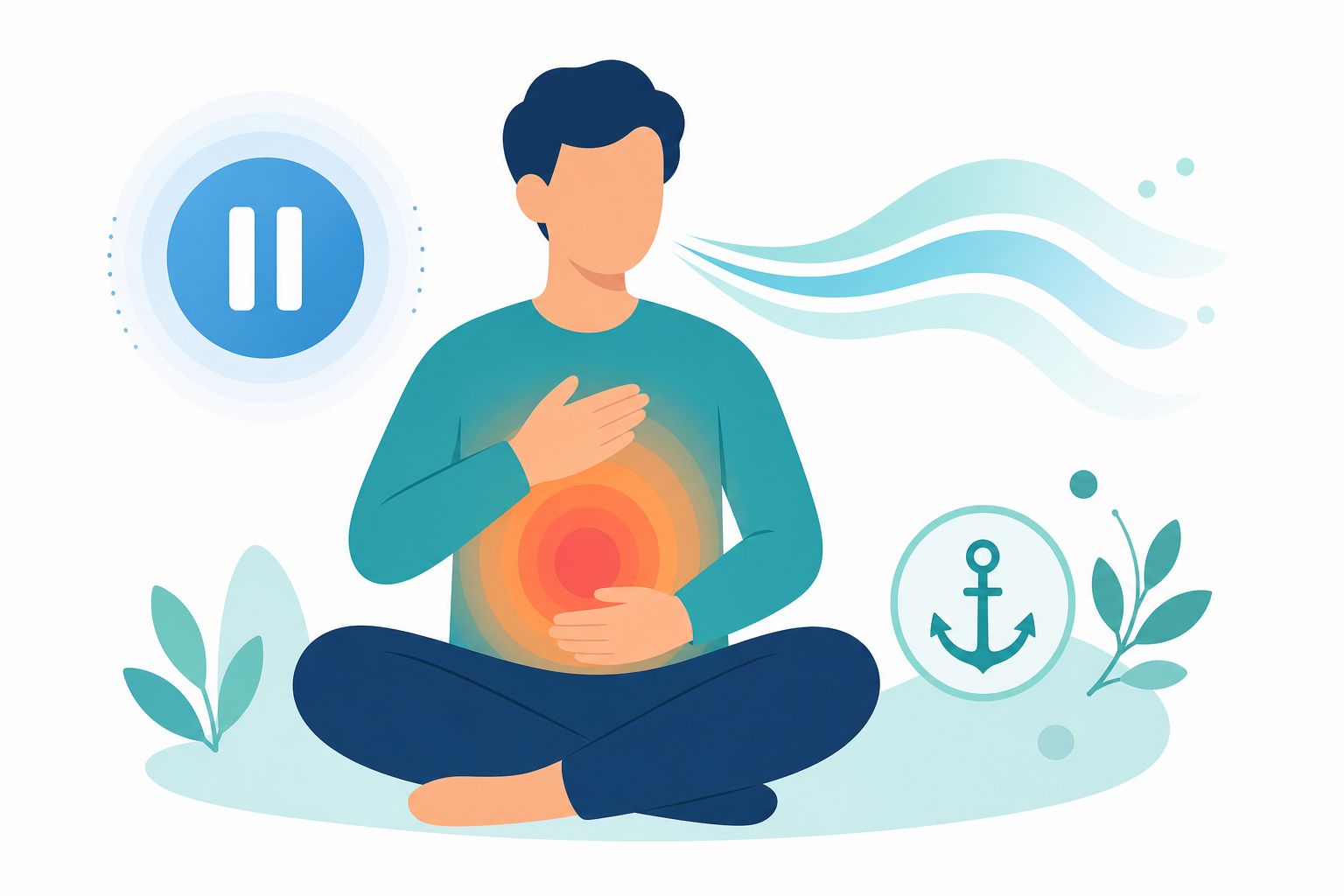
Notice the first physical signs: tight jaw, heat, fast speech, clenched hands, or a narrowed focus. Treat those cues as the moment to pause, breathe, or step away briefly.

Pause Before Repair
When irritation has already shaped your tone, wait until your body is calmer before trying to fix the conversation. A short pause often makes repair more effective.

Track Triggers Without Blame
Write down what happened, what you felt in your body, what you needed, and what helped. Look for patterns without turning the exercise into self-criticism or fault-finding.
Understanding the IPIP Anger Score
T his Anger Test uses 10 public-domain IPIP items from the Angry Hostility, or N2 Anger, facet. The items ask about general patterns of anger, irritation, mood, and keeping cool.
Each response is scored from 1 to 5. Positively keyed items keep that value, while reverse-keyed items are scored in the opposite direction. The total score ranges from 10 to 50, with higher scores reflecting more anger reactivity on this self-check.
The low, mild, moderate, and high bands are practical reflection ranges, not clinical cutoffs. They are meant to help you notice patterns and choose next steps, not to label your personality or diagnose a disorder.
Anger can be shaped by sleep, stress, pain, workload, relationships, culture, and recent conflict. A single score should be read as a snapshot, especially if you are taking it during an unusually difficult week.
Frequently Asked Questions
Is this an anger disorder diagnosis?
No. This is a public-domain IPIP personality-facet self-check for anger reactivity and irritability patterns. It does not diagnose any mental health condition.
Is this a violence-risk assessment?
No. The score does not assess dangerousness, aggression risk, or whether someone may harm another person. If anyone is in immediate danger, use emergency or crisis support now.
How is the score calculated?
Each answer maps to 1 through 5. Positively keyed items use that score directly, while reverse-keyed items use the opposite scoring direction. The final total ranges from 10 to 50.
Are the result bands official IPIP cutoffs?
No. The bands are practical reflection ranges for this page: 10-20 low, 21-30 mild, 31-40 moderate, and 41-50 high. They are not diagnostic or normative cutoffs.
What should I do if my score is high?
Start with body-based calming skills, track triggers without blaming yourself or others, and consider professional support if anger feels hard to control, harms relationships, or creates safety concerns.
More Tests

This self-test is for education and reflection only. It is not a diagnosis, clinical assessment, or violence-risk assessment. Seek professional support if anger feels hard to control, harms relationships, or creates safety concerns. If anyone is in immediate danger, use emergency or crisis support now.