Guia Rápido de Sintomas de Ansiedade
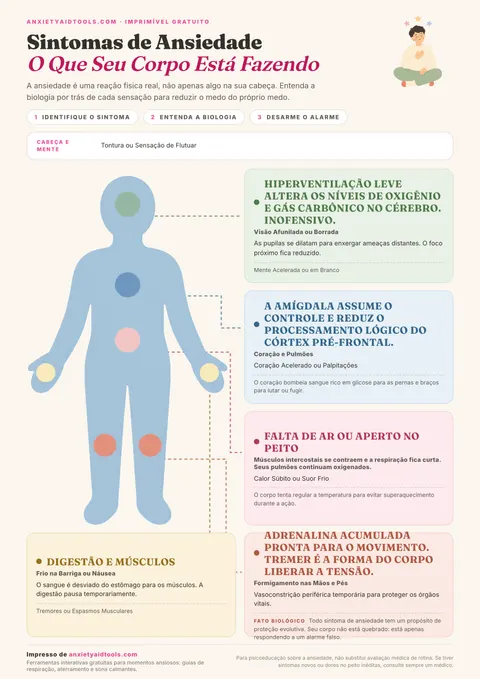
Um mapa completo e tranquilizador da fisiologia da ansiedade: entenda exatamente por que seu corpo reage com coração acelerado, falta de ar, tonturas e tremores durante o estresse.
Desbloqueie downloads com o Pro
Baixe formatos PDF em alta resolução (A4 e US Letter) e PNG prontos para impressão de todos os guias diretamente do seu painel.
Os guias rápidos são cartazes de consulta rápida de uma página, criados para serem impressos e guardados onde a ansiedade costuma surgir. Disponíveis nos formatos A4, US Letter e PNG no seu painel Pro.
O que inclui este guia rápido
Cabeça e Visão
A explicação biológica para tonturas leves, sensação de cabeça oca, visão afunilada e pensamentos acelerados.
Coração e Respiração
Por que o coração dispara, o peito aperta e a respiração parece curta, embora seus pulmões estejam recebendo oxigênio suficiente.
Sistema Digestivo
A razão evolutiva pela qual o estômago embrulha, a boca fica seca ou surge náusea quando o sangue é redirecionado aos músculos.
Músculos e Extremidades
Entenda por que ocorrem tremores, formigamentos nas mãos e pés, rigidez no pescoço e sensação de calafrio ou calor súbito.
O Lembrete Biológico
Seu corpo não está com defeito: ele está executando uma resposta natural de proteção a um alarme falso.
Como usar
- 1
Imprima e guarde em um local visível para consultar quando surgirem sensações físicas incômodas.
- 2
Ao sentir o coração acelerar ou a respiração encurtar, consulte o sintoma correspondente para entender sua função protetora.
- 3
Lembre-se: compreender a causa biológica reduz o medo do próprio medo.
- 4
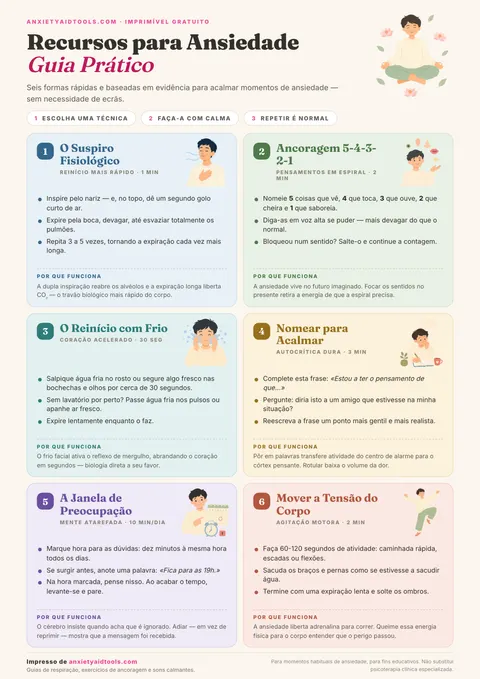
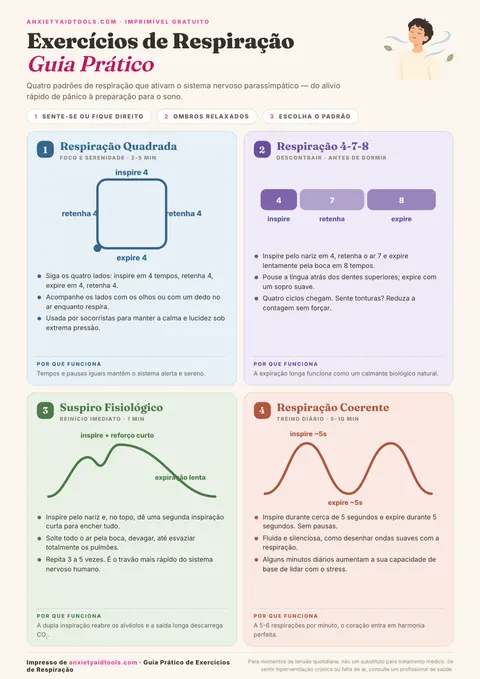
Combine esta leitura com exercícios de respiração e aterramento.
Perguntas frequentes
Por que a ansiedade causa tantos sintomas físicos estranhos?
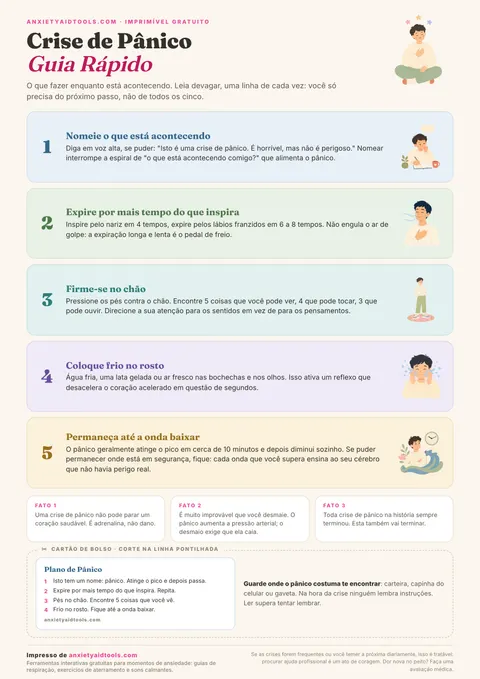
A ansiedade ativa a resposta ancestral de luta ou fuga. O sistema nervoso simpático despeja adrenalina na corrente sanguínea, acelerando os batimentos cardíacos para enviar oxigênio aos grandes músculos, dilatando as pupilas e desacelerando a digestão. Todos esses sintomas são mecanismos de sobrevivência física, e não sinais de perigo iminente.
É possível que um sintoma de ansiedade seja perigoso para a saúde?
Em um corpo saudável, as reações corporais da ansiedade são desconfortáveis, mas temporárias e inofensivas. O coração acelerado durante uma crise, por exemplo, é equivalente a um esforço de exercício físico moderado.
Como baixar este guia de sintomas em PDF?
Você pode ler o conteúdo completo aqui na página. Os arquivos em alta definição nos formatos PDF (A4 e US Letter) e PNG prontos para impressão estão disponíveis para download através do painel Pro.
Quando os sintomas físicos exigem avaliação médica?
Sintomas inéditos, dor opressiva no peito com irradiação para o braço, falta de ar grave sem histórico prévio ou episódios de desmaio devem ser sempre avaliados por um médico para segurança e diagnóstico adequado.