Physical Symptoms of Anxiety, Explained
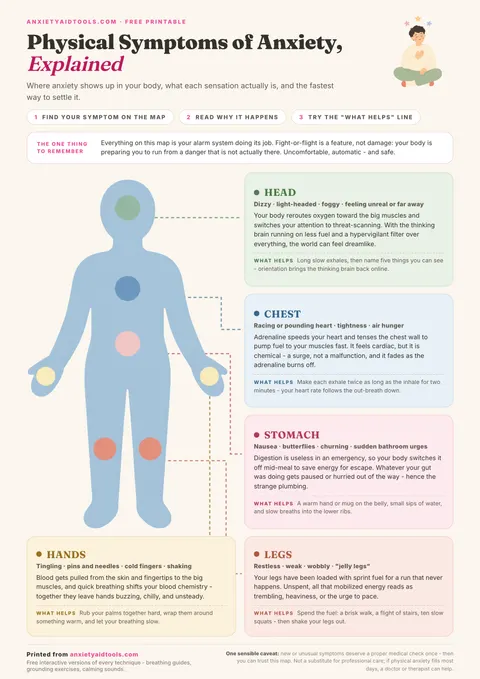
A body map of where anxiety shows up physically, what each sensation actually is, and the fastest way to settle it. Every symptom on the sheet is your alarm system doing its job - uncomfortable, automatic, and safe.
Unlock Downloads with Pro
Download high-resolution PDF (A4 & US Letter) and print-ready PNG formats for all cheat sheets directly from your dashboard.
Cheat sheets are one-page quick reference posters designed to be printed and kept where anxiety finds you. Available in A4, US Letter, and PNG formats in your Pro dashboard.
What's on this cheat sheet
Head
Dizziness, fog, and unreal feelings: oxygen rerouted to big muscles plus a hypervigilant attention filter.
Chest
Racing heart, tightness, and air hunger: adrenaline speeding fuel to your muscles. It feels cardiac, it is chemical.
Stomach
Nausea, butterflies, and sudden bathroom urges: digestion switched off to save energy for escape.
Hands
Tingling, cold fingers, and shaking: blood pulled toward the big muscles and breathing chemistry shifts.
Legs
Restless, weak, jelly legs: sprint fuel loaded for a run that never happens.
How to use it
- 1
Find your symptom on the map.
- 2
Read what is actually happening in your body - accurate beats scary.
- 3
Try the "what helps" line for that body zone.
- 4
Get new or unusual symptoms medically checked once, then trust the map.
Frequently asked questions
What are the physical symptoms of anxiety?
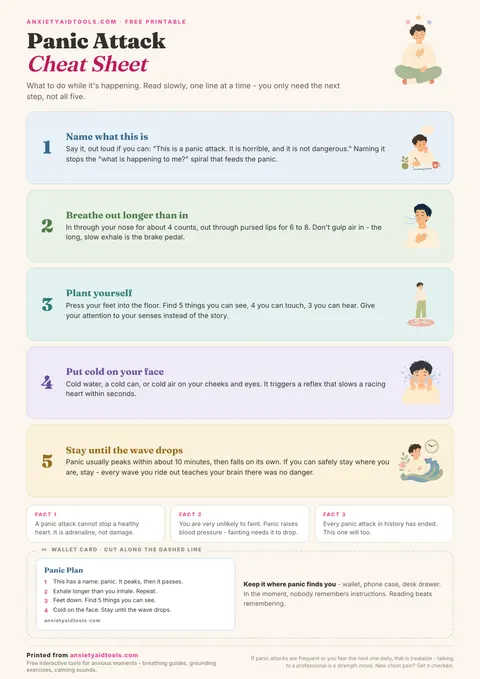
The most common ones are a racing or pounding heart, chest tightness, dizziness or a foggy unreal feeling, nausea and stomach churning, tingling or cold hands, shaking, and restless or weak legs. They are all downstream of one thing: adrenaline preparing your body to run from a danger that is not actually there.
Can anxiety cause real physical symptoms?
Yes, completely real ones. Anxiety triggers genuine physiological changes: your heart genuinely races, digestion genuinely pauses, blood genuinely moves toward the big muscles. The symptoms are real; the danger they are announcing usually is not.
How do I know it's anxiety and not my heart?
New or unusual chest symptoms deserve one proper medical check - that is non-negotiable and sensible, not anxious. After a clear check, the pattern becomes the clue: sensations that arrive with stress, shift with your breathing, and fade as you calm point to anxiety, not cardiac trouble.
Why does anxiety upset my stomach?
Digestion is expensive, and in an emergency your body cancels expensive projects. Under threat, the gut gets switched off mid-meal or hurried out of the way, which produces nausea, butterflies, cramping, and the famous pre-event bathroom urge. It reverses as the alarm passes.