AnxietyAidTools

Evidence-based mental health tools
10 min

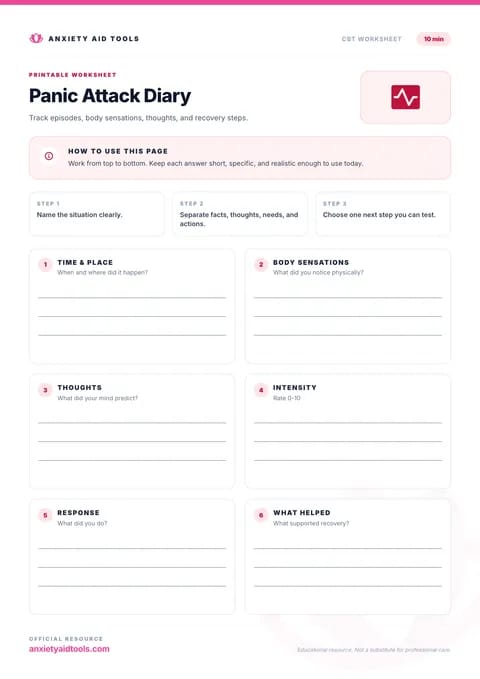
Panic Attack Diary

Track episodes, body sensations, thoughts, and recovery steps.

Anxiety & Worry
Beginner
10 min
Panic Attack Diary

When to Use

  • After panic to record clear details
  • When episodes feel random or confusing
  • Before therapy to bring useful examples
  • When tracking which coping steps help

How to Use

  1. 1
    Complete the diary after the episode has passed.
  2. 2
    Write concrete details rather than long explanations.
  3. 3
    List body sensations and thoughts separately.
  4. 4
    Rate the peak intensity from 0 to 10.
  5. 5
    Record what you did and what helped recovery.
  6. 6
    Review several entries for patterns, not one entry in isolation.

Download PDF and PNG with Pro

Preview this worksheet for free. Pro unlocks downloadable PDF and PNG versions, fillable worksheets, and saved progress.

Unlock Pro

The Panic Attack Diary helps you record panic episodes without relying on memory afterward. Panic can feel sudden and confusing, so a short structured record makes patterns easier to see.

This worksheet captures the situation, body sensations, thoughts, intensity, response, and recovery steps. Over several entries, you can notice repeated cues and identify which responses make recovery easier.

Use the diary after an episode, once you are steady enough to write. The goal is not to analyze perfectly. The goal is to collect clear information that can guide coping practice and therapy conversations.
Research & References

  • Barlow, D. H. (2002). Anxiety and Its Disorders: The Nature and Treatment of Anxiety and Panic. Guilford Press.
  • Margraf, J., Taylor, C. B., Ehlers, A., Roth, W. T., & Agras, W. S. (1990). Panic attacks in the natural environment. Journal of Nervous and Mental Disease, 178(9), 558-565.