Шпаргалка: Аффирмации для детей
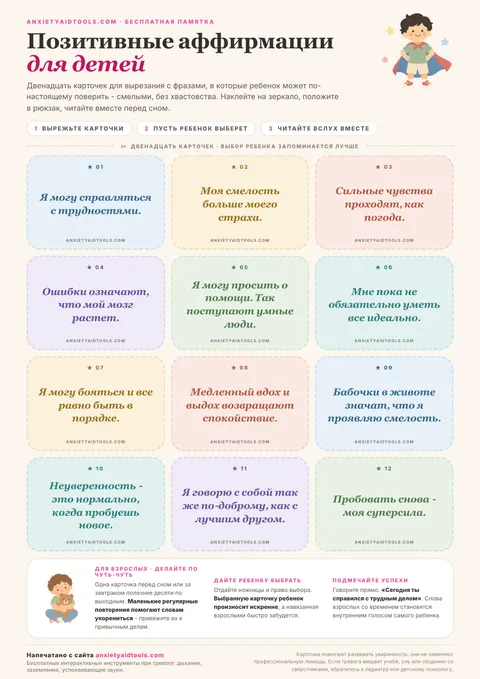
Двенадцать карточек для вырезания с простыми и понятными фразами, в которые ребенок может искренне поверить: смелыми, а не хвастливыми. Разместите их на зеркале, положите в школьный рюкзак или читайте вместе перед сном.
Откройте скачивание с Pro
Скачивайте шпаргалки в высоком разрешении PDF (A4 и US Letter) и готовые к печати PNG прямо из вашей панели.
Шпаргалки - это одностраничные постеры-памятки, которые можно распечатать и держать под рукой там, где настигает тревога. Доступны в форматах A4, US Letter и PNG в панели Pro.
Что на этой шпаргалке
12 карточек с аффирмациями
Сетка 3х4 с пунктирными линиями для вырезания. Короткие реалистичные фразы детским языком: «Я могу справляться с трудностями» и «Чувства проходят, как погода».
Простой алгоритм из 3 шагов
Подсказки вверху: вырежьте карточки, дайте ребенку выбрать любимые и читайте вместе вслух. Без ощущения школьных уроков.
Для взрослых: внедряйте по чуть-чуть
Одна карточка за завтраком или перед сном полезнее долгих занятий по выходным. Небольшие регулярные повторения помогают словам закрепиться.
Для взрослых: пусть выбирает ребенок
Выбранную самостоятельно карточку ребенок произносит с искренней верой, тогда как навязанная взрослыми быстро забывается.
Для взрослых: замечайте смелость в жизни
Подмечайте реальные поступки ребенка: «Сегодня ты справился с трудным делом». Слова взрослых становятся внутренним голосом ребенка.
Как использовать
- 1
Распечатайте страницу и аккуратно вырежьте двенадцать карточек вместе с ребенком.
- 2
Позвольте ребенку самому выбрать одну или две фразы, которые ему больше всего нравятся.
- 3
Читайте их вслух в привычные моменты дня: за завтраком, по дороге в школу или перед сном.
- 4
Подмечайте моменты, когда ребенок проявляет смелость, и повторяйте эти слова в жизни.
Часто задаваемые вопросы
Как аффирмации помогают тревожным детям?
Дети легко усваивают повторяющиеся добрые и реалистичные фразы. Вместо пустых похвал формулировки вроде «Я могу справляться с трудностями» развивают жизнестойкость и становятся поддерживающим внутренним голосом в моменты стресса.
С какого возраста подходят эти карточки?
Карточки рассчитаны на детей от 4 до 11 лет. Для малышей взрослые читают текст вслух и обсуждают картинки, а дети постарше могут читать их сами и выбирать любимые карточки в рюкзак.
Что делать, если ребенок не верит в прочитанные слова?
Не заставляйте повторять через силу. Выберите самую простую фразу, например «Ошибки помогают мне учиться», и приведите реальный пример из жизни ребенка, когда промах помог освоить что-то новое.
Как часто нужно использовать карточки?
Лучше всего работает регулярное повторение одной карточки в день в течение нескольких секунд, чем долгие занятия раз в неделю. Привяжите чтение к утренней чистке зубов или вечернему чтению книг.