Spiekbriefje Spreekangst & Presenteren
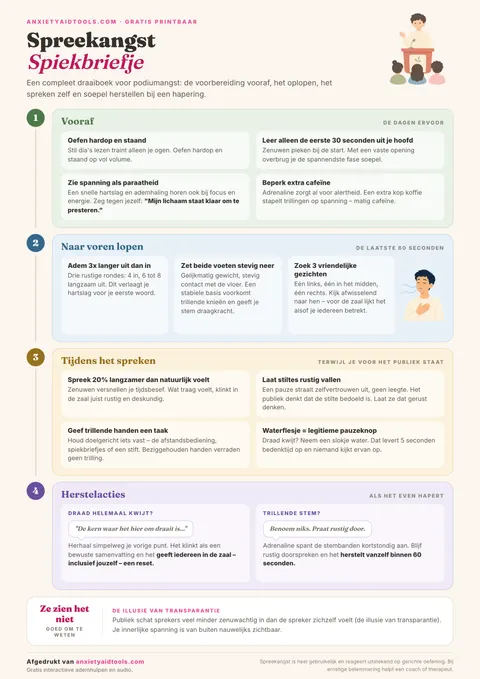
De complete gids tegen spreekangst: hoe je hardop oefent zodat je mond de woorden kent, wat je doet in de laatste 60 seconden, herstelzinnen bij een hapering en het feit dat toehoorders maar een fractie zien van wat jij voelt.
Ontgrendel downloads met Pro
Download printbare PDF- (A4 & US Letter) en PNG-bestanden in hoge resolutie voor alle spiekbriefjes rechtstreeks vanuit je dashboard.
Spiekbriefjes zijn overzichtsposters van één pagina, ontworpen om af te drukken en te bewaren op plekken waar angst je overvalt. Beschikbaar in A4-, US Letter- en PNG-formaat in je Pro-dashboard.
Wat staat er op dit spiekbriefje
Vooraf
Oefen staand en hardop, leer alleen de eerste 30 seconden uit je hoofd, zie spanning als paraatheid en sla overmatige cafeïne over.
Naar voren lopen
Drie trage uitademingen, beide voeten stevig neerzetten en drie vriendelijke gezichten in de zaal uitkiezen om oogcontact mee af te wisselen.
Tijdens de presentatie
Spreek 20% langzamer dan natuurlijk voelt, omarm stiltes als teken van zelfvertrouwen en geef trillende handen een taak (bijv. een klikker vasthouden).
Herstelzinnen
"De kern van het verhaal is dus..." herstelt de draad voor iedereen; een trillende stem herstelt binnen een minuut als je gewoon doorkeilt.
De transparantie-illusie
Toehoorders schatten sprekers stelselmatig in als véél minder zenuwachtig dan de spreker zich voelt – je innerlijke storm is aan de buitenkant nauwelijks te zien.
Hoe te gebruiken
- 1
Print het schema en gebruik de 'Vooraf'-kolom bij het voorbereiden van je presentatie.
- 2
Oefen altijd staand en hardop – je mond heeft herhalingen nodig, niet je ogen.
- 3
Lees het ritueel voor het podium door vlak voor je wordt aangekondigd.
- 4
Raak je de draad kwijt? Gebruik een herstelzin in plaats van excuses te maken.
Veelgestelde vragen
Hoe kom ik van spreekangst af?
Streef niet naar nul spanning, maar naar hanteerbare spanning. Oefen staand hardop, ken de eerste halve minuut feilloos uit je hoofd, zie adrenaline als gezonde energie en start op een rustig spreektempo.
Waarom trilt mijn stem tijdens presentaties?
Adrenaline spant de spiertjes rond je stembanden aan. Blijf rustig doorspreken; zodra de eerste minuut voorbij is en je lichaam aan het tempo went, verdwijnt het trillen meestal vanzelf.
Ziet het publiek hoe zenuwachtig ik ben?
Veel minder dan je denkt. Door de 'transparantie-illusie' overschatten sprekers enorm hoeveel van hun innerlijke spanning zichtbaar is. Het publiek ziet een spreker; jij voelt een hartslag.
Helpt het om het publiek in hun ondergoed voor te stellen?
Nee, dat leidt alleen maar af. Wat wél helpt: 20% trager praten, af en toe een bewuste pauze nemen, en je aandacht richten op drie vriendelijke gezichten in de zaal.