Positieve affirmaties bij angst
Twaalf uitknipbare affirmatiekaartjes, geschreven voor een nuchter, sceptisch brein – eerlijke zinnen die standhouden onder spanning, geen holle positiviteit. Print, knip en leg ze waar angst je meestal overvalt.
Ontgrendel downloads met Pro
Download printbare PDF- (A4 & US Letter) en PNG-bestanden in hoge resolutie voor alle spiekbriefjes rechtstreeks vanuit je dashboard.
Spiekbriefjes zijn overzichtsposters van één pagina, ontworpen om af te drukken en te bewaren op plekken waar angst je overvalt. Beschikbaar in A4-, US Letter- en PNG-formaat in je Pro-dashboard.
Wat staat er op dit spiekbriefje
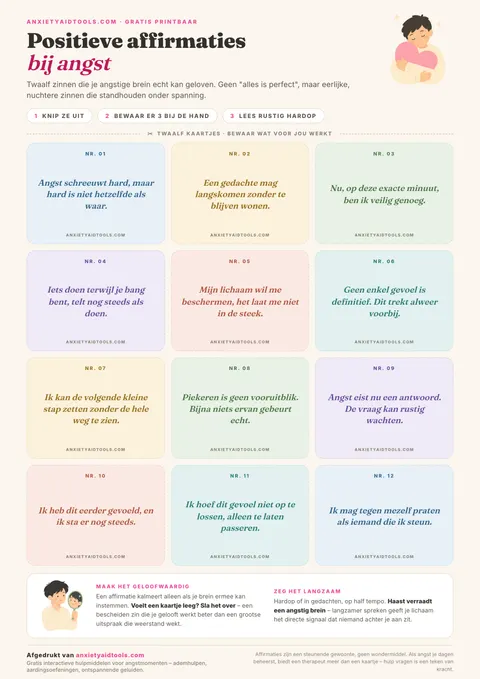
12 uitknipbare affirmatiekaartjes
Een 3x4 raster van pastelkleurige kaartjes met stippellijnen, elk met één korte affirmatie. Elke zin is geschreven om geloofwaardig te zijn onder stress, in de stijl van: 'Het bang doen telt nog steeds als doen'.
Stappenplan in drie punten
Duidelijke instructies bovenaan: knip ze uit, bewaar er drie op plekken waar angst toeslaat, lees ze langzaam hardop. Geen rituelen of ingewikkelde opdrachten.
Maak het geloofwaardig
Een korte toelichting waarom nuchtere zinnen kalmeren en overdreven kreten afketsen. Voelt een kaartje onwaar, sla het dan gerust over.
Spreek rustig uit
Waarom een half tempo cruciaal is: snel door de woorden heen jagen volgt de gejaagdheid van angst, terwijl langzaam spreken je lichaam vertelt dat er geen gevaar dreigt.
Hoe te gebruiken
- 1
Print het blad op A4-papier en knip de twaalf kaartjes uit langs de stippellijnen.
- 2
Houd alleen de kaartjes over die voor jou oprecht waar aanvoelen – geloofwaardigheid is wat ze laat werken.
- 3
Leg er drie op plekken waar angst je vaak treft: badkamerspiegel, rand van je laptop, portemonnee of telefoonhoesje.
- 4
Als de spanning oploopt, lees dan één kaartje langzaam twee tot drie keer hardop of in gedachten.
Veelgestelde vragen
Werken positieve affirmaties echt tegen angst?
Ja, mits ze geloofwaardig zijn. Onderzoek toont aan dat zelfaffirmaties werken wanneer ze aansluiten bij wat je over jezelf gelooft. Overdreven zinnen werken juist averechts. Daarom zijn alle uitspraken op dit blad nuchter en realistisch geformuleerd, zoals: 'Het bang doen telt nog steeds als doen'.
Hoe gebruik ik deze affirmaties bij angst?
Knip de kaartjes uit en leg ze op zichtbare plekken. Lees een kaartje rustig en met een lage stem voor wanneer spanning opkomt. De trage uitspraak is net zo belangrijk als de woorden zelf, omdat dit het zenuwstelsel helpt vertragen.
Wat kan ik het beste tegen mezelf zeggen tijdens angst?
Houd het kort, feitelijk en mild: 'Dit is angst. Het voelt naar, maar het is ongevaarlijk en het waait altijd weer over.' Zinnen die het gevoel erkennen werken veel beter dan ontkenningen zoals 'er is niks aan de hand'.
Wat is het verschil tussen affirmaties en toxische positiviteit?
Toxische positiviteit ontkent het moeilijke gevoel ('alleen maar positieve vibes!'). Een helpende affirmatie maakt juist ruimte voor de spanning én benoemt een nuchtere waarheid: emoties zakken en je hebt eerdere moeilijke momenten ook doorstaan.