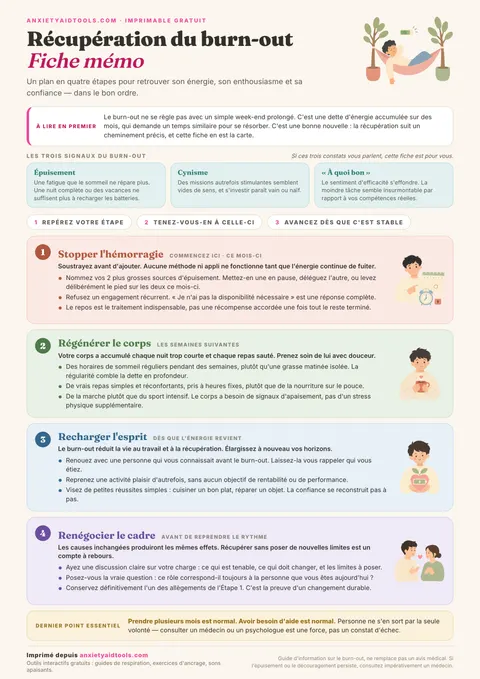
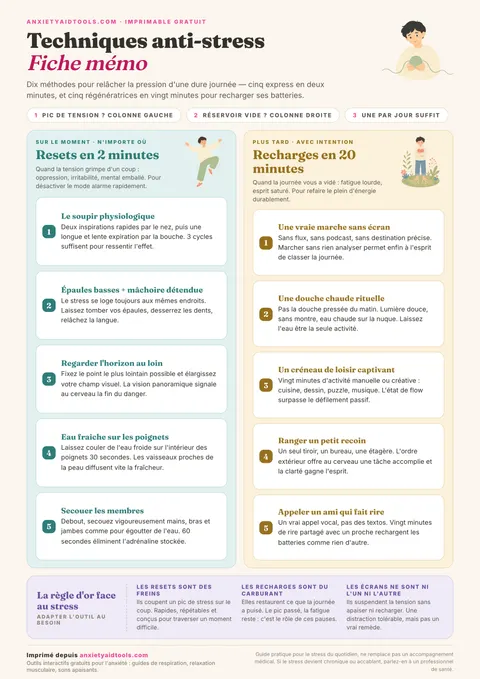
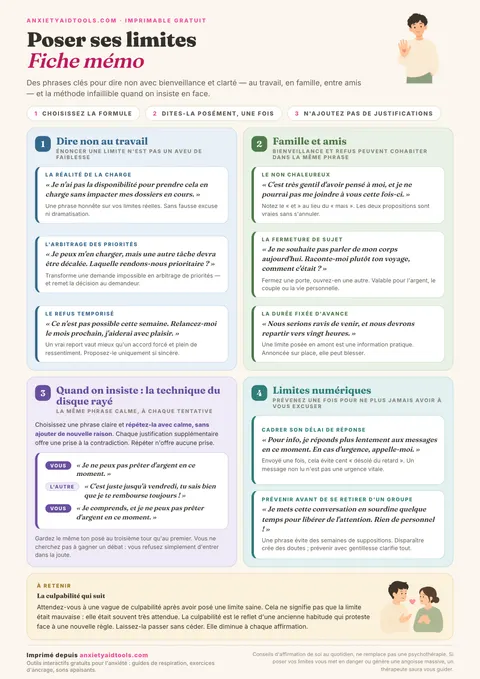
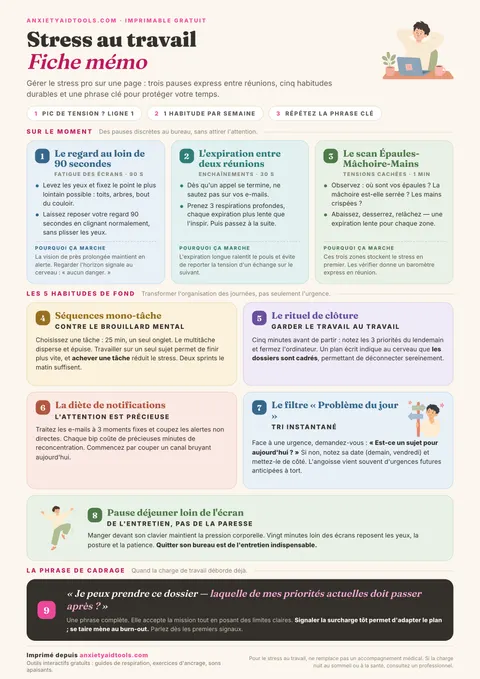
Fiche mémo : Stress au travail
Gérer le stress professionnel sur une seule page : trois pauses express discrètes, cinq habitudes pour transformer ses journées et une phrase clé pour protéger sa charge mentale.
Débloquez les téléchargements avec Pro
Téléchargez les formats PDF haute résolution (A4 et US Letter) et PNG prêts à imprimer pour toutes les fiches mémo directement depuis votre tableau de bord.
Les fiches mémo sont des posters de référence d'une page conçus pour être imprimés et gardés là où l'anxiété vous touche. Disponibles aux formats A4, US Letter et PNG dans votre tableau de bord Pro.
Contenu de cette fiche
Sur le moment : 3 pauses discrètes
Le regard au loin de 90 secondes contre la fatigue des écrans, l'expiration entre deux réunions et le scan Épaules-Mâchoire-Mains.
Les 5 habitudes de fond
Séquences de travail mono-tâche de 25 min, rituel de clôture de fin de journée, diète de notifications, filtre « Problème du jour » et pause déjeuner loin des écrans.
La phrase clé de cadrage
« Je peux prendre ce dossier — laquelle de mes priorités actuelles doit passer après ? » pour dire oui au travail et non à la surcharge.
Comment l'utiliser
- 1
Affichez cette fiche discrètement à côté de votre écran d'ordinateur.
- 2
Entre deux réunions consécutives, prenez 30 secondes pour 3 expirations lentes avant d'ouvrir un dossier.
- 3
Pratiquez le rituel de clôture 5 minutes avant de partir pour ne pas ramener le travail à la maison.
- 4
Répétez la phrase clé dès que l'on vous sollicite au-delà de vos capacités.
Foire aux questions
Comment déconnecter mentalement du travail le soir ?
Notez sur papier vos 3 priorités du lendemain avant d'éteindre votre ordinateur. Ce plan écrit informe votre cerveau que les dossiers sont sous contrôle et qu'il peut relâcher la pression.
Pourquoi manger devant son écran accentue-t-il le stress ?
Le cerveau reste en état de stimulation continue et ne perçoit aucune vraie rupture de repos, ce qui épuise les ressources cognitives dès le milieu de l'après-midi.
Comment oser dire qu'on a trop de travail sans paraître incompétent ?
Utilisez la phrase de cadrage des priorités : vous montrez votre engagement professionnel tout en impliquant votre responsable dans l'arbitrage réaliste des délais.
Quelle est la meilleure façon de gérer le flot incessant d'e-mails ?
Traitez vos e-mails à heures fixes (ex. : 10h, 14h, 17h) et désactivez les notifications instantanées pour préserver des plages de travail profond sans interruption.