Lista de autocuidado
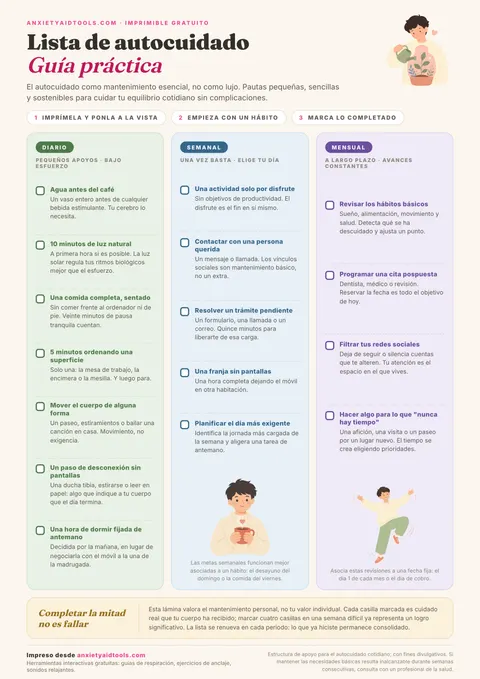
Una lista de autocuidado realista que enfoca el bienestar como un mantenimiento necesario, no un lujo: 7 anclas diarias, 5 reinicios semanales y 4 chequeos mensuales con casillas para marcar. Imprímela, tenla a la vista y empieza con una sola acción al día.
Desbloquea las descargas con Pro
Descarga formatos PDF en alta resolución (A4 y US Letter) y PNG listos para imprimir de todas las hojas de referencia directamente desde tu panel.
Las hojas de referencia son pósteres de consulta rápida de una página diseñados para imprimirse y tenerse a mano donde la ansiedad te encuentre. Disponibles en formatos A4, US Letter y PNG en tu panel Pro.
Qué incluye esta hoja de referencia
Anclas diarias
Siete acciones sencillas de bajo esfuerzo para mantener el equilibrio: beber agua antes del café, diez minutos de luz natural, una comida sentado, ordenar una superficie durante 5 minutos, moverse un poco, desconectar de pantallas antes de dormir y una hora de acostarse elegida conscientemente.
Reinicios semanales
Cinco hábitos semanales asociados a momentos fijos (como el café del domingo): hacer algo puramente por diversión, contactar con alguien querido, resolver un trámite pendiente, un bloque sin pantallas y aligerar la jornada más cargada de la próxima semana.
Chequeos mensuales
Cuatro pautas de fondo para principios de mes: revisar qué hábitos básicos se han descuidado, pedir esa cita médica pospuesta, limpiar las redes sociales de cuentas que generen malestar y hacer una actividad que tenías aparcada.
Marcar la mitad no es fracasar
Una nota al pie que sitúa el autocuidado en su justo lugar: la lista mide cuidados recibidos, no tu valía personal. Cada casilla marcada es bienestar real que le diste a tu cuerpo, y la lista se renueva en cada ciclo.
Cómo usarla
- 1
Imprime la hoja y ponla donde la veas a diario: la nevera, tu escritorio o tu agenda.
- 2
Empieza por una sola acción diaria, la que te resulte más fácil, y márcala durante varios días antes de añadir otra.
- 3
Asocia los puntos semanales y mensuales a momentos ya establecidos, como el fin de semana o el inicio de mes.
- 4
Marca lo conseguido sin buscar la perfección: cada casilla cuenta y la lista vuelve a empezar de cero cada ciclo.
Preguntas frecuentes
¿Qué debería incluir una lista de autocuidado realista?
Lo más eficaz son hábitos básicos y funcionales: hidratación, luz natural, comidas regulares, movimiento, descanso adecuado y pequeños espacios de orden. A nivel semanal, mantener el contacto con personas de confianza y resolver tareas aplazadas. Evita metas inalcanzables: una lista solo resulta útil si sus puntos son factibles en un día común y corriente.
¿Cómo empiezo a cuidarme cuando siento demasiado agobio?
Comienza por una sola ancla diaria. Elige la acción más simple de la hoja, como tomar un vaso de agua antes del café, y mantén solo esa durante unos días. Completar una acción pequeña y constante restaura la sensación de control sobre tu día. Cuando esté asentada, incorpora una segunda con naturalidad.
¿Es egoísta dedicarse tiempo a uno mismo?
No, es una labor de mantenimiento básico equivalente a cargar la batería del móvil o hacer una revisión al coche. Descuidar las comidas, el sueño y el descanso no te hace más disponible para los demás, sino que genera fatiga e irritabilidad. Cuidar tus necesidades fundamentales es lo que te permite cuidar de otros de forma sostenible.
¿Por qué descuidamos el autocuidado en momentos de ansiedad?
La ansiedad orienta la atención hacia la amenaza percibida y cataloga las necesidades básicas (comer, descansar) como postergables. Al no tener plazos rígidos, los cuidados cotidianos se van dejando de lado, creando un círculo vicioso de mayor vulnerabilidad física. Una lista impresa hace visibles esas necesidades básicas para que no queden eclipsadas por las prisas.