AnxietyAidTools

Evidence-based mental health tools
5–10 min

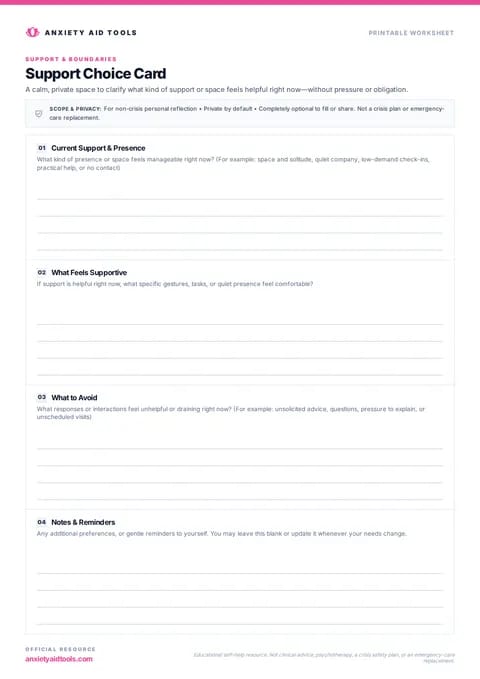
Support Choice Card

A calm, voluntary one-page card to clarify revisable preferences about support that feels okay—such as space, quiet company, practical help, or no contact—without pressure or obligation.

Crisis & Safety
Beginner
5–10 min
Support Choice Card
Pro download PDF & PNG

Overview

Print for offline use during therapy or self-practice

Printable PDF and PNG formats available in your Pro dashboard

When to Use

  • When feeling overwhelmed and wanting to clarify what kind of support or space feels okay
  • When you want a gentle reminder of what feels helpful versus intrusive
  • When you want to notice whether solitude, quiet company, or practical task help feels okay
  • When you want a revisable personal reference that you can update or leave blank anytime

How to Use

  1. 1
    Notice your current preference: Consider what level of interaction feels manageable today—such as space, quiet presence, practical help, or low-demand check-ins.
  2. 2
    Clarify what feels supportive: Note low-pressure gestures that feel genuinely helpful (such as quiet presence or practical assistance).
  3. 3
    Identify what to avoid: Clarify intrusive or draining behaviors (such as unsolicited advice, problem-solving, or urgent questions).
  4. 4
    Hold or share on your terms: Keep this card private, share only if you want to, or leave parts blank without needing to explain.
  5. 5
    Revise anytime: Update or change your preferences whenever your energy or needs shift.

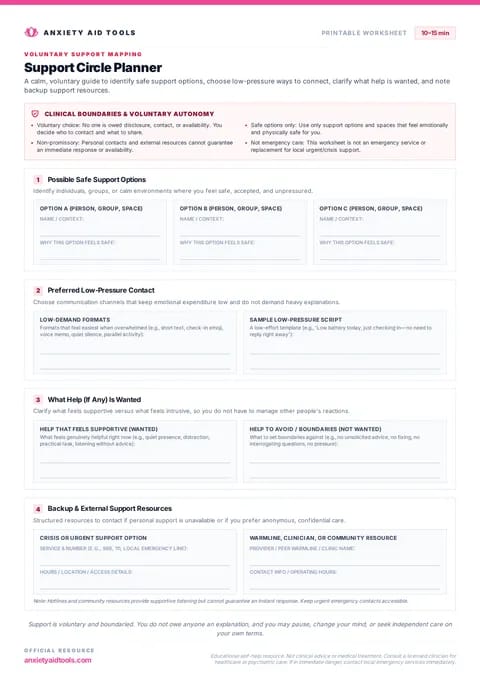
The Support Choice Card is a calm, voluntary reflection tool designed to help you clarify what kind of support or personal space feels manageable right now. It provides a simple, pressure-free way to notice your own preferences without having to justify them.

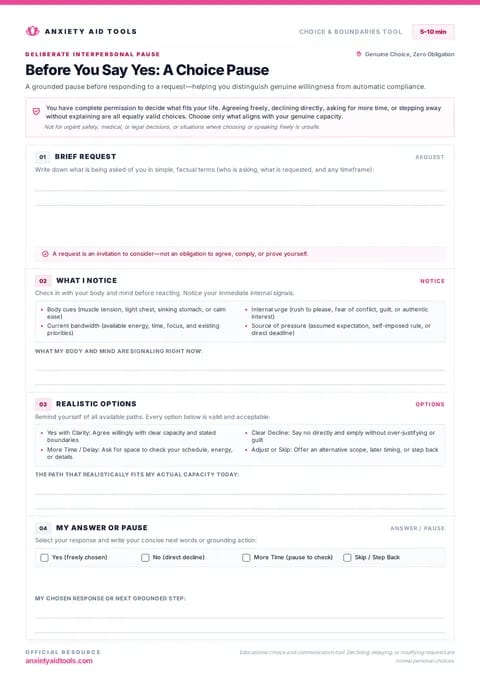
Preferences are completely revisable and belong entirely to you: you never owe anyone disclosure, contact, or availability. Choosing solitude, quiet parallel company, practical help, or temporary silence is always valid, with no expectation to decide or explain.

This worksheet is an educational self-reflection tool. It is not a crisis plan or emergency-care replacement.
Research & References

  • Cohen, S., & Wills, T. A. (1985). Stress, social support, and the buffering hypothesis. Psychological Bulletin, 98(2), 310-357.
  • Substance Abuse and Mental Health Services Administration (2014). Trauma-Informed Care in Behavioral Health Services. Treatment Improvement Protocol (TIP) Series, No. 57.
  • Sweeney, A., Filson, B., Kennedy, A., Collinson, L., & Gillard, S. (2018). A paradigm shift: Relationships in trauma-informed mental health services. BJPsych Advances, 24(5), 319-333.