AnxietyAidTools

Evidence-based mental health tools
10–15 min

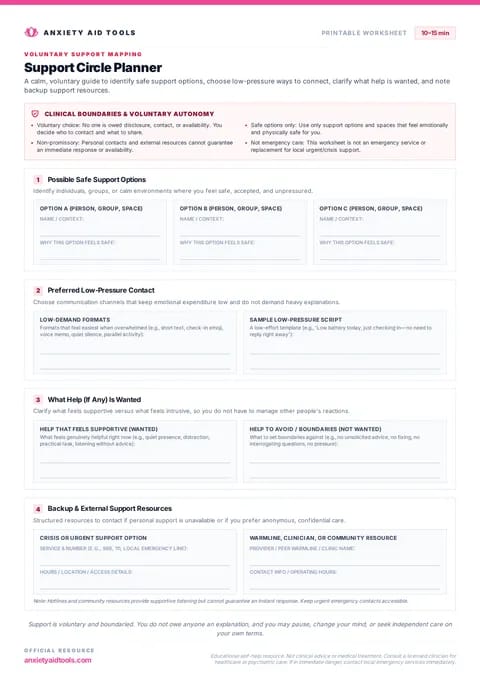
Support Circle Planner

A calm, voluntary planner for identifying safe support, low-pressure contact methods, what help is wanted, and backup support resources.

Crisis & Safety
Beginner
10–15 min
Support Circle Planner
Pro download PDF & PNG

Overview

Print for offline use during therapy or self-practice

Printable PDF and PNG formats available in your Pro dashboard

When to Use

  • When you want to map out safe support options before distress or overwhelm builds
  • When you need low-pressure ways to stay connected without explaining yourself
  • To clarify what kind of help feels supportive and what boundaries you need respected
  • When you want to identify external resources or warmlines as a backup

How to Use

  1. 1
    Identify safe options: List individuals, peer groups, or calm environments where you feel accepted and emotionally secure.
  2. 2
    Select low-pressure formats: Decide on easy communication channels—such as short text check-ins, voice notes, or shared quiet time—that keep emotional demand low.
  3. 3
    Clarify wanted vs. unwanted help: Write down what feels genuinely helpful (like quiet distraction or practical help) versus what to avoid (such as unsolicited advice or fixing).
  4. 4
    Document backup resources: Note professional providers, local warmlines, or crisis numbers in case personal contacts are unavailable.
  5. 5
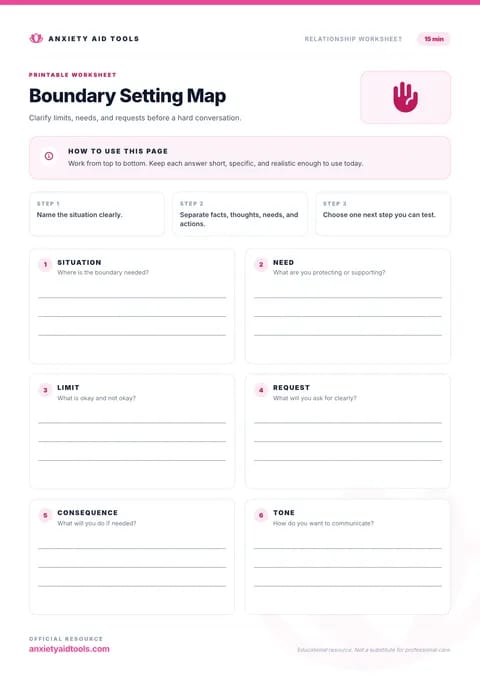
    Honor boundaries: Remember that no one is owed disclosure or contact, and use only the options that feel safe for you.

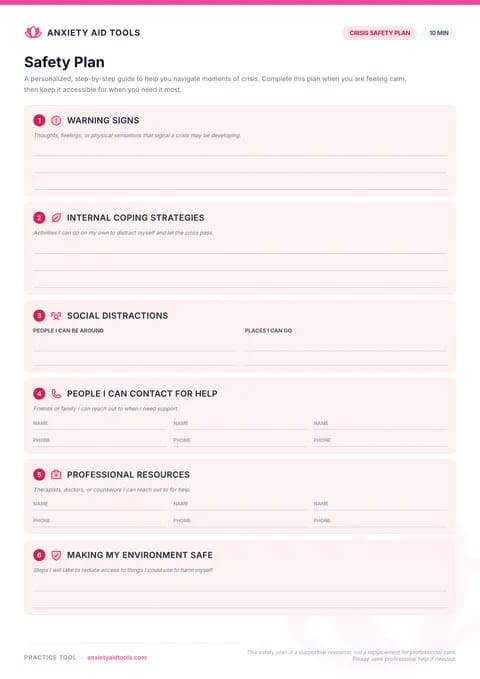
The Support Circle Planner is a calm, voluntary reflection tool designed to help you think through interpersonal support on your own terms. It complements rather than duplicates a formal crisis Safety Plan by focusing on low-pressure, everyday connection and boundary clarity rather than acute risk intervention.

Connection is entirely voluntary: no one is owed disclosure, contact, or availability. You decide who feels safe to reach out to, how much to share, and when to pause. Similarly, support options are individuals or resources with their own limits, and a resource cannot guarantee an immediate response.

This worksheet is an educational self-help tool. It is not an emergency service or a replacement for local urgent or emergency crisis support. If you are experiencing an acute safety emergency or need immediate help, contact your local emergency services or a crisis lifeline directly.
Research & References

  • Cohen, S., & Wills, T. A. (1985). Stress, social support, and the buffering hypothesis. Psychological Bulletin, 98(2), 310-357.
  • Substance Abuse and Mental Health Services Administration (2014). Trauma-Informed Care in Behavioral Health Services. Treatment Improvement Protocol (TIP) Series, No. 57.
  • Stanley, B., & Brown, G. K. (2012). Safety Planning Intervention: A Brief Intervention to Mitigate Suicide Risk. Cognitive and Behavioral Practice, 19(2), 256-264.