Grübeln stoppen Spickzettel
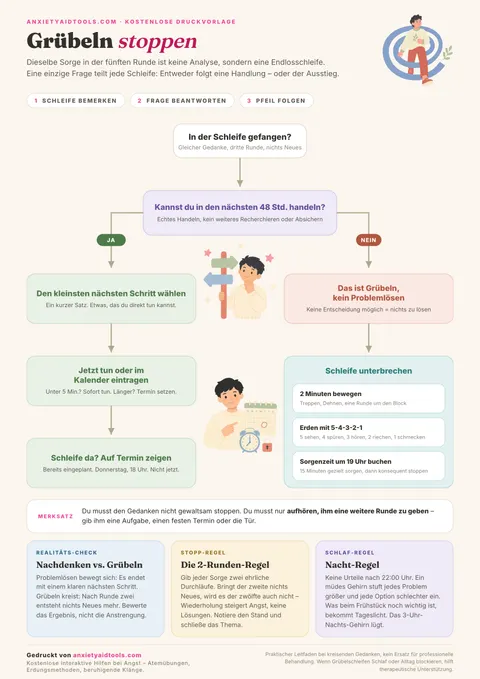
Ein einseitiges Flussdiagramm, das kreisende Gedanken sofort aufteilt: Lösbare Sorgen bekommen einen konkreten Schritt im Kalender, reine Grübelschleifen werden gezielt unterbrochen. Mit 2-Runden-Regel und Nachtregel.
Downloads mit Pro freischalten
Lade hochauflösende PDF- (A4 & US Letter) und druckfertige PNG-Formate für alle Spickzettel direkt aus deinem Dashboard herunter.
Spickzettel sind einseitige Übersichten zum Ausdrucken – perfekt für Orte, an denen dich Angst oft überrascht. Verfügbar im A4-, US-Letter- und PNG-Format in deinem Pro-Dashboard.
Inhalt dieser Übersicht
Das 1-Fragen-Flussdiagramm
Jede Gedankenschleife startet hier: Kannst du in den nächsten 48 Stunden konkret etwas tun? Handeln meint eine echte Tat, nicht weiteres Recherchieren.
Der JA-Zweig: Gib der Sorge eine Aufgabe
Bestimme den kleinsten nächsten Schritt: sofort tun (unter 5 Minuten) oder fest im Kalender einplanen. Bei erneutem Grübeln verweist du auf den Termin.
Der NEIN-Zweig: Grübelschleife stoppen
Gibt es nichts zu tun, ist es reines Grübeln. Drei Unterbrecher helfen sofort: 2 Minuten Bewegung, 5-4-3-2-1 Erdung oder ein Sorgenfenster.
Das Sorgenfenster (z. B. 19:00 Uhr)
Ein fester 15-Minuten-Termin am Tag, um bewusst zu sorgen. Sorgen aufzuschieben reduziert nachweislich das Grübeln tagsüber.
Nachdenken vs. Grübeln
Der Unterschied: Problemlösen endet mit einem umsetzbaren Handlungsschritt. Grübeln dreht sich im Kreis und endet dort, wo es begann.
Die 2-Runden-Regel
Gehe eine Sorge maximal zweimal durch. Hat der zweite Durchlauf keine neue Erkenntnis gebracht, bringt der zwölfte auch keine. Akte schließen!
Die Nachtregel (keine Urteile nach 22 Uhr)
Ein müdes Gehirn übertreibt Gefahren und sieht nur Sackgassen. Was am Morgen noch wichtig ist, wird bei Tageslicht gelöst.
Anwendung
- 1
Drucke die Vorlage aus und platziere sie dort, wo du oft grübelst: Schreibtisch, Küche oder Nachttisch.
- 2
Sobald ein Gedanke in die dritte Runde geht, starte oben am Flussdiagramm.
- 3
Beantworte die 48-Stunden-Frage ehrlich und folge strikt der Verzweigung.
- 4
Nutze die Faustregeln am unteren Rand, um nachts gedankliche Stoppschilder zu setzen.
Häufig gestellte Fragen
Warum grübelt man über alles nach?
Grübeln fühlt sich fälschlicherweise wie Arbeit an: Das Gehirn glaubt, noch eine Denkschleife bringe Sicherheit. In Wahrheit ist es oft eine Vermeidung der Unbequemlichkeit, eine Entscheidung zu treffen. Eine klare Sortierregel durchbricht diese Illusion.
Wie stoppe ich Gedankenkreisen beim Einschlafen?
Nutze die Nachtregel: Keine Urteile nach 22 Uhr! Schreibe die Sorge in einem Stichwort auf einen Block am Bett – das signalisiert dem Gehirn, dass nichts verloren geht. Unterbrich den Gedankenstrom anschließend mit einer sensorischen Erdung oder dem physiologischen Seufzer.
Ist ständiges Grübeln ein Zeichen von Angststörungen?
Grübeln (Ruminieren) ist ein zentrales Merkmal generalisierter Angst. Jeder Mensch grübelt gelegentlich; wenn es jedoch regelmäßig Schlaf, Konzentration und Lebensqualität raubt, ist die Rücksprache mit Fachleuten sinnvoll.
Was unterscheidet konstruktives Nachdenken von Grübeln?
Konstruktives Problemlösen bewegt sich vorwärts und endet mit einem konkreten Handlungsschritt auf der To-do-Liste. Grübeln dreht sich im Kreis, erzeugt Anspannung und bringt keine neuen Lösungen hervor.