Spickzettel: Emotionsregulation
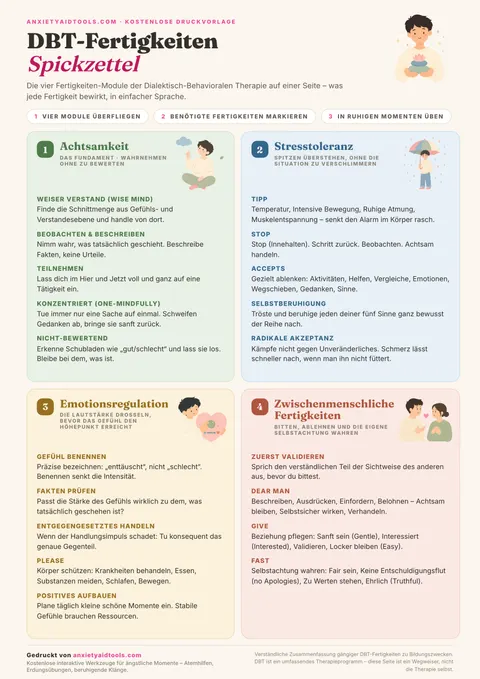
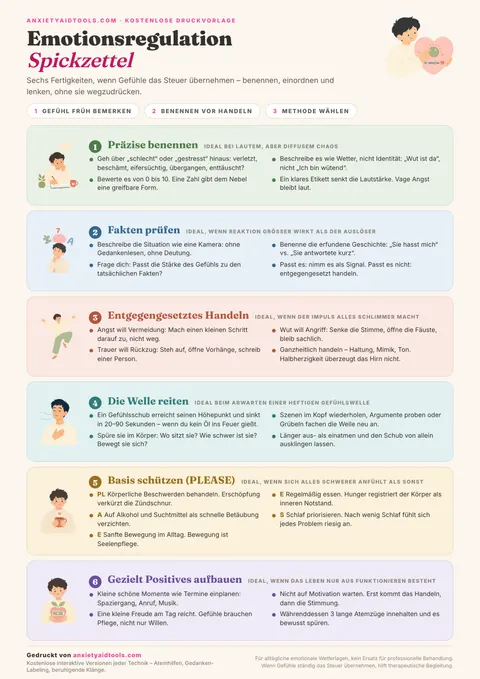
Sechs Fertigkeiten für Momente, in denen Gefühle das Steuer übernehmen: präzise benennen, Realität prüfen und steuern, statt Gefühle zu unterdrücken. Eine druckbare A4-Seite für Kühlschrank, Schreibtisch oder Journal.
Downloads mit Pro freischalten
Lade hochauflösende PDF- (A4 & US Letter) und druckfertige PNG-Formate für alle Spickzettel direkt aus deinem Dashboard herunter.
Spickzettel sind einseitige Übersichten zum Ausdrucken – perfekt für Orte, an denen dich Angst oft überrascht. Verfügbar im A4-, US-Letter- und PNG-Format in deinem Pro-Dashboard.
Inhalt dieser Übersicht
Präzise benennen
Ersetze vage Begriffe wie „schlecht“ durch das exakte Gefühl, bewerte die Stärke von 0 bis 10 und lass die präzise Benennung die Lautstärke senken.
Fakten prüfen
Trenne das, was eine Kamera aufgezeichnet hätte, von deiner inneren Interpretation. Passt die Stärke des Gefühls zu den tatsächlichen Fakten?
Entgegengesetztes Handeln
Wenn der Impuls der Emotion schadet, handle bewusst gegenteilig: Stelle dich dem, was Angst meidet; werde sanft, wo Wut verhärtet; suche Kontakt, wenn Trauer Rückzug will.
Die Welle reiten
Ein emotionaler Schub steigt an und flaut in 20 bis 90 Sekunden von selbst ab, wenn du ihn nicht durch Gedankenschleifen neu anheizt. Spüre ihn im Körper und lass ihn ziehen.
Grundlagen schützen (PLEASE)
Der DBT-PLEASE-Skill: Körperliche Krankheiten behandeln, ausgewogen essen, stimmungsverzerrende Mittel meiden, Schlaf schützen und bewegen – ein erschöpfter Körper hat eine kürzere Zündschnur.
Positives gezielt aufbauen
Plane kleine wohltuende Momente fest ein wie Termine und sei ganz dabei. Emotionale Widerstandskraft braucht regelmäßigen Nachschub.
Anwendung
- 1
Drucke die Seite aus und platziere sie dort, wo Emotionen oft hochkochen: Küche, Arbeitsplatz, Planer.
- 2
Wenn ein Gefühl ansteigt, starte bei Schritt 1 und benenne es genau, bevor du handelst.
- 3
Wähle anhand der Hinweise die Technik aus, die genau zu deinem aktuellen Moment passt.
- 4
Übe die Fertigkeiten in ruhigen Zeiten, damit du in emotionalen Stürmen mühelos darauf zugreifen kannst.
Häufig gestellte Fragen
Was sind Fertigkeiten zur Emotionsregulation?
Emotionsregulation umfasst wissenschaftlich erprobte Strategien, um Art, Intensität und Ausdruck unserer Gefühle bewusst zu steuern. Die meisten Methoden stammen aus KVT und DBT. Ziel ist nicht Gefühllosigkeit, sondern ein konstruktiver Umgang mit Emotionen, damit sie uns leiten statt überrollen.
Wie lange hält ein emotionaler Schub an?
Der rein biochemische Schub eines Gefühls im Körper erreicht seinen Höhepunkt und ebbt nach 20 bis etwa 90 Sekunden ab. Was Gefühle über Stunden aufrechterhält, sind die kreisenden Gedanken: inneres Wiederholen von Streitgesprächen oder Grübeln. Lässt du die Welle durch den Körper laufen, zieht sie rasch vorbei.
Was unterscheidet Regulation von Unterdrückung?
Unterdrückung tut so, als wäre nichts da: herunterschlucken, Miene verziehen, ablenken. Das führt meist dazu, dass Gefühle später heftiger zurückschlagen und der Körper angespannt bleibt. Regulation nimmt das Gefühl bewusst wahr, benennt es und steuert die Reaktion darauf mit Skills wie Faktencheck oder entgegengesetztem Handeln.
Funktionieren Emotionsregulations-Skills auch bei Erwachsenen?
Absolut. Diese Fertigkeiten wurden ursprünglich für Erwachsene in der Psychotherapie entwickelt. Gegenläufiges Handeln, Faktenchecks und körperliche Selbstfürsorge sind in jedem Lebensalter erlernbar und wirksam.