Supporting Someone Having a Panic Attack Cheat Sheet
A calm, evidence-informed bystander guide for helping a friend, partner, or coworker through intense panic. Learn what to say, how to support without crowding, what common habits to avoid, and clear medical safety boundaries.
Unlock Downloads with Pro
Download high-resolution PDF (A4 & US Letter) and print-ready PNG formats for all cheat sheets directly from your dashboard.
Cheat sheets are one-page quick reference posters designed to be printed and kept where anxiety finds you. Available in A4, US Letter, and PNG formats in your Pro dashboard.
What's on this cheat sheet
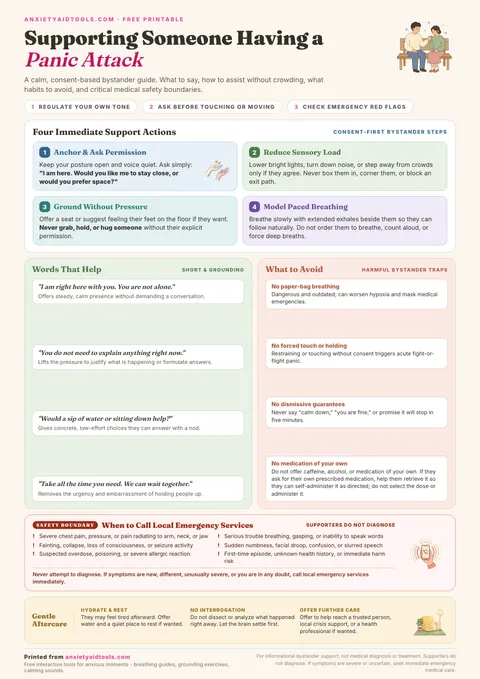
Four immediate support steps
Consent-first actions including asking permission, lowering sensory stimulation, offering gentle grounding without forced touch, and modeling slow paced breathing.
Words that help
Four word-for-word scripts that provide steady, calming presence, relieve pressure to explain symptoms, offer concrete low-effort choices, and remove time pressure.
What to avoid
Critical bystander traps to avoid, including paper-bag rebreathing, forced touch or restraint, dismissive promises like 'calm down', and unprescribed substances.
Emergency medical boundary
Clear guidance on when to call local emergency services immediately for chest pain, severe breathing distress, fainting, seizure signs, stroke symptoms, or unknown medical history.
Gentle aftercare & further support
Post-panic recovery steps focusing on hydration, quiet rest, avoiding immediate interrogation, and offering to help reach a trusted person, local crisis support, or a health professional if wanted.
How to use it
- 1
Print the sheet and keep a copy in your first-aid kit, office desk, or shared living space.
- 2
Read through the helpful phrases and traps to avoid so supportive responses become second nature.
- 3
In the moment, regulate your own tone first and always ask permission before offering touch or moving locations.
- 4
During recovery, offer quiet rest and ask if they would like help reaching a trusted person, local crisis support, or a healthcare professional.
Frequently asked questions
How do I help someone having a panic attack without making it worse?
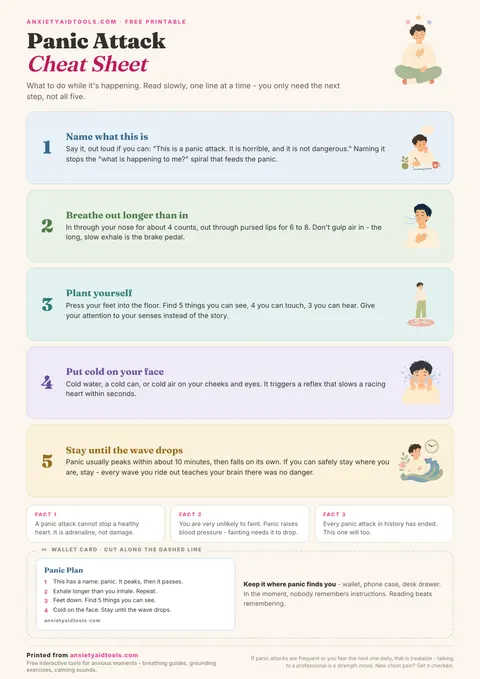
The most effective way to help is to regulate your own nervous system first and ask consent before acting. Keep your voice quiet and low, ask if they would like you to stay close or give them space, and avoid crowding them with multiple people or questions. Never touch, hug, or move someone without explicit permission, as unsolicited physical contact can trigger fight-or-flight panic responses. Instead, offer steady presence, model slow calm breathing beside them, and let them guide what helps.
What should you not do when someone is having a panic attack?
Never tell someone to 'calm down,' tell them 'it is all in your head,' or make false guarantees about when it will end. Do not use paper-bag breathing, which is medically outdated and potentially dangerous because it can worsen hypoxia and mask cardiac or respiratory emergencies. Avoid crowding the person, restraining them, forcing them to lie down or walk, or interrogating them about what caused the attack. Do not offer caffeine, alcohol, or medication of your own. If they ask for their own prescribed medication, help them retrieve it so they can self-administer it as directed; do not select the dose or administer it.
What are the best things to say to someone experiencing panic?
Use short, simple sentences that relieve pressure and establish safety without requiring lengthy conversation. Lines like 'I am right here with you,' 'You do not need to explain anything right now,' and 'Take all the time you need' communicate steady support. Offer concrete, closed choices such as 'Would a sip of water or sitting down help?' so they can respond with a simple nod rather than complex decision-making. Avoid asking why they are panicking, which forces an overwhelmed brain to analyze when it needs to settle.
How do you know if it is a panic attack or a medical emergency?
Supporters should not try to decide whether symptoms are 'just panic.' Call local emergency services for new or severe chest pain or pressure, pain spreading to the arm, neck, jaw, or back, serious trouble breathing, fainting or loss of consciousness, seizure activity, or sudden numbness, facial droop, confusion, or slurred speech. Seek emergency help for a first episode, symptoms that are new, different, or unusually severe, immediate risk of harm, or whenever you are unsure.