AnxietyAidTools

Evidence-based mental health tools
10 min

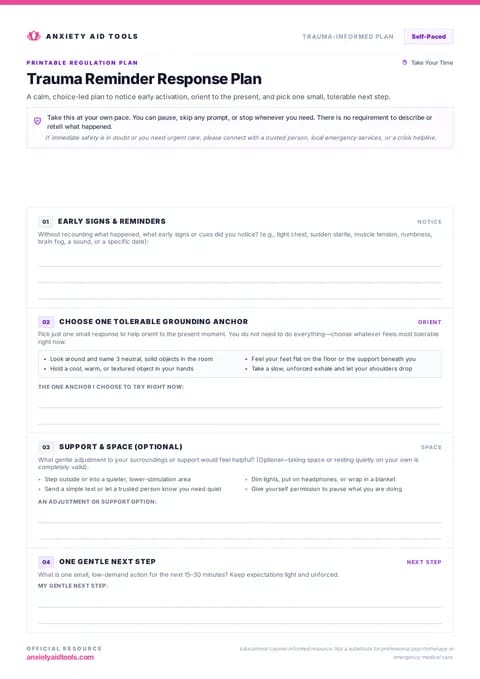
Trauma Reminder Response Plan

An optional, present-focused plan for choosing grounding, space, and one gentle next step after a trauma reminder—without exposure or retelling.

Trauma & Triggers
Beginner
10 min
Trauma Reminder Response Plan
Pro download PDF & PNG

Overview

Print for offline use during therapy or self-practice

Printable PDF and PNG formats available in your Pro dashboard

When to Use

  • When you want an optional plan for responding to trauma reminders without describing the experience
  • During a relatively calm moment, before or between situations that may bring activation
  • When you notice early signs of activation, numbness, or disconnection and want one present-focused anchor
  • When deciding whether space, quiet, or optional support might fit the next few minutes

How to Use

  1. 1
    Begin only if it feels acceptable; you can skip, pause, or stop at any point.
  2. 2
    Note early signs or reminders using brief words, without recounting or retelling what happened.
  3. 3
    Choose one tolerable grounding anchor that helps you orient to the present, or choose none.
  4. 4
    Consider one optional change in space or support, such as reducing stimulation or letting a trusted person know you need quiet.
  5. 5
    Write one small, low-demand next step for the next 15–30 minutes and keep expectations unforced.
  6. 6
    If immediate safety is in doubt, contact a trusted person, local emergency services, or a crisis helpline.

The Trauma Reminder Response Plan is an optional, present-focused worksheet for planning what you may want to do when a reminder brings activation, numbness, or disconnection. It does not ask you to describe or retell the experience, and it is not exposure work.

The plan moves through four gentle choices: notice early signs without recounting what happened, choose one tolerable grounding anchor, consider optional space or support, and write one low-demand next step. You decide what to include, skip, pause, or stop.

Use this as a preparation and reflection aid, not as a test or a promise of safety, resolution, or symptom relief. A clinician or trusted support person may help you adapt it, but you remain free to choose what feels acceptable.
Research & References

  • Substance Abuse and Mental Health Services Administration (2014). Trauma-Informed Care in Behavioral Health Services. Treatment Improvement Protocol (TIP) Series, No. 57.
  • Najavits, L. M. (2002). Seeking Safety: A Treatment Manual for PTSD and Substance Abuse. Guilford Press.