AnxietyAidTools

Evidence-based mental health tools
10 min

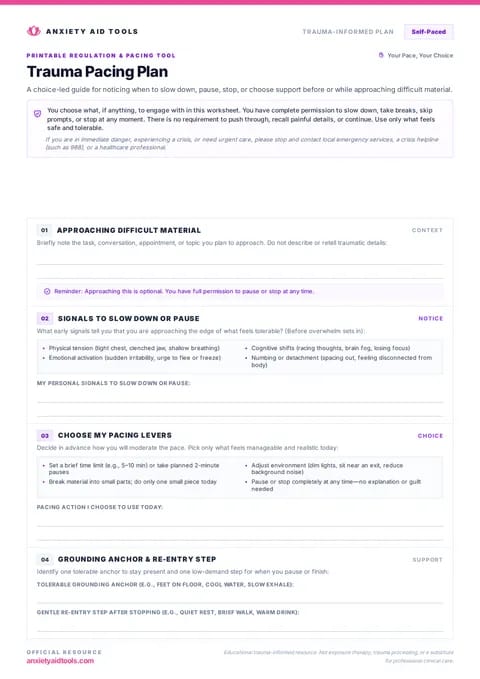
Trauma Pacing Plan

A trauma-informed choice and pacing tool for noticing when to slow, pause, stop, or choose support before or while approaching difficult material.

Trauma & Triggers
Beginner
10 min
Trauma Pacing Plan
Pro download PDF & PNG

Overview

Print for offline use during therapy or self-practice

Printable PDF and PNG formats available in your Pro dashboard

When to Use

  • Before approaching a difficult topic, appointment, or conversation that may feel activating
  • When you want clear, planned permission to slow down, take breaks, or stop
  • When noticing early physical or emotional cues that you are approaching the edge of your comfort zone
  • When deciding in advance on a grounding anchor or support option without recounting difficult events

How to Use

  1. 1
    Briefly name the material or task you plan to approach, without describing or recalling traumatic details.
  2. 2
    Identify early body cues—such as muscle tightness or numbing—that signal it is time to slow down or pause.
  3. 3
    Select one or two practical pacing levers, such as setting a time limit or scheduling pauses.
  4. 4
    Remember that stopping or stepping away is always an acceptable and valid choice.
  5. 5
    Identify one tolerable grounding anchor and one low-demand re-entry activity for when you pause or finish.
  6. 6
    If immediate safety is in doubt or distress feels unmanageable, stop and reach out to local emergency services or a crisis helpline.

The Trauma Pacing Plan is an optional, trauma-informed guide to help you monitor and control your pace before or while approaching difficult material—such as sensitive paperwork, medical appointments, tough conversations, or challenging topics. It is not exposure therapy, trauma processing, or a test of endurance.

This plan makes choice and permission explicit: you are not required to recall or describe traumatic details, and continuing is never mandatory. You have complete permission to slow down, take breaks, adjust your surroundings, or stop entirely at any moment without justification.

Use this worksheet as a personal planning aid rather than a promise of calm, safety, or specific results. Use only what feels safe and tolerable. If you experience overwhelming distress, immediate danger, or a crisis, stop immediately and contact local emergency services, a crisis helpline, or a healthcare professional.
Research & References

  • Substance Abuse and Mental Health Services Administration (2014). Trauma-Informed Care in Behavioral Health Services. Treatment Improvement Protocol (TIP) Series, No. 57.
  • Rothschild, B. (2000). The Body Remembers: The Psychophysiology of Trauma and Trauma Treatment. W. W. Norton & Company.