AnxietyAidTools

Evidence-based mental health tools
15 min

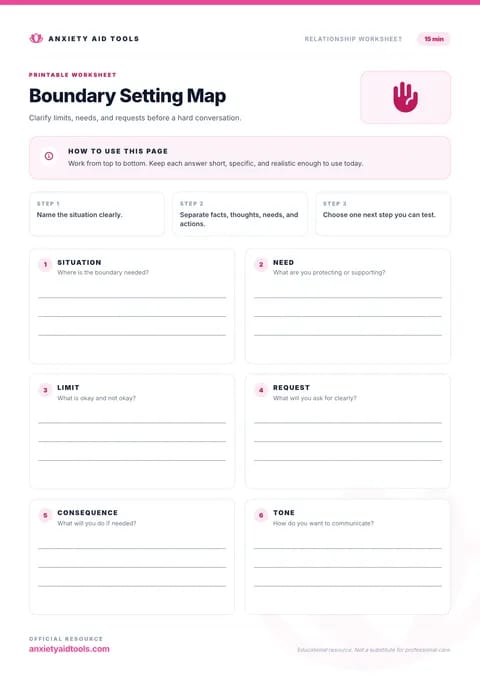
Boundary Setting Map

Clarify limits, needs, and requests before a hard conversation.

Relationships
Intermediate
15 min
Boundary Setting Map

When to Use

  • Before a difficult relationship conversation
  • When resentment signals a missing limit
  • When requests become unclear or apologetic
  • During DBT-style interpersonal practice

How to Use

  1. 1
    Describe the situation without blame or interpretation.
  2. 2
    Name the need the boundary is meant to support.
  3. 3
    Write the limit in concrete terms.
  4. 4
    Create a request that another person can understand.
  5. 5
    Decide what action you will take if the limit is crossed.
  6. 6
    Practice the tone you want to use before speaking.

Download PDF and PNG with Pro

Preview this worksheet for free. Pro unlocks downloadable PDF and PNG versions, fillable worksheets, and saved progress.

Unlock Pro

The Boundary Setting Map helps prepare clear limits without escalating or over-explaining. A boundary names what you can choose, what you need, and what action you will take to protect that need.

This worksheet separates the situation, need, limit, request, consequence, and tone. That structure makes it easier to communicate directly while staying respectful and grounded.

Use it before a conversation about time, energy, privacy, work, family, or friendship. Good boundaries are specific, realistic, and connected to your own behavior.
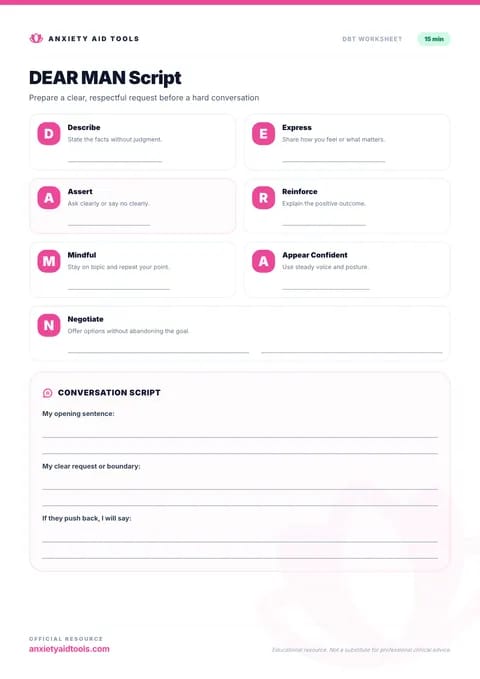
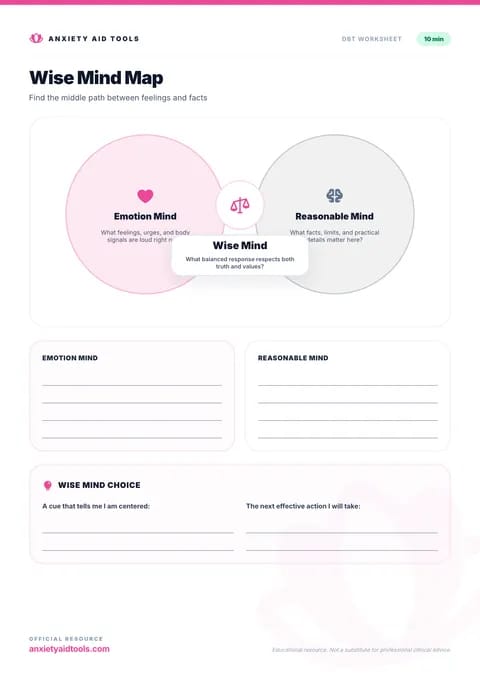
Research & References

  • Linehan, M. M. (2014). DBT Skills Training Manual. Guilford Press.
  • Rosenberg, M. B. (2015). Nonviolent Communication: A Language of Life. PuddleDancer Press.