Guia Rápido de Autocompaixão
Ferramentas práticas baseadas nos estudos da Dra. Kristin Neff para substituir a voz da autocrítica implacável por compreensão, gentileza e acolhimento nos momentos de sofrimento e erro.
Desbloqueie downloads com o Pro
Baixe formatos PDF em alta resolução (A4 e US Letter) e PNG prontos para impressão de todos os guias diretamente do seu painel.
Os guias rápidos são cartazes de consulta rápida de uma página, criados para serem impressos e guardados onde a ansiedade costuma surgir. Disponíveis nos formatos A4, US Letter e PNG no seu painel Pro.
O que inclui este guia rápido
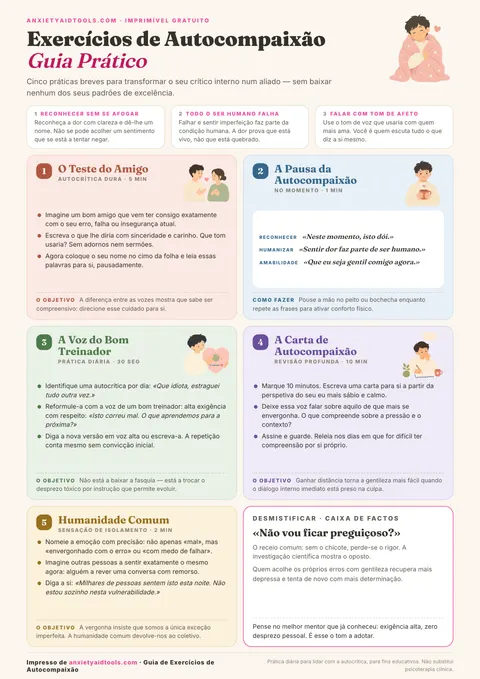
1. Os Três Pilares da Autocompaixão
Autogentileza (em vez de autojulgamento), Humanidade Compartilhada (saber que todos sofrem e erram) e Mindfulness (reconhecer a dor sem exagerar).
2. O Roteiro da Pausa da Autocompaixão
Passo 1: "Este é um momento de sofrimento". Passo 2: "O sofrimento faz parte da vida de todos". Passo 3: "Que eu possa ser gentil comigo agora".
3. Toque Físico Reconfortante (Neurobiologia)
Colocar a mão quente sobre o coração, segurar as próprias mãos ou abraçar-se para liberar oxitocina e acalmar a amígdala.
4. A Pergunta do Melhor Amigo
"O que eu diria a um amigo querido que estivesse passando exatamente por esta mesma situação e sentindo essa mesma dor?"
5. Desarmar a Voz do Crítico Interno
Reconheça a autocrítica como uma tentativa desajeitada de proteção e responda com firmeza carinhosa.
6. Autocompaixão Feroz (Ação)
Autocompaixão não é apenas acolhimento suave; é também a coragem de dizer não, proteger-se de abusos e lutar por suas necessidades.
A Verdade Fundamental
Você não precisa ser perfeito para merecer seu próprio amor, respeito e compaixão.
Como usar
- 1
Imprima e deixe o guia perto do espelho ou do seu caderno de reflexão.
- 2
Ao cometer um erro ou sentir vergonha, coloque a mão no peito e faça a pausa de 3 passos.
- 3
Substitua as frases duras da autocrítica pelas palavras que você usaria com alguém que ama.
- 4
Pratique diariamente até que a gentileza se torne seu tom de voz interno padrão.
Perguntas frequentes
Autocompaixão não vai me tornar preguiçoso ou acomodado?
Pelo contrário! Pesquisas da Dra. Kristin Neff comprovam que a autocompaixão gera muito mais motivação sustentável do que a autocrítica. A autocrítica gera medo de errar e paralisia; a autocompaixão cria um ambiente seguro para tentar de novo e aprender com os erros.
Qual é a diferença entre autocompaixão e autopiedade?
A autopiedade foca no 'por que isso só acontece comigo?' e gera isolamento e vitimização. A autocompaixão baseia-se na humanidade compartilhada: ela reconhece a dor, mas lembra que o sofrimento e a imperfeição são universais a todos os seres humanos.
Como baixar este guia em alta definição?
O guia está disponível gratuitamente para leitura na página. Os arquivos em formato PDF (A4 e US Letter) e imagens PNG prontos para impressão podem ser baixados no painel Pro.
Por que o toque somático no peito libera ocitocina?
O cérebro mamífero evoluiu para associar o calor e a pressão suave no peito aos cuidados e ao afeto maternal da infância. Esse estímulo tátil ativa o sistema parassimpático e libera ocitocina, reduzindo os níveis corporais de cortisol.