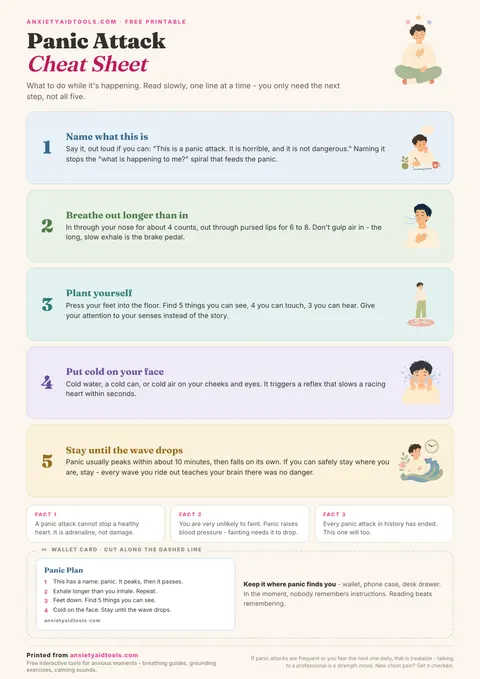
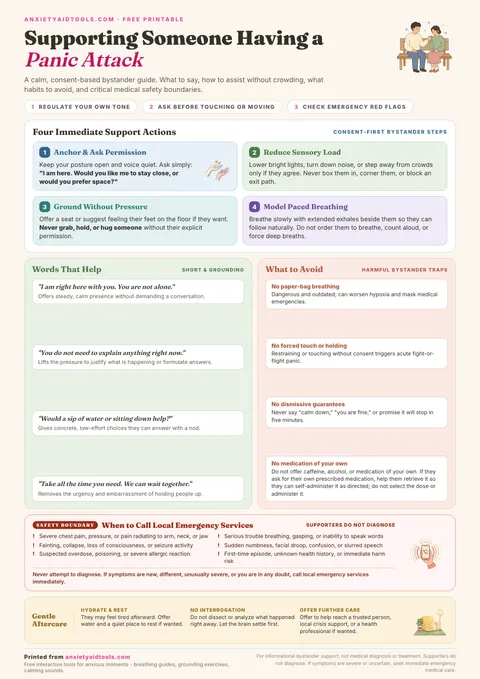
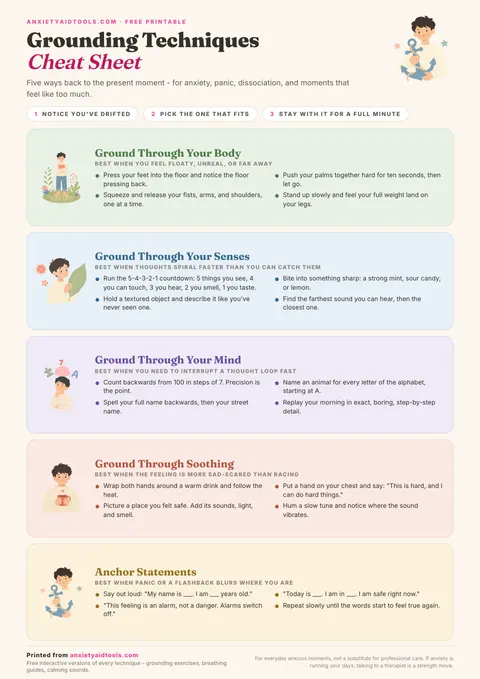
After a Panic Attack Cheat Sheet
A calm, non-clinical guide for the first hour and rest of the day after intense panic. Learn what simple comforts help, what demands to postpone, how to communicate support preferences, and clear safety boundaries.
Unlock Downloads with Pro
Download high-resolution PDF (A4 & US Letter) and print-ready PNG formats for all cheat sheets directly from your dashboard.
Cheat sheets are one-page quick reference posters designed to be printed and kept where anxiety finds you. Available in A4, US Letter, and PNG formats in your Pro dashboard.
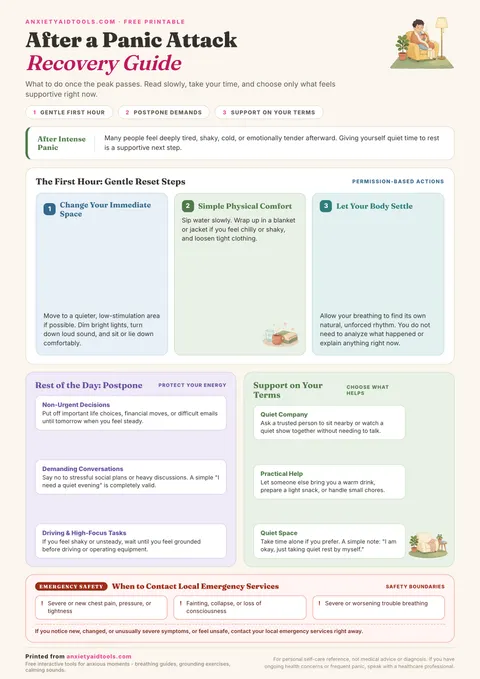
What's on this cheat sheet
After intense panic
A gentle normalizing note acknowledging that many people feel tired, shaky, cold, or emotionally tender afterward.
The first hour: gentle reset
Three unhurried steps to move to a low-stimulation space, bring simple physical warmth and hydration, and let breathing settle naturally.
Rest of the day: permission to postpone
Three groups of demanding tasks to put off, including non-urgent decisions, stressful conversations, and driving while unsteady.
Support on your terms
Three clear ways to ask for what you need, whether that means quiet company, practical help, or restful alone time.
Emergency safety boundaries
Focused safety guidance on when to contact local emergency services immediately for new or severe chest symptoms, fainting, or severe breathing trouble.
How to use it
- 1
Keep a copy in your bedroom, desk, or phone photos so it is easy to reach after intense panic.
- 2
In the first hour, focus on simple comfort, water, and quiet surroundings instead of trying to analyze what happened.
- 3
Give yourself permission to postpone non-urgent tasks, decisions, and demanding social plans for the rest of the day.
- 4
Let friends or family know your preferred support style, whether you want quiet company, practical help, or space.
Frequently asked questions
Why do many people feel tired or shaky after a panic attack?
After intense panic passes, it is common to notice physical fatigue, trembling, chills, or emotional tenderness. Giving yourself quiet time and comfortable surroundings is a supportive way to rest.
What should I focus on during the first hour after panic?
Focus on lowering sensory stimulation and resting comfortably. Move to a quiet space with soft lighting, sip water slowly, wrap up in a blanket if you feel chilly, and let your breathing settle at its own natural pace without pressure.
Is it okay to cancel plans and postpone tasks for the rest of the day?
Yes. It is supportive to delay non-urgent decisions, stressful conversations, and demanding tasks until you feel steady. A short message like 'I need a quiet evening to rest' is completely appropriate.
When should someone seek emergency medical help after a panic attack?
Contact local emergency services immediately if you notice new, changed, or severe symptoms, such as severe or new chest pain, pressure, or tightness, fainting or collapse, or severe or worsening trouble breathing.