AnxietyAidTools

Evidence-based mental health tools
10 min

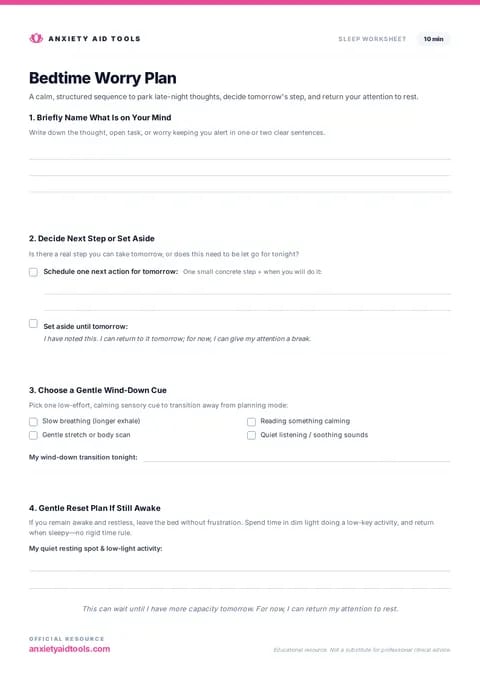
Bedtime Worry Plan

A calm, structured bedtime protocol to park late-night racing thoughts, decide next steps, and transition gently back into rest.

Sleep
Beginner
10 min
Bedtime Worry Plan
Pro download PDF & PNG

Overview

Print for offline use during therapy or self-practice

Printable PDF and PNG formats available in your Pro dashboard

When to Use

  • When racing thoughts or tomorrow's to-do list keep you awake in bed
  • During your evening wind-down routine before getting into bed
  • If you wake up during the night and start problem-solving or ruminating
  • When feeling overwhelmed by unresolved daytime concerns

How to Use

  1. 1
    Complete the sheet at a desk or comfortable chair in dim light before going to bed.
  2. 2
    Write a brief, one-sentence description of the worry or open loop on your mind.
  3. 3
    Decide if there is one realistic next step to schedule tomorrow, or give yourself permission to park it.
  4. 4
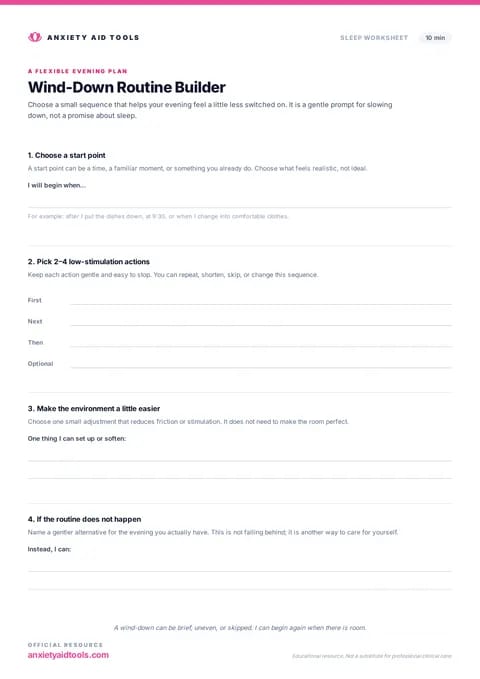
    Choose a gentle, low-effort sensory cue to transition from planning mode to rest.
  5. 5
    If you stay awake in bed, get up gently for a quiet, low-light activity until sleepiness returns.

Late-night worry often feels urgent because the bedroom is quiet and free of daytime distractions. When thoughts race at bedtime, the brain can begin to associate being in bed with problem-solving, vigilance, and frustration rather than rest.

The Bedtime Worry Plan provides an intentional cognitive container rooted in CBT-I (Cognitive Behavioral Therapy for Insomnia) and stimulus control principles. Writing thoughts down relieves working memory and signals to your nervous system that unresolved issues are safely recorded.

Using a calm, low-pressure four-step sequence, this worksheet helps you briefly name what is on your mind, decide whether there is a single concrete action to schedule for tomorrow or if the worry can be set aside, pick a sensory wind-down cue, and follow a gentle reset plan if you remain awake.

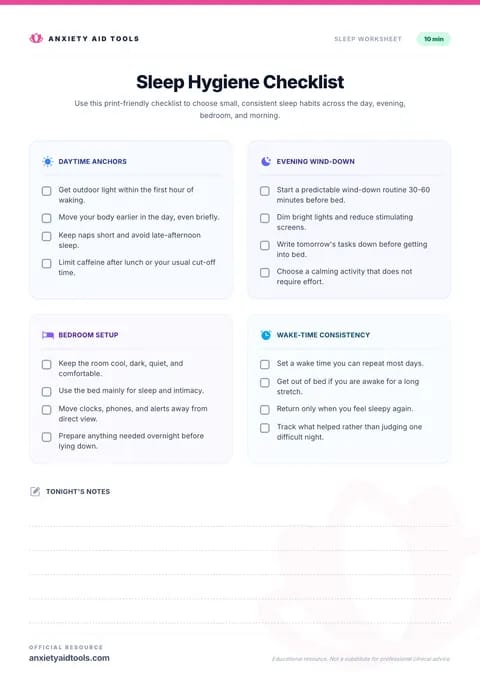
Use this sheet before bed or at a quiet table outside the bedroom to preserve your bed as a sanctuary for sleep.
Research & References

  • Borkovec, T. D., Wilkinson, L., Folensbee, R., & Lerman, C. (1983). Stimulus control applications to the treatment of worry. Behaviour Research and Therapy, 21(3), 247-251.
  • Morin, C. M., et al. (2006). Psychological and behavioral treatment of insomnia: Update of the recent evidence. Sleep, 29(11), 1398-1414.