Self-Compassion Scale (SCS)
A validated 26-question assessment developed by Dr. Kristin Neff that measures how you treat yourself during difficult times. It evaluates self-kindness, common humanity, and mindfulness versus self-judgment, isolation, and over-identification with negative emotions.
Who Is This Test For?
The Self-Compassion Scale is designed for adults who want to understand how they relate to themselves during difficult times. It's particularly valuable for those interested in building emotional resilience and well-being through a kinder inner relationship.
- Adults who want to understand their relationship with themselves during hard times
- Those curious whether their inner dialogue is more critical or compassionate
- People interested in building emotional resilience through self-kindness
- Anyone exploring mindfulness, meditation, or contemplative practices
Please read each statement carefully before answering. Indicate how often you behave in the stated manner.
I'm disapproving and judgmental about my own flaws and inadequacies
When I'm feeling down I tend to obsess and fixate on everything that's wrong
When things are going badly for me, I see the difficulties as part of life that everyone goes through
When I think about my inadequacies, it tends to make me feel more separate and cut off from the rest of the world
I try to be loving towards myself when I'm feeling emotional pain
When I fail at something important to me I become consumed by feelings of inadequacy
When I'm down, I remind myself that there are lots of other people in the world feeling like I am
When times are really difficult, I tend to be tough on myself
When something upsets me I try to keep my emotions in balance
When I feel inadequate in some way, I try to remind myself that feelings of inadequacy are shared by most people
I'm intolerant and impatient towards those aspects of my personality I don't like
When I'm going through a very hard time, I give myself the caring and tenderness I need
When I'm feeling down, I tend to feel like most other people are probably happier than I am
When something painful happens I try to take a balanced view of the situation
I try to see my failings as part of the human condition
When I see aspects of myself that I don't like, I get down on myself
When I fail at something important to me I try to keep things in perspective
When I'm really struggling, I tend to feel like other people must be having an easier time of it
I'm kind to myself when I'm experiencing suffering
When something upsets me I get carried away with my feelings
I can be a bit cold-hearted towards myself when I'm experiencing suffering
When I'm feeling down I try to approach my feelings with curiosity and openness
I'm tolerant of my own flaws and inadequacies
When something painful happens I tend to blow the incident out of proportion
When I fail at something that's important to me, I tend to feel alone in my failure
I try to be understanding and patient towards those aspects of my personality I don't like
Turn self-test results into a clearer next step.
Save your results, watch changes over time, and find relevant tools when you need a next step.
- Save your history
- Track changes over time
- Find relevant tools
Save this result so your next score has context.
Good To Know

Talk to Yourself Like a Friend
When you notice self-criticism, pause and ask: 'What would I say to a good friend in this situation?' Then offer yourself those same words. This simple shift can transform your inner dialogue. You deserve the same kindness you readily give others.

Remember: Everyone Struggles
When you're having a hard time, it's easy to feel alone - like everyone else has it together. But struggle is part of being human. Billions of people have felt exactly what you're feeling. This isn't meant to minimize your pain, but to connect you to humanity. You're not alone in this.
Touch Can Activate Compassion
Physical touch releases oxytocin, the hormone of comfort and connection. When you're struggling, try placing your hand on your heart or giving yourself a gentle hug. It might feel awkward at first, but your body responds to physical warmth even when the gesture is self-directed.
Understanding the Self-Compassion Scale
T he Self-Compassion Scale (SCS) was developed by Dr. Kristin Neff at the University of Texas at Austin in 2003. Dr. Neff pioneered the scientific study of self-compassion, drawing on Buddhist psychology while grounding the concept in Western psychological research. The scale has become the gold standard for measuring self-compassion in research settings worldwide.
Self-compassion has three core components, each with a positive and negative pole. Self-Kindness (vs. Self-Judgment) involves treating yourself with care and understanding rather than harsh criticism. Common Humanity (vs. Isolation) means recognizing that suffering and imperfection are shared human experiences. Mindfulness (vs. Over-Identification) involves holding painful thoughts and feelings in balanced awareness rather than suppressing or exaggerating them.
Research consistently shows that self-compassion is strongly associated with psychological well-being. Higher self-compassion is linked to lower anxiety, depression, and stress, as well as greater life satisfaction, emotional intelligence, and resilience. Importantly, self-compassion is distinct from self-esteem - it doesn't depend on being special or above average, but on treating yourself kindly regardless of success or failure.
The SCS uses a 1-5 scale from 'almost never' to 'almost always.' Half the items measure the positive components (self-kindness, common humanity, mindfulness) and half measure their opposites (self-judgment, isolation, over-identification), which are reverse-scored. Your total score reflects how self-compassionate you are across all dimensions.
Frequently Asked Questions
Is self-compassion the same as self-pity or self-indulgence?
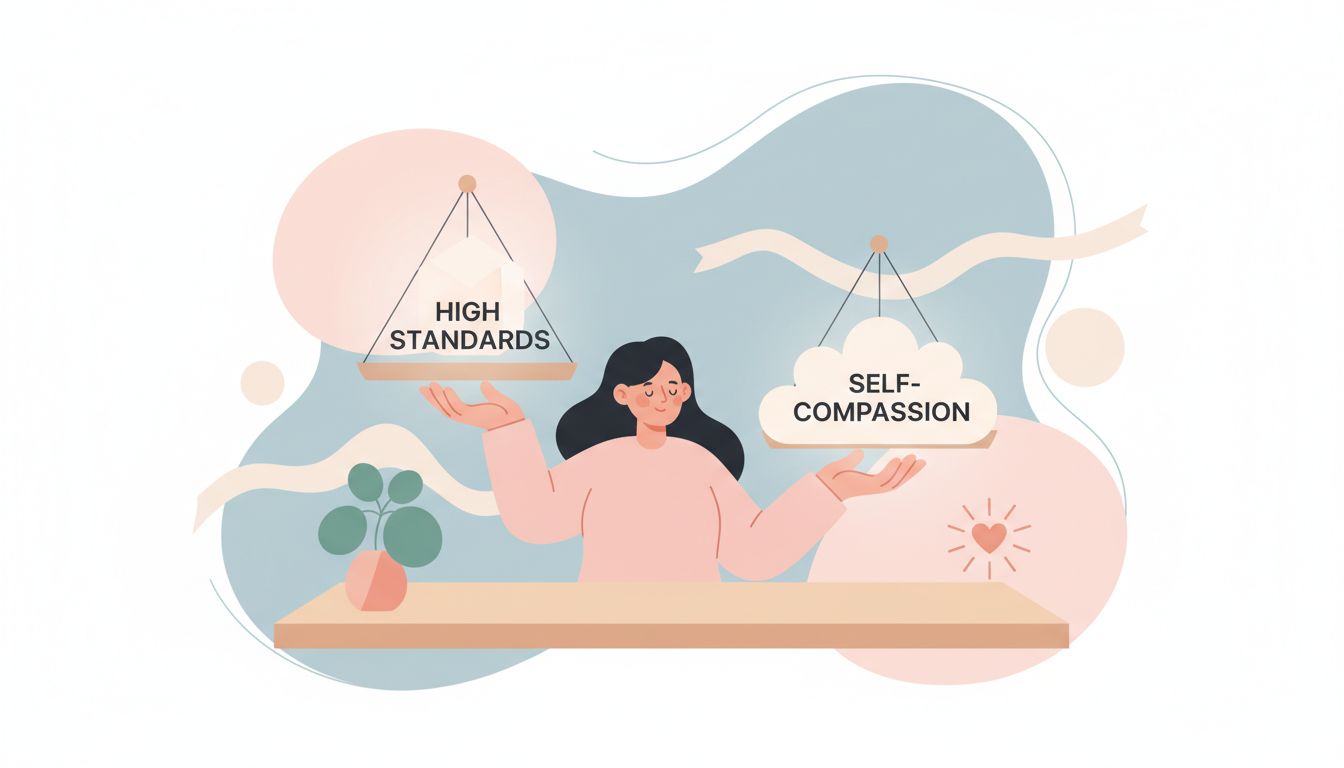
No - self-compassion is actually the opposite. Self-pity involves over-identification with your problems ('poor me'), while self-compassion maintains balanced awareness. Self-indulgence often avoids discomfort at the cost of long-term well-being, while self-compassion genuinely cares about your well-being and sometimes means doing hard things. Research shows self-compassionate people are more motivated to improve, not less.
Can self-compassion be learned?
Yes, absolutely. Research shows that self-compassion can be significantly increased through practice. Mindful Self-Compassion (MSC) is an 8-week program developed by Dr. Neff and Dr. Chris Germer that has been shown in randomized controlled trials to increase self-compassion, mindfulness, and well-being while decreasing anxiety, depression, and stress. Simple daily practices can also help.
Does self-compassion make people weak or lazy?
Research shows the opposite. Self-compassionate people are more likely to take responsibility for mistakes, try again after failure, and pursue challenging goals. Self-criticism, by contrast, undermines motivation because it activates the threat-defense system. Self-compassion provides the emotional safety needed to acknowledge shortcomings and work on improvement.
How is self-compassion different from self-esteem?
Self-esteem depends on feeling special, successful, or better than others - it fluctuates with achievement and can lead to narcissism or ego-defensiveness. Self-compassion offers unconditional kindness regardless of performance. It provides emotional stability because it doesn't depend on being exceptional. Research shows self-compassion provides the same mental health benefits as self-esteem without the downsides.
What if I was raised to be self-critical?
Many people learn self-criticism from parents, teachers, or culture who believed it would motivate them. While this approach is well-intentioned, research shows self-criticism actually undermines performance and well-being. The patterns are changeable - neuroplasticity means you can develop new, more compassionate neural pathways through practice. Start small: notice self-criticism without judgment, and try speaking to yourself as you would a friend.
More Tests
This self-assessment measures self-compassion as defined in psychological research. It is not a clinical diagnostic tool. While low self-compassion is associated with poorer mental health outcomes, this scale cannot diagnose any condition. If you're experiencing significant distress, please consult a mental health professional who can provide personalized support.