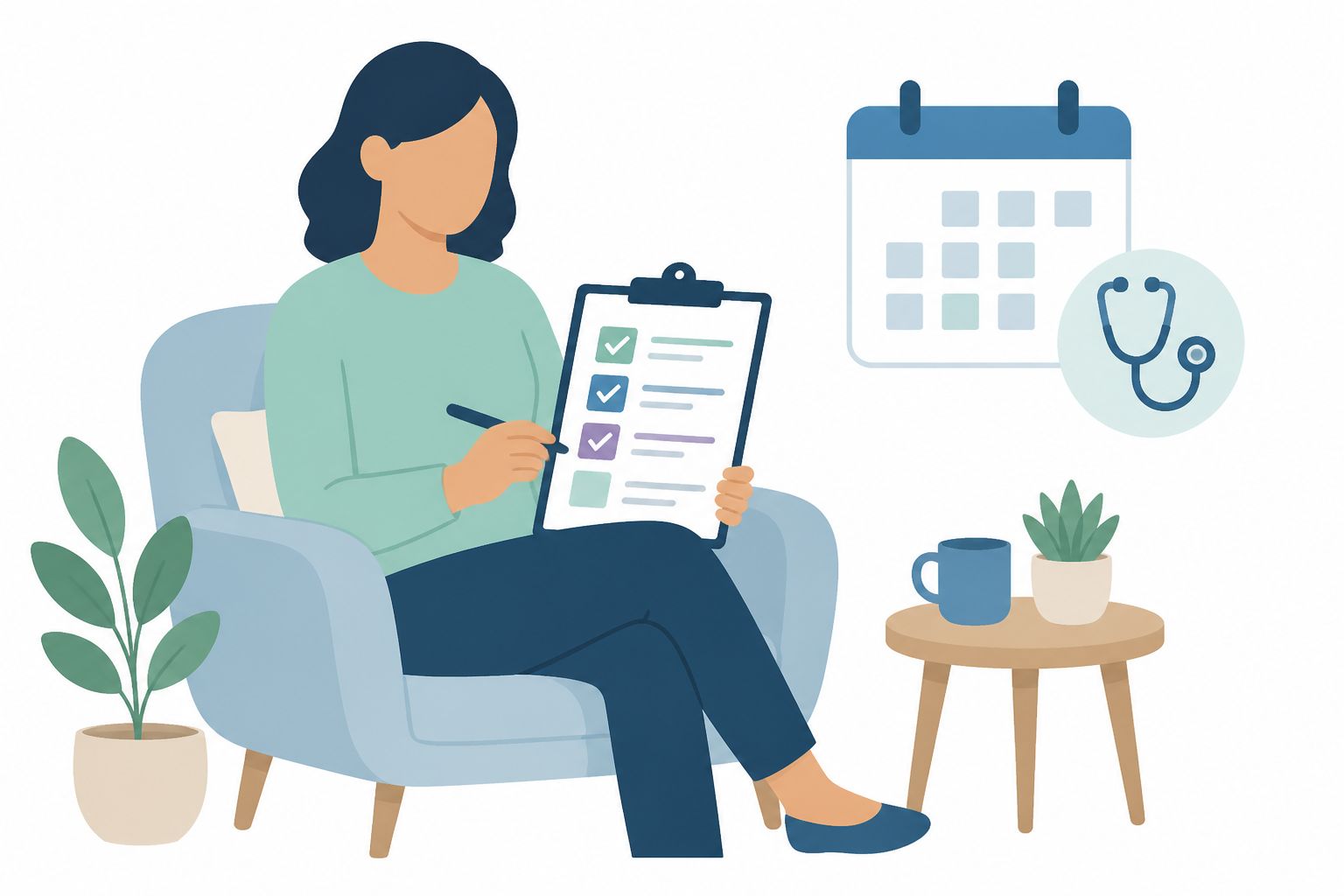
Health Anxiety Test: What Patterns Do You Notice?
This original educational reflection only helps you notice health-related attention and coping patterns; it is not a validated clinical assessment and is not diagnostic.
Who Is This Reflection For?
This educational reflection is for adults who want a brief, non-clinical way to notice how they respond when health concerns, uncertainty, searching, checking, or reassurance-seeking take up attention.
- People who notice that health information searching can become repetitive
- Anyone who wants to reflect on how they choose appropriate medical advice or emergency care
- People exploring how they respond to uncertainty about physical changes
- Anyone who wants to discuss persistent health worries with a qualified professional
Think about your usual pattern over the past few weeks. Rate how often each practice fits you, based on what you actually do rather than what you think you should do. This page cannot decide what a symptom means.
When I notice a physical change, I make room to observe what is happening before deciding what it means.
I can pause before searching for health information again when I have already looked recently.
I write down a clear question or concern instead of trying to resolve every uncertainty in my head.
I use a planned medical appointment or trusted advice channel when it is appropriate, rather than repeatedly checking many sources.
I can explain a health concern to a professional or trusted person in a short, specific way.
I remember that this reflection cannot rule out, explain, or diagnose a physical symptom.
I notice when searching, body checking, or asking for reassurance is becoming a loop for me.
After getting information or advice, I can return attention to another part of my day for a while.
I can separate the physical sensation I noticed from the story my mind begins to build around it.
I treat myself with patience when uncertainty about my health feels difficult.
I know that a new, severe, worsening, or concerning symptom deserves timely medical advice or emergency care as appropriate.
When health concerns take up a lot of space, I choose one practical next step instead of trying to get complete certainty immediately.
Good To Know

Use One Trusted Care Path
For a concern that needs medical advice, choose an appropriate trusted clinician or service and prepare a short symptom timeline or question. This page cannot tell you whether a symptom needs care.

Make the Checking Loop Visible
Notice what happens before and after searching, body checking, or asking for reassurance. Write down the trigger, the action, and what changes for a few minutes afterward without judging yourself.

Practice a Planned Return
After you have chosen the appropriate next step, set a short time to return to an ordinary activity. Use grounding or slow breathing to help your attention come back to the present.
Understanding This Health Anxiety Reflection
T his is an original educational reflection about everyday ways of responding when health concerns take up attention. It asks about practices such as observing a change, choosing an appropriate care step, communicating a concern clearly, noticing repeated checking, and returning attention to daily life. It is not based on a named scale, is not a validated clinical assessment, and is not diagnostic.
Each of the 12 statements is rated from 1 (Never) to 5 (Almost always). The score is the arithmetic mean of the responses, so the possible score runs from 1.00 to 5.00. A higher score means you reported using the practices in these original statements more often in the situations you considered; it does not say anything about whether a symptom is medical, harmless, or caused by anxiety.
The less-often, sometimes, and more-often bands divide this page's own 1–5 response continuum into three equal-width descriptive sections: 1.00–2.33, above 2.33 to 3.67, and above 3.67 to 5.00. They are reflection summaries created for this page, not clinical thresholds, severity levels, or diagnostic results.
Do not use this reflection to delay or replace medical care. New, severe, worsening, or concerning symptoms warrant timely professional medical advice or emergency care as appropriate. If health worries are persistent, overwhelming, or disrupting daily life, a qualified mental health professional can also help you explore support that fits your situation.
Frequently Asked Questions
What does this reflection measure?
It asks how often you report using a set of original practices for responding to health concerns and uncertainty. It does not measure a disorder, diagnose a condition, or explain physical symptoms.
How is the score calculated?
Each of the 12 responses is scored from 1 to 5, from Never to Almost always. The score is their arithmetic mean, with a possible range from 1.00 to 5.00.
What do less-often, sometimes, and more-often mean?
They are descriptive summaries of this page's own response continuum: 1.00–2.33 is less-often, above 2.33 to 3.67 is sometimes, and above 3.67 to 5.00 is more-often. They are not clinical thresholds, severity levels, or diagnostic results.
Can this reflection tell me whether a symptom is serious?
No. It cannot explain, rule out, or diagnose a symptom. New, severe, worsening, or concerning symptoms need timely professional medical advice or emergency care as appropriate.
What can I do if health worries are taking over my day?
Choose the appropriate medical care step for any symptom that needs it, then consider discussing persistent or overwhelming health worries with a qualified mental health professional. A clear plan, a short written question, and a grounding exercise can help while you seek the support that fits your situation.
More Tests


Sources & References
This is an original educational reflection only. It is not a validated clinical assessment and is not diagnostic. Its original statements and equal-width score bands are for self-reflection only; the bands are not clinical thresholds, severity levels, or diagnostic results. This page cannot explain, rule out, or diagnose physical symptoms, and it must not be used to delay or replace medical care. New, severe, worsening, or concerning symptoms warrant timely professional medical advice or emergency care as appropriate. If health worries are persistent, overwhelming, or interfering with daily life, consider speaking with a qualified mental health professional.