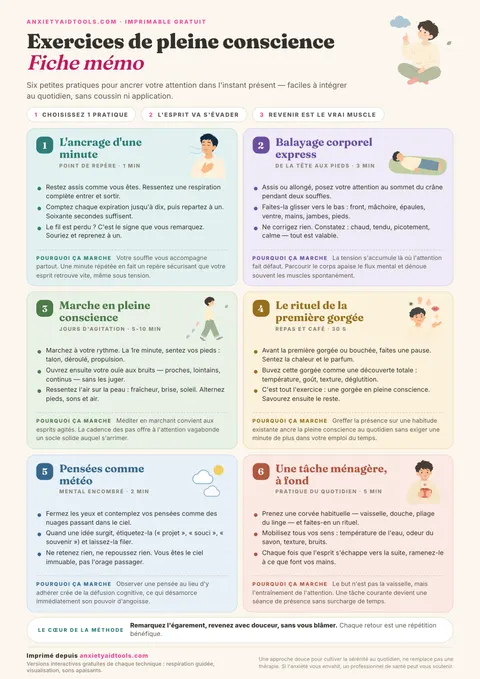
Fiche mémo : Exercices de pleine conscience
Six pratiques accessibles de pleine conscience pour entraîner l'attention, calmer le système nerveux et cultiver la présence bienveillante au quotidien.
Débloquez les téléchargements avec Pro
Téléchargez les formats PDF haute résolution (A4 et US Letter) et PNG prêts à imprimer pour toutes les fiches mémo directement depuis votre tableau de bord.
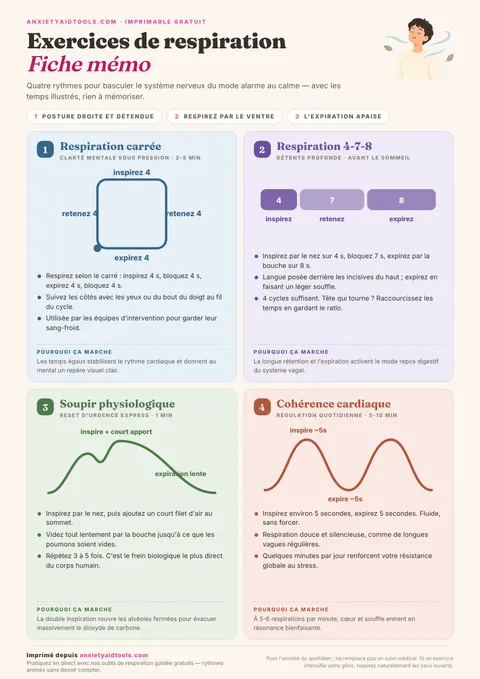
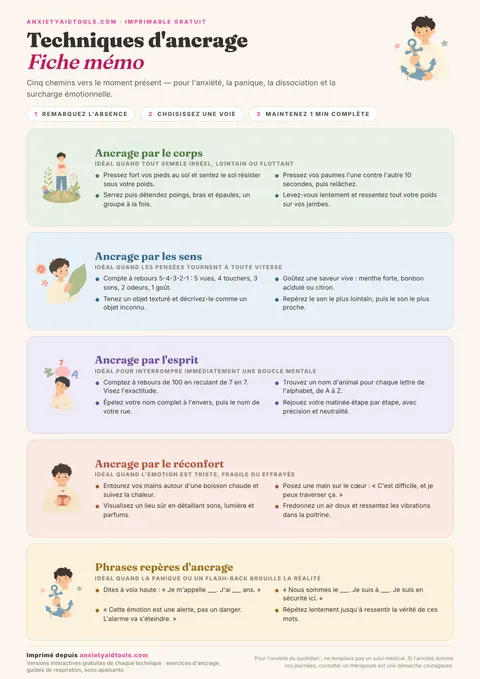
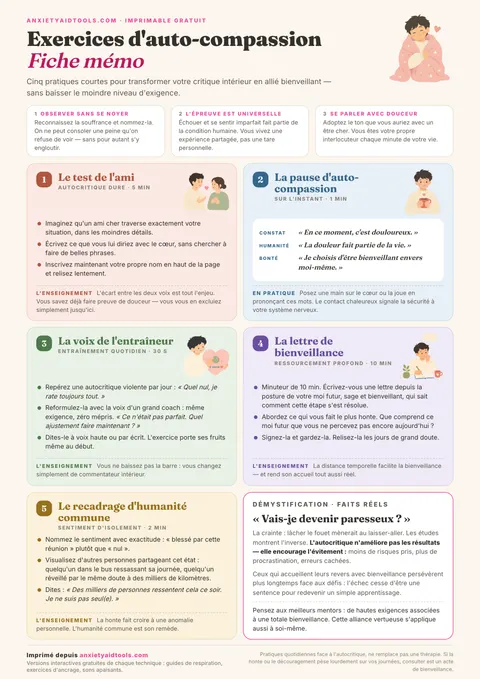
Les fiches mémo sont des posters de référence d'une page conçus pour être imprimés et gardés là où l'anxiété vous touche. Disponibles aux formats A4, US Letter et PNG dans votre tableau de bord Pro.
Contenu de cette fiche
L'ancrage d'une minute
Soixante secondes à compter les expirations jusqu'à dix puis recommencer. Une minute entraînée transforme le souffle en refuge accessible en plein stress.
Le scan corporel express
Trois minutes du sommet de la tête aux orteils pour observer les sensations sans rien forcer. Les muscles se détendent souvent du simple fait d'être remarqués.
La marche consciente
Méditation en mouvement pour esprits agités : porter l'attention sur les pieds, les sons environnants et l'air sur la peau à allure normale.
Le rituel de la première gorgée
Trente secondes d'attention totale sur la première gorgée ou bouchée de votre repas. Lier la pratique aux habitudes ancre la pleine conscience au quotidien.
Les pensées comme la météo
Observer les pensées traverser l'esprit comme des nuages dans le ciel sans s'y accrocher. Vous êtes le ciel vaste, pas la tempête qui passe.
Une tâche du quotidien en pleine présence
Transformer la vaisselle, la douche ou le linge en entraînement attentionnel en y engageant tous ses sens, sans temps supplémentaire à dégager.
Comment l'utiliser
- 1
Imprimez la fiche et placez-la au cœur de votre quotidien : cuisine, bureau, miroir de salle de bain.
- 2
Choisissez l'exercice qui s'intègre le plus facilement à votre routine et essayez-le aujourd'hui, sans chercher la perfection.
- 3
Attendez-vous à ce que votre esprit s'évade : remarquer la distraction et revenir doucement constitue le véritable entraînement.
- 4
Gardez la même pratique pendant une semaine avant d'en ajouter une autre pour créer une vraie habitude durable.
Foire aux questions
Faut-il vider son esprit pour pratiquer la pleine conscience ?
Absolument pas. L'objectif n'est jamais de faire le vide, mais de remarquer quand l'esprit s'est égaré et de le ramener doucement à l'instant présent. Chaque retour d'attention renforce le cerveau.
Combien de temps faut-il méditer chaque jour ?
Même 3 à 5 minutes par jour procurent des bienfaits notables sur le stress et la concentration. La régularité compte bien plus que la durée d'une séance isolée.
Que faire si je me sens encore plus anxieux en essayant de méditer ?
Si la méditation assise silencieuse réveille des angoisses, orientez-vous vers la pleine conscience active : marche consciente, scan corporel avec mouvement doux ou observation des sons environnants.
Quelle est la différence entre pleine conscience et relaxation ?
La relaxation vise un état de détente physique et mentale. La pleine conscience vise une observation lucide et sans jugement de l'expérience actuelle, qu'elle soit agréable ou désagréable.