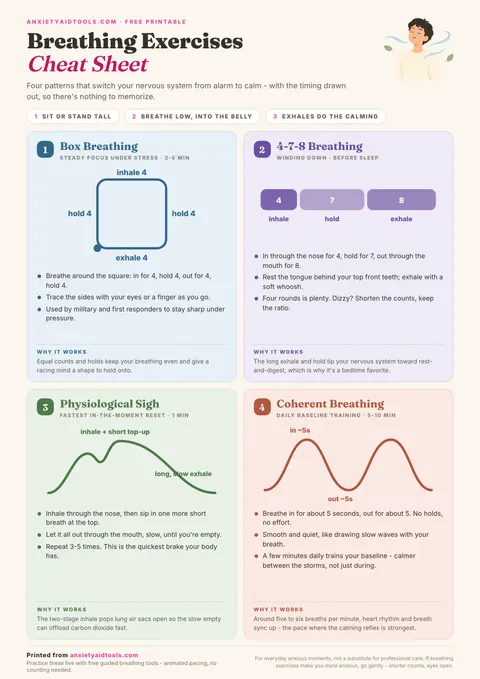
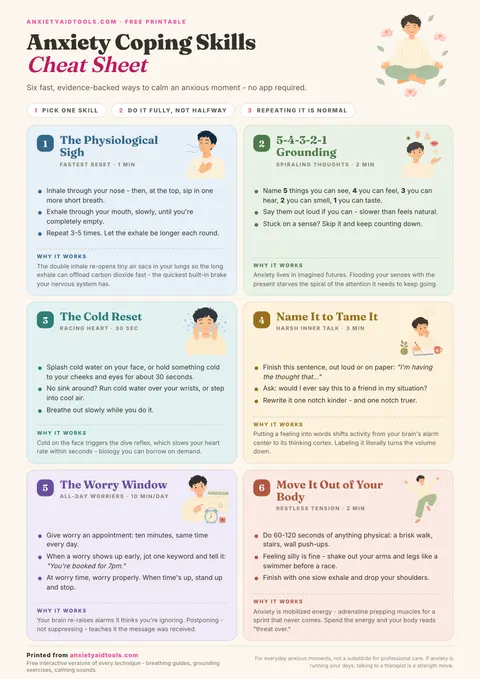
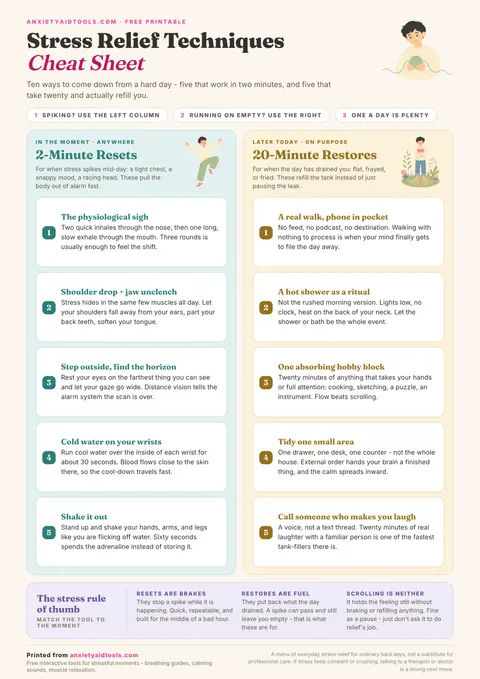
Vagus Nerve Exercises Cheat Sheet
Eight quick, low-risk vagus nerve exercises on one printable page, from the long exhale to slow belly breathing. Honest calibration included: real physiology and modest evidence, with zero miracle claims.
Unlock Downloads with Pro
Download high-resolution PDF (A4 & US Letter) and print-ready PNG formats for all cheat sheets directly from your dashboard.
Cheat sheets are one-page quick reference posters designed to be printed and kept where anxiety finds you. Available in A4, US Letter, and PNG formats in your Pro dashboard.
What's on this cheat sheet
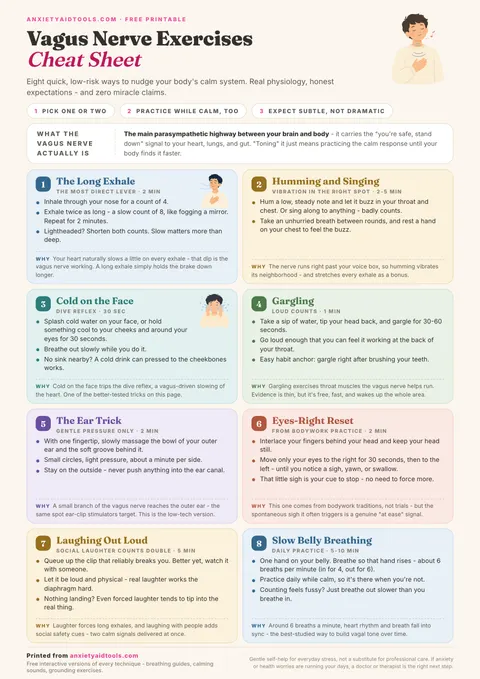
What the vagus nerve actually is
A two-line fact strip that cuts through the hype: the vagus nerve is the main parasympathetic highway between your brain and body, and toning it just means practicing the calm response until your body finds it faster.
The Long Exhale
Breathe in for a count of 4 and out for a count of 8. Your heart naturally slows a little on every exhale, and that dip is vagal activity - a long exhale is the most direct lever you have.
Humming and Singing
Hum a low, steady note or sing along to anything. The nerve runs right past your voice box, so the vibration works its neighborhood while stretching every exhale as a bonus.
Cold on the Face
Splash cold water on your face or hold something cool to your cheeks for 30 seconds. Cold trips the dive reflex, a vagus-driven slowing of the heart, and it is one of the better-tested tricks on the sheet.
Gargling
Gargle water for 30-60 seconds, loud enough to feel it at the back of your throat. It exercises throat muscles the vagus nerve helps run, and it anchors easily to toothbrushing.
The Ear Trick
Gently massage the bowl of your outer ear and the groove behind it, about a minute per side. A small branch of the vagus nerve reaches the outer ear - the same spot ear-clip stimulators target.
Eyes-Right Reset
Interlace your fingers behind your head, keep your head still, and move only your eyes right for 30 seconds, then left, until a sigh, yawn, or swallow arrives. From bodywork practice rather than trials, but the sigh it triggers is a genuine at-ease signal.
Laughing Out Loud
Queue up the clip that reliably breaks you, ideally with company. Real laughter forces long exhales, and laughing with people adds social safety cues - two calm signals at once.
Slow Belly Breathing
About 6 breaths per minute with one hand rising on your belly, practiced daily. Around that pace, heart rhythm and breath fall into sync - the best-studied way to build vagal tone over time.
How to use it
- 1
Print the sheet and keep it where stress actually finds you: your desk, the kitchen, or a bedside table.
- 2
Read the fact strip once so you know what you are working with, and what not to expect.
- 3
Pick one or two exercises and practice them daily while you are calm, so they come easily when you are not.
- 4
In a tense moment, start with the long exhale, then layer on a second technique if you need more.
Frequently asked questions
How do I stimulate my vagus nerve?
Start with your breath, because it is the most direct lever you have: exhale roughly twice as long as you inhale, and keep that going for a couple of minutes. Your heart rate dips slightly on every exhale, and that dip is vagal activity you can deliberately extend. Humming, gargling, cold water on the face, and slow belly breathing at about six breaths per minute all nudge the same system through different doors. Treat the exhale as your foundation and the rest as low-risk extras worth experimenting with.
What are the symptoms of low vagal tone?
Low vagal tone is not a diagnosis you can assign yourself, and no online checklist can measure your nervous system reliably. What people usually mean is a chronically stressed system, which tends to show up as a racing or pounding heart, shallow chest breathing, digestive trouble, and difficulty winding down after stress has passed. Those signs have many possible causes, so persistent symptoms deserve a conversation with a doctor rather than a self-applied label. The practical part is unchanged either way: the exercises on this sheet are worth practicing whether or not your vagal tone is technically low.
How fast do vagus nerve exercises work?
Some effects arrive almost immediately: a long exhale or cold water on the face can slow your heart rate within seconds to a minute, because both use built-in reflexes. Feeling meaningfully calmer usually takes a few minutes of staying with the exercise rather than doing it once and checking. Raising your baseline is a slower project - think weeks of daily slow-breathing practice, similar to building any other kind of fitness. Expect gentle nudges in the moment and gradual gains over time, not an instant switch.
Is vagus nerve stimulation legit?
Device-based vagus nerve stimulation is real, regulated medicine: implanted and prescription stimulators are used to treat epilepsy and treatment-resistant depression. The exercises on this sheet are gentler cousins that work the same pathways at far lower intensity, and their evidence ranges from solid (slow breathing, the dive reflex) to thin but plausible (gargling, ear massage). Because simple physical exercises carry no extra financial barrier and are essentially risk-free, they are worth trying even where the research is still young. Just be skeptical of anyone promising that vagus nerve hacks will cure anxiety, trauma, or gut problems outright.