After a Difficult Conversation: Reset Before You React
A practical guide for the moments after tense talks. Learn how to settle your body, separate literal facts from stress stories, and choose a clean response without reacting impulsively.
Unlock Downloads with Pro
Download high-resolution PDF (A4 & US Letter) and print-ready PNG formats for all cheat sheets directly from your dashboard.
Cheat sheets are one-page quick reference posters designed to be printed and kept where anxiety finds you. Available in A4, US Letter, and PNG formats in your Pro dashboard.
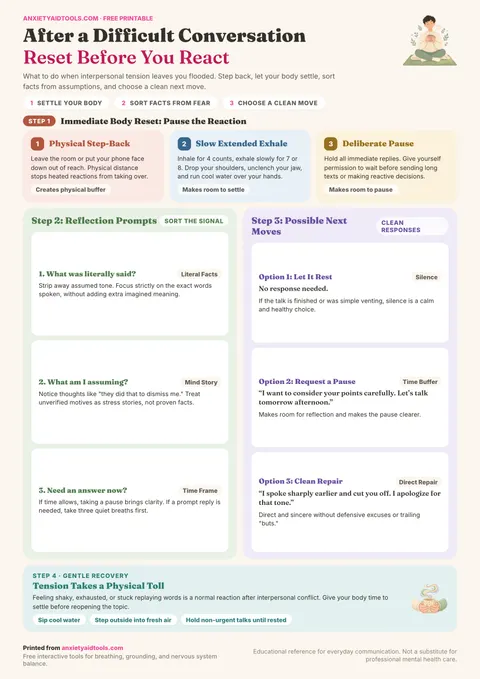
What's on this cheat sheet
Immediate Body Reset
Three simple steps to physically step away from the interaction, extend your exhales, and pause before sending reactive replies.
Reflection Prompts
Three concise questions to check what was literally said, catch assumed motives, and evaluate whether an immediate response is truly needed.
Possible Next Moves
Three clean response options with practical scripts: letting it rest in silence, requesting a calm pause, or offering a direct repair.
Gentle Recovery
A normalizing reminder that feeling tired or shaky after conflict is common, with simple physical comfort actions like hydration and fresh air.
How to use it
- 1
Keep a copy near your workspace or saved on your phone for right after a tense talk or heated message exchange.
- 2
First, step away from screens, put your phone face down, and use slow exhales to let your body settle.
- 3
Read through the reflection prompts to separate literal words from assumed motives.
- 4
Select one clean next move that fits the situation and give yourself time before replying.
Frequently asked questions
Why do I feel exhausted and shaky after a difficult conversation?
Interpersonal tension is physically demanding. When the conversation ends, your body experiences a natural drop in energy as it begins to settle. Shaky feelings, heavy fatigue, or trouble concentrating are common bodily reactions to stress.
How long should I wait before sending a follow-up message?
Giving yourself a deliberate pause allows your body to settle so your reply comes from thoughtful intention rather than stress. If a prompt reply is needed, taking three quiet breaths first helps you respond with steady calm.
What should I do if I said something harsh during the talk?
Use a clean, brief repair script once you feel calm. Name what you did specifically and apologize for your tone without adding defensive excuses or trailing 'buts'.
How do I know whether to respond or just let the conversation go?
Ask yourself if further discussion serves a clear, constructive purpose. If the conversation has ended or the other person was simply venting frustration, letting the matter rest in silence is often the most grounded choice.