Anger Management Cheat Sheet
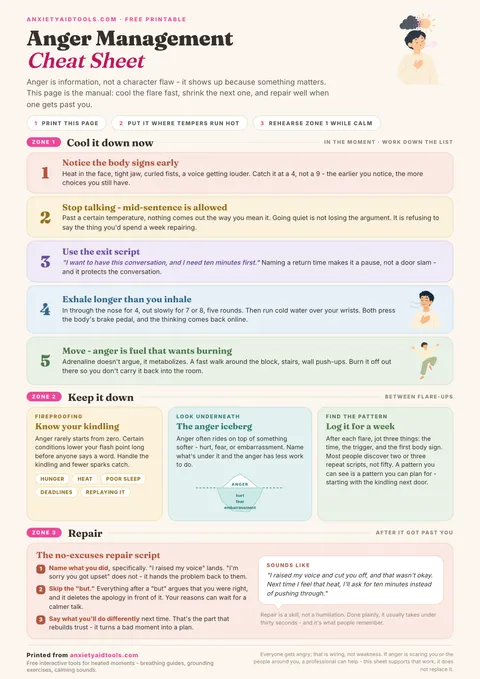
Anger is information, not a character flaw. One printable A4 page with a five-step plan to cool a flare fast, three habits that shrink the next one, and a no-excuses repair script for when one gets past you.
Unlock Downloads with Pro
Kids’ cheat sheets are free to download. Unlock Pro for high-resolution PDF and PNG downloads of the rest of the library.
Cheat sheets are one-page quick reference posters designed to be printed and kept where anxiety finds you. Available in A4, US Letter, and PNG formats in your Pro dashboard.
What's on this cheat sheet
Cool It Down Now (5 steps)
A step timeline for the hot moment: notice the body signs early, stop talking mid-sentence if needed, use the ten-minute exit script, exhale longer than you inhale with cold water on your wrists, then move to burn the adrenaline off.
Know Your Kindling
Anger rarely starts from zero. Hunger, heat, poor sleep, deadlines, and replaying an old grievance all lower your flash point, so half the work is fireproofing the day.
The Anger Iceberg
A small diagram of the classic idea: anger often rides on top of something softer like hurt, fear, or embarrassment. Name what's under it and the anger has less work to do.
Log It for a Week
After each flare, jot the time, the trigger, and the first body sign. Most people find two or three repeat scripts, not fifty, and a pattern you can see is a pattern you can plan for.
The No-Excuses Repair Script
Three moves for after a blow-up: name what you did specifically, skip the 'but', and say what you'll do differently next time, with a two-line example apology you can adapt.
How to use it
- 1
Print it and put it where tempers tend to run hot: the kitchen, your desk, near the family calendar.
- 2
Rehearse the five Zone 1 steps while you're calm, especially the exit script, so they're within reach when you're not.
- 3
Between flare-ups, work Zone 2: watch your kindling for a week and note what sits under the anger.
- 4
After a blow-up, use the repair script within a day. Short and specific beats long and defensive.
Frequently asked questions
How do I calm down fast when I'm angry?
Work with your body first, because in a real flare the reasonable part of your brain is briefly offline. Stop talking, even mid-sentence, and step away with a return time: 'I want to have this conversation, and I need ten minutes first.' Then breathe out longer than you breathe in for a few rounds, run cold water over your wrists, and move - a fast walk or a flight of stairs burns off the adrenaline that keeps the anger loud. Trying to argue yourself calm while flooded usually just gives the anger more fuel.
Why do I get angry so easily?
Usually two things are stacking. First, kindling: hunger, heat, poor sleep, deadline pressure, and replaying an old grievance all lower your flash point before anyone says a word, so an ordinary irritation lands on a body that's already primed. Second, there's often a softer feeling underneath - hurt, fear, or embarrassment - and anger is simply the fastest, most protected way to express it. Logging your flares for a week usually reveals two or three repeating patterns, which is far more fixable than 'I'm just an angry person.'
Is anger a secondary emotion?
Often, but not always. The 'anger iceberg' idea is that anger frequently rides on top of a more vulnerable feeling: hurt at being dismissed, fear about money, embarrassment at being corrected in front of others. Anger feels safer to show, so it goes first. That said, anger can also be a primary, legitimate response - to unfairness or a crossed boundary, for example. The practical move is the same either way: name what else is present, because a precisely named feeling is easier to act on well than a loud, blurry one.
When is anger a problem worth getting help for?
A useful test is cost, not volume. Consider getting support if anger is frequent enough that people around you manage their behavior to avoid setting you off, if it has cost you relationships, jobs, or driving incidents, if it turns into shouting, throwing, or threats, or if the shame after an outburst is becoming its own weight. Help works: anger management programs and CBT-based therapy reliably reduce both the frequency and intensity of outbursts. Going is a sign you take your relationships seriously, not proof that something is wrong with you as a person.
Prefer something to fill in?
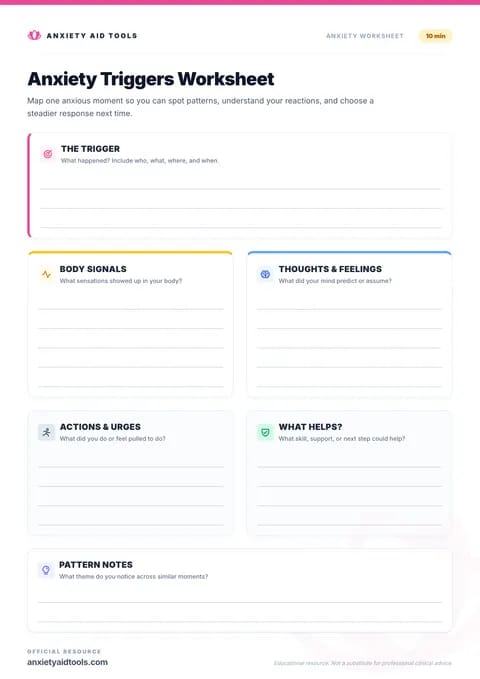
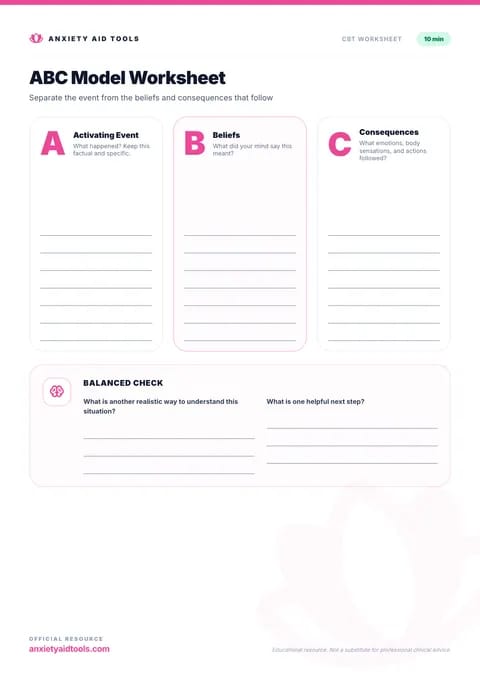
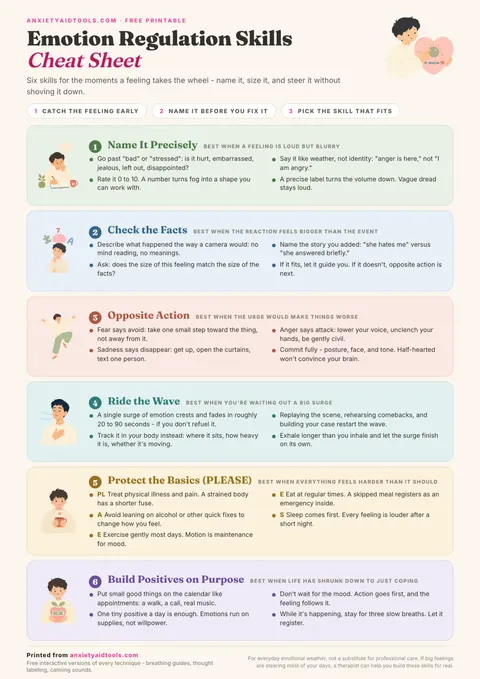
Cheat sheets are for reading in the moment. If you want structured exercises you write on, browse the worksheets library.