Morning Anxiety Cheat Sheet
A first-hour routine for mornings that start with dread: six small moves, in order, built around the cortisol spike your body produces on its own. Print it and keep it by the bed, because nobody remembers a plan at 6 am.
Unlock Downloads with Pro
Download high-resolution PDF (A4 & US Letter) and print-ready PNG formats for all cheat sheets directly from your dashboard.
Cheat sheets are one-page quick reference posters designed to be printed and kept where anxiety finds you. Available in A4, US Letter, and PNG formats in your Pro dashboard.
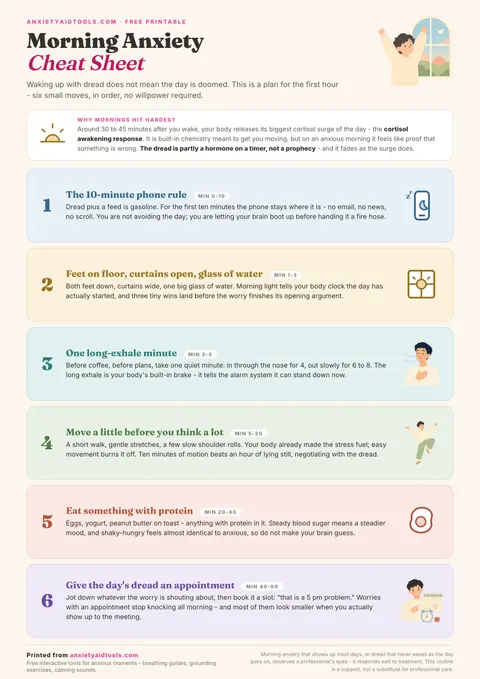
What's on this cheat sheet
Why Mornings Hit Hardest
A short fact box on the cortisol awakening response: your body's biggest stress-hormone surge lands 30 to 45 minutes after waking. Knowing the dread is partly chemistry on a timer takes away half its authority.
The 10-Minute Phone Rule
No email, news, or feeds for the first ten minutes. An anxious brain plus a scroll of bad news is gasoline on the cortisol spike, so the phone waits until your brain has booted up.
Feet on Floor, Curtains Open, Glass of Water
Three tiny physical wins before the worry finishes its opening argument. Morning light tells your body clock the day has genuinely started.
One Long-Exhale Minute
A single quiet minute of breathing with the exhale longer than the inhale, before coffee or plans. The long exhale is the body's built-in brake for the alarm system.
Move a Little Before You Think a Lot
A short walk, stretches, or slow shoulder rolls. Your body already made the stress fuel overnight; easy movement burns it off faster than lying still and negotiating with the dread.
Eat Something With Protein
Eggs, yogurt, or peanut butter on toast to steady blood sugar. Shaky-hungry feels almost identical to anxious, and this step keeps your brain from confusing the two.
Give the Day's Dread an Appointment
Jot down what the worry is shouting about and book it a specific time later in the day. Worries with an appointment stop knocking all morning.
How to use it
- 1
Print the sheet and keep it on your nightstand or stuck to the bathroom mirror, where the anxious morning actually finds you.
- 2
Read the fact box first so you can name what is happening: a cortisol surge on a timer, not proof that something is wrong.
- 3
Work the six steps in order during your first hour awake, using the time windows as a loose guide rather than a stopwatch.
- 4
Repeat the routine daily for a week or two; the steps get automatic, and mornings stop being a negotiation.
Frequently asked questions
Why is my anxiety worse in the morning?
Blame the cortisol awakening response: in almost everyone, cortisol surges to its daily peak around 30 to 45 minutes after waking. That surge is designed to get you up and moving, but it uses the same chemistry as stress, so an anxious brain reads it as evidence of danger. Add an empty stomach, a to-do list that loads instantly, and a phone full of news, and mornings become the perfect storm. The honest framing is that the hormone amplifies worries you already have rather than inventing new ones, and its effect fades as the surge does, usually within the hour.
How do I stop waking up with dread?
You cannot switch the cortisol surge off, but you can change what you do inside it, which changes how it feels. A consistent first-hour routine helps most: keep the phone away for ten minutes, get light and water fast, spend one minute on slow exhales, move a little, eat some protein, and give the day's worry a scheduled slot instead of an open mic. Each step either burns off the stress chemistry or denies it fresh material. Run the routine daily for a couple of weeks; mornings improve gradually as your brain stops pairing waking up with spiraling.
Should I check my phone when I wake up anxious?
Not right away. Your cortisol is peaking in those first minutes, which means your brain is primed to treat anything it sees as urgent, and a feed or inbox hands it an endless supply of things to feel urgent about. Waiting even ten minutes lets the surge start to settle before you load the day's inputs. This is not a digital detox rule, just a sequencing one: light, water, and a few slow breaths first, then the phone with a steadier nervous system behind it.
When should I worry about morning anxiety?
Occasional anxious mornings, especially before big days, are normal and manageable with a routine like this one. It is worth professional input when the dread shows up most mornings for weeks, makes it hard to get out of bed or function at work, comes with panic attacks, or never really lifts as the day goes on. Persistent early waking with heavy morning dread can also be a sign of depression, which is worth naming to a doctor or therapist. Both respond well to treatment, so asking early is a strength move, not an overreaction.