AnxietyAidTools

Evidence-based mental health tools
Self-Paced / Optional

Communication Styles Spectrum

Explore communication styles and practise an optional clear, respectful way to express a need.

Relationships
Beginner
Self-Paced / Optional
Communication Styles Spectrum
Pro download PDF & PNG

Overview

Print for offline use during therapy or self-practice

Printable PDF and PNG formats are also available in your dashboard

When to Use

  • When reflecting on a conversation after it has ended and you feel ready.
  • When preparing a respectful request or boundary in a situation that feels safe.
  • When discussing communication patterns with a trusted person or professional.

How to Use

  1. 1
    Read the examples and possible effects; notice which descriptions fit a particular moment, if any.
  2. 2
    Write when or with whom a style tends to appear. There is no required category.
  3. 3
    Choose something you said or held back and try rewriting it. Use the feeling, situation and request prompts only if useful.
  4. 4
    Consider whether, when and how to use the new wording. You can leave sections blank, pause or decide not to speak.

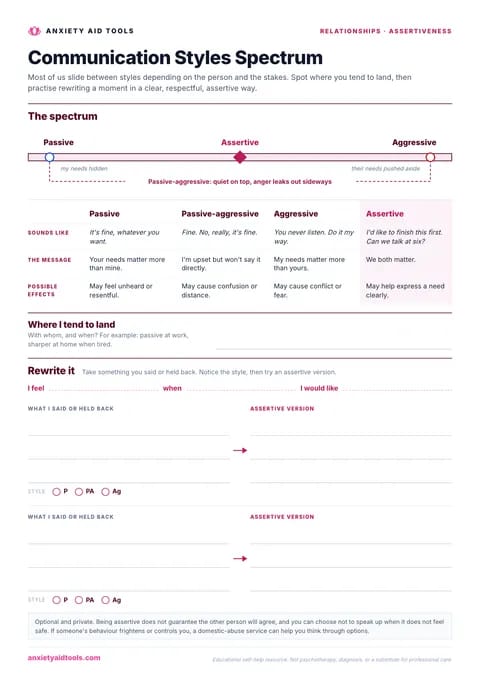
Communication can change with the person, situation and what feels safe. This worksheet compares examples of passive, passive-aggressive, aggressive and assertive communication. These are descriptions of moments, not diagnoses or fixed personality labels.

The spectrum and table show possible messages and effects. A space below invites you to notice where you tend to land, then rewrite something you said or held back. The prompts ‘I feel / when / I would like’ are one option, not a required script.

Assertiveness cannot guarantee agreement, a respectful response or safety. Choosing not to speak may be protective. Adapt the exercise to your culture, communication needs and circumstances. If someone frightens or controls you, a domestic-abuse service can help you consider options without blaming your communication.
Research & References

  • NHS. Getting help for domestic violence and abuse.