AnxietyAidTools

Evidence-based mental health tools
Self-Paced / Optional

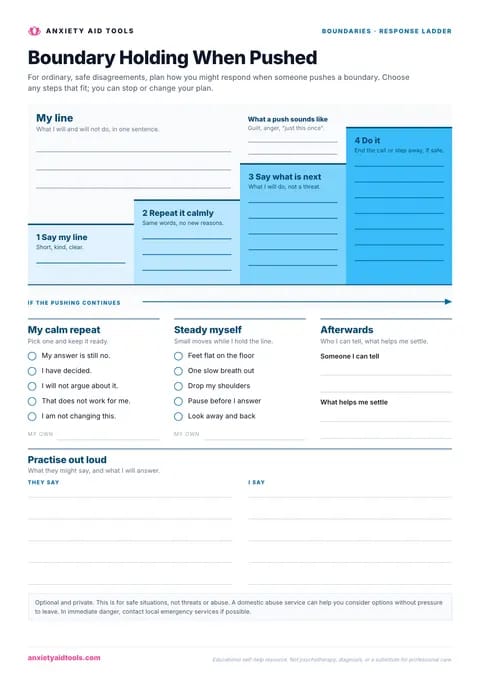
Boundary Holding When Pushed

Plan responses to pressure on a boundary in a safe situation.

Relationships
Beginner
Self-Paced / Optional
Boundary Holding When Pushed
Pro download PDF & PNG

Overview

Print for offline use during therapy or self-practice

Printable PDF and PNG formats are also available in your dashboard

When to Use

  • When preparing for a safe disagreement about a personal limit.
  • When you want a short phrase ready if someone asks again.
  • When you want to plan what support or settling activity might help afterward.

How to Use

  1. 1
    Write your boundary in one sentence and note what a push might sound like.
  2. 2
    Explore the ladder and write an optional response or next action that is safe for you.
  3. 3
    Choose or write a phrase for repeating your decision and a way to steady yourself.
  4. 4
    Practise a possible exchange in the “They say / I say” spaces.
  5. 5
    Note someone you could tell and what could help you settle afterward, if useful.

In an ordinary disagreement that feels safe, it can help to decide in advance what you will and will not do. This page offers space to plan a clear line and a response if someone pushes back.

The response ladder offers choices, not steps you must finish: state or repeat your line, name your next action or step away if safe. Practise in your own words and skip anything that does not fit.

Optional and private. This is for safe situations, not threats or abuse. A domestic abuse service can help you consider options without pressure to leave. In immediate danger, contact local emergency services if possible. If someone monitors your device or belongings, consider whether keeping or sharing this page is safe for you.
Research & References

  • NHS. Getting help for domestic violence and abuse.