AnxietyAidTools

Evidence-based mental health tools
Self-Paced / Optional

Pacing Past Boom and Bust

Plan activity and rest around changing energy and adjust as needed.

Self-Discovery
Beginner
Self-Paced / Optional
Pacing Past Boom and Bust
Pro download PDF & PNG

Overview

Print for offline use during therapy or self-practice

Printable PDF and PNG formats are also available in your dashboard

When to Use

  • When activity and recovery seem to vary from day to day.
  • When you want to plan breaks or discuss your limits with a health professional.

How to Use

  1. 1
    List a few activities and what you have noticed on better and harder days.
  2. 2
    Choose a tentative starting level and rest period, then note signs of overdoing and a stop signal.
  3. 3
    Review and keep, reduce or change an activity as needed; there is no obligation to increase it.

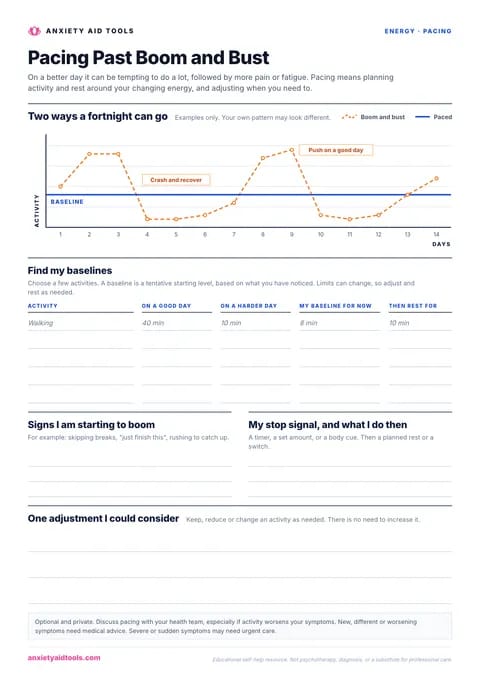
On a better day, doing more can sometimes be followed by increased pain or fatigue. Pacing means considering activity and rest together, paying attention to changing limits and adjusting without a required rate of increase.

The graph shows two examples, not a prediction. Compare activities on good and harder days, choose a tentative starting level and a rest period, and note signs and a stop signal. The walking times are examples, not a prescription.

Limits can fluctuate, and a plan cannot guarantee stable symptoms. Discuss pacing with your health team, especially if activity worsens symptoms. Seek medical advice for new, different or worsening symptoms; severe or sudden symptoms may need urgent care.
Research & References

  • NICE (2021). Myalgic encephalomyelitis (or encephalopathy)/chronic fatigue syndrome: diagnosis and management.