Physical Symptoms Test (SSS-8)
Free physical symptoms test — 8 questions, about 2 minutes, instant results. Based on the SSS-8 scale for body symptoms like pain, fatigue, and dizziness.
Who Is This Test For?
The SSS-8 is for people who want a brief check of recent physical symptom burden.
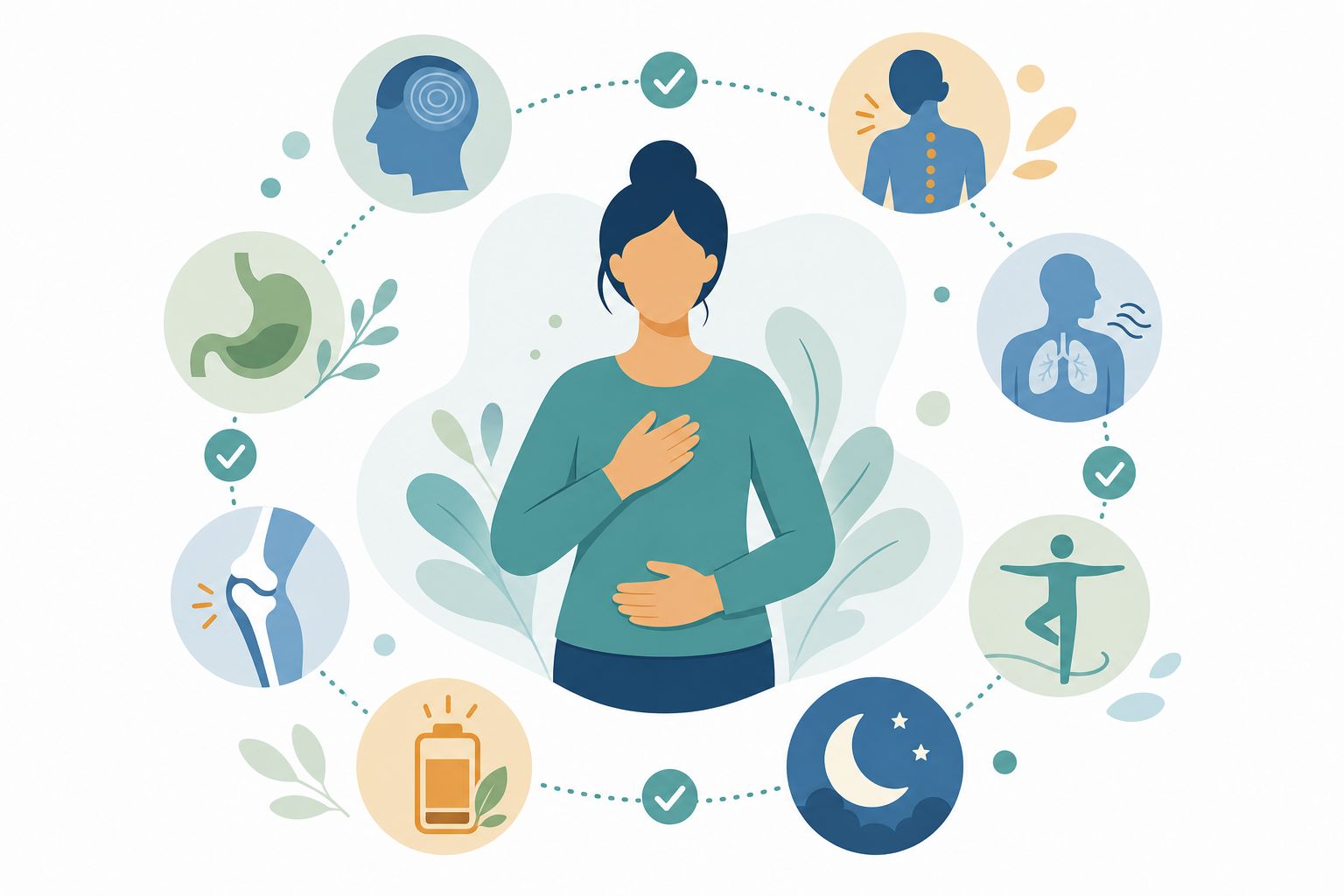
- People noticing pain, fatigue, sleep trouble, dizziness, or digestive symptoms
- Anyone wanting to summarize symptoms from the past 7 days
- People preparing to discuss physical symptoms with a health professional
- Anyone tracking symptom burden over time without assuming a cause
During the past 7 days, how much have you been bothered by each of the following?
Stomach or bowel problems
Back pain
Pain in your arms, legs, or joints
Headaches
Chest pain or shortness of breath
Dizziness
Feeling tired or having low energy
Trouble sleeping
Turn self-test results into a clearer next step.
Save your results, watch changes over time, and find relevant tools when you need a next step.
- Save your history
- Track changes over time
- Find relevant tools
Save this result so your next score has context.
Good To Know
Track Symptoms with Context
For one week, record symptom severity, timing, sleep, meals, activity, medication, menstrual cycle if relevant, stressors, and what helped. Bring the pattern to appointments.

Know the Red Flags
Get urgent care for severe chest pain, shortness of breath, neurological symptoms, fainting, sudden severe or unexplained symptoms, or anything that feels medically unsafe.

Regulate Without Dismissing
Use breathing, grounding, gentle movement, hydration, and rest to reduce strain while still taking symptoms seriously and seeking medical advice when appropriate.
Understanding the SSS-8
T he Somatic Symptom Scale-8 (SSS-8) is a brief measure of somatic symptom burden. It asks how much eight common physical symptoms bothered you during the past 7 days.
Each item is scored from 0 to 4, using the response options from 'Not at all' to 'Very much'. The total score ranges from 0 to 32, with higher scores indicating greater recent symptom burden.
This page uses published severity categories: minimal, low, medium, high, and very high. The average marker shown here is 5, rounded from a recent German community norm of about 4.64; that comparison is only a rough reference and may not represent your country, age group, health status, or clinical setting.
The SSS-8 measures symptom burden, not the cause of symptoms. A high score does not mean symptoms are 'just anxiety' or only stress-related. Attribution and licensing details can vary by source, so this page cites the original publication and accessible references without claiming public-domain status.
Frequently Asked Questions
What does the SSS-8 measure?
It measures how much eight physical symptoms bothered you during the past 7 days. It is a symptom-burden measure, not a test of why the symptoms are happening.
Does the SSS-8 diagnose a medical or mental health condition?
No. The SSS-8 does not diagnose somatic symptom disorder, anxiety, depression, or any physical illness. A qualified clinician can interpret symptoms with your history, examination, risk factors, and any needed tests.
When should I seek urgent help?
Seek urgent or emergency care for severe chest pain, significant shortness of breath, fainting, new weakness or numbness, confusion, sudden severe headache or pain, severe allergic symptoms, or any symptom that feels like an emergency.
Can stress affect physical symptoms?
Stress can influence pain, sleep, energy, digestion, muscle tension, and symptom attention, but that does not prove stress is the cause. Physical symptoms deserve appropriate medical consideration.
What should I do with a high score?
Consider making a concise symptom timeline and discussing it with a health professional, especially if symptoms are new, persistent, worsening, unexplained, or interfering with daily life.
More Tests


Sources & References
- Gierk B, Kohlmann S, Kroenke K, et al. The Somatic Symptom Scale-8 (SSS-8): a brief measure of somatic symptom burden. JAMA Internal Medicine. 2014;174(3):399-407.
- Merck Manual Professional Edition. Somatic Symptom Scale-8 table.
- Frontiers in Psychiatry. Clinical use and severity categories of the Somatic Symptom Scale-8.
This SSS-8 self-test is a symptom-burden and reflection tool only. It does not diagnose any medical or mental health condition, identify the cause of symptoms, or replace assessment by a qualified health professional. Do not assume physical symptoms are anxiety or stress. Seek urgent or emergency care for severe chest pain, shortness of breath, neurological symptoms, sudden severe or unexplained symptoms, or other emergency warning signs. SSS-8 attribution: Gierk B, Kohlmann S, Kroenke K, et al.; reproduction and licensing status may depend on the source and use case, so this page provides citation without claiming public-domain status.