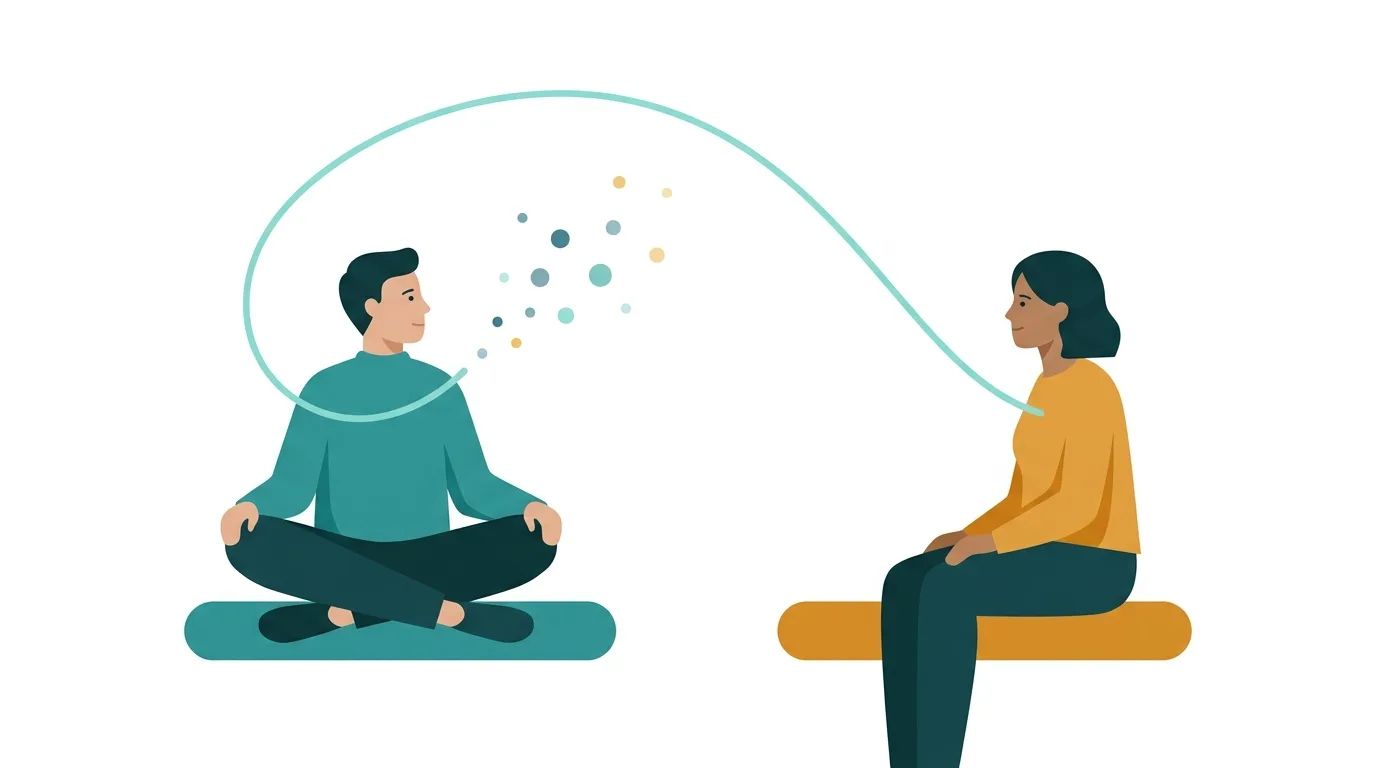
Rejection Sensitivity Test: Relationship Uncertainty
Use this original educational reflection only to notice how possible distance, disapproval, or exclusion can affect your thoughts and actions in relationships. It is not a validated clinical assessment and is not diagnostic.
Who Is This Reflection For?
This original educational reflection is for adults who want a brief, non-clinical way to notice how possible rejection affects their thoughts and actions in relationships. It can support private reflection or a conversation with a qualified professional.
- People who become preoccupied when a reply, plan, or tone changes
- Anyone reflecting on how fear of rejection shapes communication or closeness
- People exploring the difference between relationship facts, guesses, and old hurts
- Anyone preparing to discuss relationship uncertainty, boundaries, or distress with a qualified professional
Think about your usual experiences over the past few weeks across more than one relationship or situation. Rate how often each statement fits you; choose what is generally true, not what you wish were true.
I notice my attention tighten when someone takes longer than expected to reply.
I wonder whether a change in someone's tone means our connection is weakening.
I hold back a question because I fear the answer could feel rejecting.
I look for small signs that someone still wants contact with me.
I take an unanswered message as a sign that I have done something wrong.
I replay a social moment afterward, searching for where I may have lost someone's approval.
I feel a strong urge to repair a relationship immediately after tension or distance.
I anticipate being left out before I know what another person intends.
I compare a current moment of distance with an earlier experience of being hurt or dismissed.
It is hard for me to focus on other things while I am unsure where I stand with someone.
I imagine a negative meaning before asking for clarification about a relationship.
I change how I act to reduce the chance that someone might reject or leave me.
Good To Know
Separate Signal From Story
When a reply, tone, or plan changes, write down what you directly observed and what you fear it means. Let both be present without treating the fear as confirmed information.
Ask Instead of Testing
When a relationship feels uncertain and it is safe to speak, make one clear request for information or reassurance. Direct communication gives the other person a fair chance to respond.

Protect Connection and Self-Respect
Notice whether your response moves toward mutual care or only toward preventing abandonment. A healthy relationship can include honest needs, room for difference, and boundaries when treatment is dismissive or unsafe.
Understanding This Rejection Sensitivity Reflection
T his original educational reflection looks at how often possible rejection, distance, or exclusion seems to draw attention and influence behavior in relationships. The 12 prompts were written for this page from scratch; they are not adapted, paraphrased, or translated from a named questionnaire.
Each statement is rated from 1 (Never) to 5 (Almost always). The score is the arithmetic mean of the 12 responses, giving a possible range from 1.00 to 5.00. A higher score means the experiences described in these prompts were reported more often in the situations you had in mind; it is not a measure of worth, lovability, or relationship quality.
The less-often, sometimes, and more-often levels are descriptive sections of this reflection's own 1–5 continuum: 1.00–2.33, above 2.33 to 3.67, and above 3.67 to 5.00. They are not clinical thresholds, rankings, or conclusions about a condition.
Concern about rejection can vary with attachment experiences, current stress, health, relationship safety, and the behavior of other people. Use the result to identify a situation worth approaching with curiosity and care. If fear of rejection is persistent, overwhelming, or disrupting daily life, a qualified mental health professional can help you explore it while respecting your relationships and boundaries.
Frequently Asked Questions
What does this reflection explore?
It explores how often possible rejection, distance, or exclusion seems to affect your attention, interpretations, and behavior in relationships. It is a self-reflection prompt, not a measure of a disorder or a verdict about your relationships.
How is the score calculated?
Each of the 12 statements is rated from 1 to 5, from Never to Almost always. The score is the arithmetic mean of all 12 responses, with an unrounded range from 1.00 to 5.00 and a two-decimal display.
What do less-often, sometimes, and more-often mean?
They are descriptive summaries of this reflection's response continuum: 1.00–2.33 is less-often, above 2.33 to 3.67 is sometimes, and above 3.67 to 5.00 is more-often. They are not clinical categories, cutoffs, or diagnostic results.
Does a more-often result mean something is wrong with me?
No. It means the experiences described in the prompts were reported more often in the situations you considered. Context matters, including how other people treat you; caring about connection is not a flaw, and a result cannot tell you whether a relationship is safe or mutual.
What can I do if fear of rejection is affecting my relationships?
Start by grounding yourself, separating known facts from guesses, and choosing one direct question, request, or boundary when it is safe to do so. If the pattern causes significant distress or interferes with daily life, consider speaking with a qualified mental health professional.
More Tests
Sources & References
- Downey, G., & Feldman, S. I. (1996). Implications of rejection sensitivity for intimate relationships. Journal of Personality and Social Psychology, 70(6), 1327–1343.
- National Institute of Mental Health. Social Anxiety Disorder: More Than Just Shyness.
- National Institute of Mental Health. Caring for Your Mental Health.
- National Institute of Mental Health. Psychotherapies.
This is an original educational reflection only; it is not a validated clinical assessment; it is not diagnostic. Its original prompts and equal-width score bands are for self-reflection only, not clinical thresholds, rankings, or conclusions about a condition. Relationship experiences vary with context, stress, health, history, safety, and the behavior of other people, and this page cannot determine whether a relationship is healthy or harmful. It cannot replace an evaluation by a qualified mental health professional. If fear of rejection is persistent, overwhelming, or interfering with daily life, consider seeking professional support. If you are in immediate danger or crisis, contact emergency services or a crisis hotline now.